

05 Animal Nutrition
#49 Diet
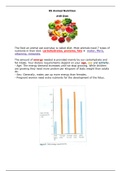
The food an animal eat everyday is called diet. Most animals need 7 types of
nutrients in their diet: carbohydrates, proteins, fats + water, fibre,
vitamins, minerals.
The amount of energy needed is provided mainly by our carbohydrate and
fat intake. Your dietary requirements depend on your age, sex and activity.
- Age: The energy demand increases until we stop growing. While children
are growing they need more protein per kilogram of body weight than adults
do.
- Sex: Generally, males use up more energy than females.
- Pregnant women need extra nutrients for the development of the fetus.
,A. A balanced diet is a diet that contains all the main nutrients in the
correct amounts and proportions to maintain good health.
B. Malnutrition is the result of not eating a balanced diet. There may be:
wrong amount of food: too little or too much
incorrect proportion of main nutrients
lacking in one or more key nutrients
,Effects of malnutrition
1. Obesity - Too much food (carbohydrate, fat or protein)
2. Coronary heart disease
Too much saturated/animal fat in the diet results in high cholesterol
levels.
Cholesterol can stick to the walls of arteries, gradually blocking them.
If coronary arteries become blocked, the results can be angina and
coronary heart disease.
, 3. Starvation
Too little food can result in starvation.
Extreme slimming diets, such as those that avoid carbohydrate foods,
can result in the disease anorexia nervosa.
Starvation
4. Childhood protein-energy malnutrition (Kwashiakor)
Wrong proportion of nutrients e.g. too much carbohydrates (starchy foods)
and a lack of protein can lead to Kwashiakor in young children.
Kwashiakor characterized by edema,
anorexia, ulcerating dermatoses.
#49 Diet
The food an animal eat everyday is called diet. Most animals need 7 types of
nutrients in their diet: carbohydrates, proteins, fats + water, fibre,
vitamins, minerals.
The amount of energy needed is provided mainly by our carbohydrate and
fat intake. Your dietary requirements depend on your age, sex and activity.
- Age: The energy demand increases until we stop growing. While children
are growing they need more protein per kilogram of body weight than adults
do.
- Sex: Generally, males use up more energy than females.
- Pregnant women need extra nutrients for the development of the fetus.
,A. A balanced diet is a diet that contains all the main nutrients in the
correct amounts and proportions to maintain good health.
B. Malnutrition is the result of not eating a balanced diet. There may be:
wrong amount of food: too little or too much
incorrect proportion of main nutrients
lacking in one or more key nutrients
,Effects of malnutrition
1. Obesity - Too much food (carbohydrate, fat or protein)
2. Coronary heart disease
Too much saturated/animal fat in the diet results in high cholesterol
levels.
Cholesterol can stick to the walls of arteries, gradually blocking them.
If coronary arteries become blocked, the results can be angina and
coronary heart disease.
, 3. Starvation
Too little food can result in starvation.
Extreme slimming diets, such as those that avoid carbohydrate foods,
can result in the disease anorexia nervosa.
Starvation
4. Childhood protein-energy malnutrition (Kwashiakor)
Wrong proportion of nutrients e.g. too much carbohydrates (starchy foods)
and a lack of protein can lead to Kwashiakor in young children.
Kwashiakor characterized by edema,
anorexia, ulcerating dermatoses.


