
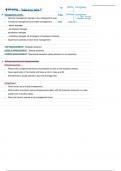
TOP general management
SerERAL
Mmmm V
* Management Levels: MIDDLE functional management
sadmin manager
• General management operate a top management level. c production manager
W
• Functional management are middle management. LOWER supervisors
- admin manager
- purchasing manager
-production manager
- marketing manager etc (managers of business functions)
• Supervisors operate at lower level management.
TOP MANAGEMENT: Strategic decisions
MIDDLE MANAGEMENT: Tactical decisions
LOWER MANAGEMENT: Operational decisions (daily decisions to run business)
* Entrepreneurship and intrapreneurship:
Entrepreneurship:
• Person who combines the factors of production to start a new business venture.
• Sees opportunity in the market and takes a risk to make a profit.
• Entrepreneurs usually operate a top level management.
Intrapreneur:
• Often known as an inside entrepreneur.
• Works within a business using entrepreneurial skills, with the business resources, to make
profits from innovative ideas.
• Does not have to operate a top management level.
, Entrepreneurial qualities, characteristics and skills:
Most of these skills and characteristics can be learned and developed.
• identify opportunities with potential and pursue them despite risks.
• Take risks
• Understand the target market
• Continuously scan the internal & external environment.
• Be proactive when identifying opportunities and threats.
• Be an opportunist (anticipate market trends)
• Commitment and perseverance.
• Creativity and innovation.
• Leadership qualities.
• Make quick decisions.
• Ability to communicate clearly, and accurately.
• Must be personally motivated (likes to work and learn or be in charge in groups)
* Leadership vs Management:
• managers are appointed in positions of authority (get people to do what they want)
• Leader should use expertise to make people aware of which course of action they
SHOULD pursue.
• Ideally, managers should also be leaders.
Managers: Dictates Leaders: Inspires
• maintains & focuses on systems • Focuses on people
• accepts the status quo • develops new methods to do things
• Leaders inspire, trust.
• relies on control. • challenges the status quo
• Leads by example
• follows what management says • Emerges anywhere in a business
• Study/apply for a job. • Born skills
• Gets placed in a role
, A Management Styles:
111
Democratic: creative
• Allows subordinates to give input & participate in the decision-making process.
• Also referred to as the participative leadership style.
• Disadvantage: may cause slower decision making.
• Advantage: Everyone feels part of the decision-making process which can be seen as an
advantage (can lead to higher retention and higher morale)
-11
Autocratic: crisis
• often does not allow input from subordinates
• Manager usually makes all the decisions
• Disadvantage: employees have low morale, also have a higher employee turnover as
employees feel undervalued.
• Advantage: decision making process is quicker.
3 Laissez-Faire: Italented employees (
• Manager believes he/she should not interfere in the process of carrying out a task.
• Explains to employees what is required and expected, and then does not interfere.
• The style yields excellent results if the workforce is highly skilled and motivated.
• Disadvantages : if employees are not skilled or motivated work will be dissatisfactory.
• Advantage: employees will not feel micromanaged and have higher morale as they feel
valued.
4 Transactional:
• Manager motivates employees to perform task in return for incentives.
• Disadvantage If employees, do not find the reward sufficient, they may be demotivated.
• Advantage: incentives can make employees more motivated to perform, higher quality,
work which will yields higher profits.
SerERAL
Mmmm V
* Management Levels: MIDDLE functional management
sadmin manager
• General management operate a top management level. c production manager
W
• Functional management are middle management. LOWER supervisors
- admin manager
- purchasing manager
-production manager
- marketing manager etc (managers of business functions)
• Supervisors operate at lower level management.
TOP MANAGEMENT: Strategic decisions
MIDDLE MANAGEMENT: Tactical decisions
LOWER MANAGEMENT: Operational decisions (daily decisions to run business)
* Entrepreneurship and intrapreneurship:
Entrepreneurship:
• Person who combines the factors of production to start a new business venture.
• Sees opportunity in the market and takes a risk to make a profit.
• Entrepreneurs usually operate a top level management.
Intrapreneur:
• Often known as an inside entrepreneur.
• Works within a business using entrepreneurial skills, with the business resources, to make
profits from innovative ideas.
• Does not have to operate a top management level.
, Entrepreneurial qualities, characteristics and skills:
Most of these skills and characteristics can be learned and developed.
• identify opportunities with potential and pursue them despite risks.
• Take risks
• Understand the target market
• Continuously scan the internal & external environment.
• Be proactive when identifying opportunities and threats.
• Be an opportunist (anticipate market trends)
• Commitment and perseverance.
• Creativity and innovation.
• Leadership qualities.
• Make quick decisions.
• Ability to communicate clearly, and accurately.
• Must be personally motivated (likes to work and learn or be in charge in groups)
* Leadership vs Management:
• managers are appointed in positions of authority (get people to do what they want)
• Leader should use expertise to make people aware of which course of action they
SHOULD pursue.
• Ideally, managers should also be leaders.
Managers: Dictates Leaders: Inspires
• maintains & focuses on systems • Focuses on people
• accepts the status quo • develops new methods to do things
• Leaders inspire, trust.
• relies on control. • challenges the status quo
• Leads by example
• follows what management says • Emerges anywhere in a business
• Study/apply for a job. • Born skills
• Gets placed in a role
, A Management Styles:
111
Democratic: creative
• Allows subordinates to give input & participate in the decision-making process.
• Also referred to as the participative leadership style.
• Disadvantage: may cause slower decision making.
• Advantage: Everyone feels part of the decision-making process which can be seen as an
advantage (can lead to higher retention and higher morale)
-11
Autocratic: crisis
• often does not allow input from subordinates
• Manager usually makes all the decisions
• Disadvantage: employees have low morale, also have a higher employee turnover as
employees feel undervalued.
• Advantage: decision making process is quicker.
3 Laissez-Faire: Italented employees (
• Manager believes he/she should not interfere in the process of carrying out a task.
• Explains to employees what is required and expected, and then does not interfere.
• The style yields excellent results if the workforce is highly skilled and motivated.
• Disadvantages : if employees are not skilled or motivated work will be dissatisfactory.
• Advantage: employees will not feel micromanaged and have higher morale as they feel
valued.
4 Transactional:
• Manager motivates employees to perform task in return for incentives.
• Disadvantage If employees, do not find the reward sufficient, they may be demotivated.
• Advantage: incentives can make employees more motivated to perform, higher quality,
work which will yields higher profits.


