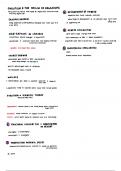
EVOLUTION 8 THE ORIGIN OF ORGANISMS
the process by which new types of organisms develop from
4 DEVELOPMENT OF EMBRYO
existing organisms
organisms dev . from common ancestor
ERASMUS DARWIN early stages of development → all embryos have nerve cord
spdlnal cord
living organisms ( and humans ) changed over time due to a 8 supporting rod
vital force
5 GENETIC SIMILARITIES
JEAN -
BAPTISTE de LAMARCK gene pool 1 DNA changes over time
environment caused changes in organisms close similarities in DNA = shows related hell
use Id 11 Use → creatures could dev new organs ( change
.
organisms with more similarities in protein t nucleic acid leg
structure ( function = more closely related
giraffes stretched their necks 9 BIOCHEMICAL SIMILAR 171ft
DNA
CHARLES DARWIN shared amino acid sequences
individuals most suited to their environment
lived long enough to reproduce
parents passed good traits → offspring
tell favourable traits → died
WALLACE
• related species dev . from a common ancestor 8 changed
over time
•
populations living in separate areas could lead to new species
EVOLUTION → SCIENTIFIC THEORY
satisfied most tests
CREATIONISTS believe Earth 8 all living things were created In a
event
single
SCIENCE needs evidence to support its facts
FAITH act of belief based on absolute trust in a holy being
2 STRUCTURAL SIMILARITIES t MODIFICATION
BY DESCENT
analogous t homologous
convergent t divergent
3 MODIFICATION WITHIN A SPEC Ift
adaptations ( modification occurred to adapt to different
environments
eg : horse
, EVOLUTION BY NATURAL SELECTION
the process of change over a
long geological time period which leads to individuals adapting to their environment
changing s
TU&tqBEa③
⑧oaM .
Micro -
EVOLUTION MACRO -
EVOLUTION
process of change 8 variation that occurs within a species gradual process of change that leads to the formation of a new species
!
" " " "" " " " ° "" "" d "" " " " "
Yicheng
" " " "" "
÷a¥m
Woo;.
.
EBBA
÷. *. .n.
f-
.EE#EE&.E
.
*
1 FOSSIL RECORD Faq
!
"
how
Ie:!:O: III.
living organisms
celled bacteria summon
have changed 8 developed
years ago
over time
ftp.af#EBBqgqfEBEAFEoo
'T
3 Similarities and differences in type , origins and functions of body structures
extinct 8 extant species
4 Clues about relationship btw .
and environment mya
s climate
DIVERGENT
EVOLUTION
CONVERGENT HOMOLOGOUS STRUCTURES
EVOLUTION
ANALOGOUS BODY STRUCTURES
④O¥tE8
BODY STRUCTURES THAT DO THE SAME JOB
SLIGHTLY DIFFERENT STRUCTURE
ggAgdEztgS#€# BUT HAVE A DIFFERENT ORIGIN AND A
THEY WERE INHERITED
o.EC#ftFAMMA
FEATURE 1 OR CHARACTERISTICS SHARED BY A GROUP OF SPECIES
FROM THE SAME COMMON ANCESTOR
BECAUSE
{I At If,
A COMMON ANCESTOR AND SHARE
WHEN OR GANI ? Mf NOT CLOSELY RELATED EVOLVE SIMILAR ADAPTIONS INDEPENDENTLY
'
, FROM SIMILAR
"
GENETIC SIMILARITIES
close similarities DNA → of different
in
aaauaaI%%
species [ related ]
with more similarities in protein
organisms
and nucleic acid sequences ( closely related ]
b BIOGEOGRAPHY
the study of distribution of species
broke up and
drifted apart
PANGAEA =
Of similar f-011111
On diff continents
explains exist .
7 LIVING LINKS joining
duck -
billed platypus primitive mammal that eggs
- a
not gills
lung f- 11h -
have lungs
.EE#egegEFtggTo&uaaenurs
jgqfT#¥aE
GRADUALISM PUNCTUATED EQUILIBRIUM
't !! ! ! !'m! lunarftp.er.nn.ruauretnan.nanceitors
8 "
s
don't have definite function
the process by which new types of organisms develop from
4 DEVELOPMENT OF EMBRYO
existing organisms
organisms dev . from common ancestor
ERASMUS DARWIN early stages of development → all embryos have nerve cord
spdlnal cord
living organisms ( and humans ) changed over time due to a 8 supporting rod
vital force
5 GENETIC SIMILARITIES
JEAN -
BAPTISTE de LAMARCK gene pool 1 DNA changes over time
environment caused changes in organisms close similarities in DNA = shows related hell
use Id 11 Use → creatures could dev new organs ( change
.
organisms with more similarities in protein t nucleic acid leg
structure ( function = more closely related
giraffes stretched their necks 9 BIOCHEMICAL SIMILAR 171ft
DNA
CHARLES DARWIN shared amino acid sequences
individuals most suited to their environment
lived long enough to reproduce
parents passed good traits → offspring
tell favourable traits → died
WALLACE
• related species dev . from a common ancestor 8 changed
over time
•
populations living in separate areas could lead to new species
EVOLUTION → SCIENTIFIC THEORY
satisfied most tests
CREATIONISTS believe Earth 8 all living things were created In a
event
single
SCIENCE needs evidence to support its facts
FAITH act of belief based on absolute trust in a holy being
2 STRUCTURAL SIMILARITIES t MODIFICATION
BY DESCENT
analogous t homologous
convergent t divergent
3 MODIFICATION WITHIN A SPEC Ift
adaptations ( modification occurred to adapt to different
environments
eg : horse
, EVOLUTION BY NATURAL SELECTION
the process of change over a
long geological time period which leads to individuals adapting to their environment
changing s
TU&tqBEa③
⑧oaM .
Micro -
EVOLUTION MACRO -
EVOLUTION
process of change 8 variation that occurs within a species gradual process of change that leads to the formation of a new species
!
" " " "" " " " ° "" "" d "" " " " "
Yicheng
" " " "" "
÷a¥m
Woo;.
.
EBBA
÷. *. .n.
f-
.EE#EE&.E
.
*
1 FOSSIL RECORD Faq
!
"
how
Ie:!:O: III.
living organisms
celled bacteria summon
have changed 8 developed
years ago
over time
ftp.af#EBBqgqfEBEAFEoo
'T
3 Similarities and differences in type , origins and functions of body structures
extinct 8 extant species
4 Clues about relationship btw .
and environment mya
s climate
DIVERGENT
EVOLUTION
CONVERGENT HOMOLOGOUS STRUCTURES
EVOLUTION
ANALOGOUS BODY STRUCTURES
④O¥tE8
BODY STRUCTURES THAT DO THE SAME JOB
SLIGHTLY DIFFERENT STRUCTURE
ggAgdEztgS#€# BUT HAVE A DIFFERENT ORIGIN AND A
THEY WERE INHERITED
o.EC#ftFAMMA
FEATURE 1 OR CHARACTERISTICS SHARED BY A GROUP OF SPECIES
FROM THE SAME COMMON ANCESTOR
BECAUSE
{I At If,
A COMMON ANCESTOR AND SHARE
WHEN OR GANI ? Mf NOT CLOSELY RELATED EVOLVE SIMILAR ADAPTIONS INDEPENDENTLY
'
, FROM SIMILAR
"
GENETIC SIMILARITIES
close similarities DNA → of different
in
aaauaaI%%
species [ related ]
with more similarities in protein
organisms
and nucleic acid sequences ( closely related ]
b BIOGEOGRAPHY
the study of distribution of species
broke up and
drifted apart
PANGAEA =
Of similar f-011111
On diff continents
explains exist .
7 LIVING LINKS joining
duck -
billed platypus primitive mammal that eggs
- a
not gills
lung f- 11h -
have lungs
.EE#egegEFtggTo&uaaenurs
jgqfT#¥aE
GRADUALISM PUNCTUATED EQUILIBRIUM
't !! ! ! !'m! lunarftp.er.nn.ruauretnan.nanceitors
8 "
s
don't have definite function