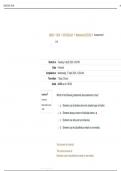
which of the following typically occurs during an expansionary phase
of a business cycle?
(A) nominal interest rates decrease.
(B) income taxes decrease.
(C) the price level decreases.
(D) government transfer payments increase.
(E) employment increases.
E
economic growth refers to an increase in which of the following?
(A) government spending.
(B) consumption spending.
(C) nominal gross domestic product (GDP).
(D) potential real gross domestic product (GDP).
(E) household wealth.
if both the nominal interest rate and the expected inflation rate
increase, what will happen to the real interest rate?
(A) it will increase because the expected inflation rate has
increased.
(B) it will increase because the nominal interest rate has increased.
(C) it will increase if the expected inflation rate increases by more
than the nominal interest rate.
(D) it will decrease because the nominal interest rate has increased.
(E) it will decrease if the expected inflation rate increases by more
than the nominal interest rate.
E
which of the following statements is true about an expansionary
fiscal policy?
(A) it decreases demand for loanable funds.
(B) it decreases the equilibrium price level.
(C) it decreases the equilibrium real interest rate.
(D) it increases aggregate demand.
(E) it increases the money supply.
D
, which of the following will most likely result from deflation?
(A) increased nominal interest rates.
(B) increased business profits.
(C) increased real value of fixed incomes.
(D) decreased purchasing power of cash.
(E) decreased real wealth.
C
which of the following is a defining characteristic of a fractional
reserve banking system?
(A) the existence of a central bank with a monopoly on money creation.
(B) the use of paper money backed by a commodity such as gold or
silver.
(C) the fact that banks retain an amount of bank reserves that is
less than the amount of costumer demand deposits.
(D) the requirement that banks maintain a certain percentage of their
reserves as a deposit in an account at the central bank.
(E) the regulations that separate investment banking from commercial
banking.
C
a negative aggregate supply shock will result in which of the
following in the short run?
(A) an increase in the price level and a decrease in the unemployment
rate.
(B) a decrease in the price level and an increase in the unemployment
rate.
(C) a decrease in both the price level and real output.
(D) an increase in both the price level and real output.
(E) an increase in both the price level and the unemployment rate.
E
which of the following combinations of fiscal and monetary policies
will correct a severe recession?
(A) increasing income tax rates and decreasing the money supply.
(B) increasing both the income tax rates and the money supply.
(C) decreasing both the income tax rates and the money supply,
(D) decreasing income tax rates and increasing the money supply.
(E) decreasing income tax rates and increasing the federal funds rate.
D
which of the following would decrease the united states net exports
to south korea?
of a business cycle?
(A) nominal interest rates decrease.
(B) income taxes decrease.
(C) the price level decreases.
(D) government transfer payments increase.
(E) employment increases.
E
economic growth refers to an increase in which of the following?
(A) government spending.
(B) consumption spending.
(C) nominal gross domestic product (GDP).
(D) potential real gross domestic product (GDP).
(E) household wealth.
if both the nominal interest rate and the expected inflation rate
increase, what will happen to the real interest rate?
(A) it will increase because the expected inflation rate has
increased.
(B) it will increase because the nominal interest rate has increased.
(C) it will increase if the expected inflation rate increases by more
than the nominal interest rate.
(D) it will decrease because the nominal interest rate has increased.
(E) it will decrease if the expected inflation rate increases by more
than the nominal interest rate.
E
which of the following statements is true about an expansionary
fiscal policy?
(A) it decreases demand for loanable funds.
(B) it decreases the equilibrium price level.
(C) it decreases the equilibrium real interest rate.
(D) it increases aggregate demand.
(E) it increases the money supply.
D
, which of the following will most likely result from deflation?
(A) increased nominal interest rates.
(B) increased business profits.
(C) increased real value of fixed incomes.
(D) decreased purchasing power of cash.
(E) decreased real wealth.
C
which of the following is a defining characteristic of a fractional
reserve banking system?
(A) the existence of a central bank with a monopoly on money creation.
(B) the use of paper money backed by a commodity such as gold or
silver.
(C) the fact that banks retain an amount of bank reserves that is
less than the amount of costumer demand deposits.
(D) the requirement that banks maintain a certain percentage of their
reserves as a deposit in an account at the central bank.
(E) the regulations that separate investment banking from commercial
banking.
C
a negative aggregate supply shock will result in which of the
following in the short run?
(A) an increase in the price level and a decrease in the unemployment
rate.
(B) a decrease in the price level and an increase in the unemployment
rate.
(C) a decrease in both the price level and real output.
(D) an increase in both the price level and real output.
(E) an increase in both the price level and the unemployment rate.
E
which of the following combinations of fiscal and monetary policies
will correct a severe recession?
(A) increasing income tax rates and decreasing the money supply.
(B) increasing both the income tax rates and the money supply.
(C) decreasing both the income tax rates and the money supply,
(D) decreasing income tax rates and increasing the money supply.
(E) decreasing income tax rates and increasing the federal funds rate.
D
which of the following would decrease the united states net exports
to south korea?