lOMoARcPSD|15424936
MNL 2601 - General summary notes for leadership
Bacherlors of Commerce Business Managment (University of South Africa)
StuDocu is not sponsored or endorsed by any college or university
, lOMoARcPSD|15424936
MNL 2601
LEADERSHIP
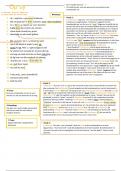
UNIT 1 – CHPT 1&2
LEADERSHIP - a process whereby an individual influences a group of individuals to achieve a common goal.”
THIS DEFINITION HAS MANY IMPLICATIONS:
1. To be a leader one must have followers
2. A leader strives to build authentic relationships between people
3. A leader influences his followers to act a certain way in order to achieve a common goal
KEY LEADERSHIP TRAITS (TRAIT THEORY)
TRAIT DESCRIPTION
DRIVE achievement, motivation, ambition, energy, tenacity, initiative
LEADERSHIP MOTIVATION desire to lead, seeking power as means to achieve desired goals
(social power motive) rather than as an end itself (personalised power itself)
HONESTY & INTEGRITY correspondence between word & deed, trustworthiness
SELF CONFIVDENCE in decision-making, assertive & decisive, emotionally stable
COGNITIVE ABILITY able to analyse situations accurately, solve problems, make decisions, usually
not genius, manage perceptions of others about intelligence
KNOWLEDGE OF BUSINESS able to gather &assimilate extensive information about the company &
industry, necessary for developing suitable visions, strategies & business
plans
CONTINGENCY LEADERSHIP THEORY
Fiedler proposed the effectiveness of leadership depended on the combination of three things:
1. The relationship between a leader and a follower
2. The structuring & clarity of the task to be achieved
3. The formal position that the leader occupies & the power that the leader possesses
SITUANTIONAL LEADERSHIP THEORY
Hersey, Blanchard & Johnson where key contributors and proposed that a leader must have a thorough
understanding of the following:
1. Which goals is to be achieved
2. Which tasks must be undertaken to achieve goals
3. Who will be undertaking these tasks
4. What their development level is for each task
5. Which style of leadership is appropriate
Downloaded by kelvin githinji ()
, lOMoARcPSD|15424936
APPROACHES TO LEARDERSHIP
All four of the above approaches can also be used to explore the concept of power in terms of leadership.
Is power vested in a person, a process, a position or in results?
(SUMMARY)
Leadership can be assessed based on the four approaches covered in this activity, namely leadership
as vested in a person, a position, a process and based on results.
Assessment of what a good leader is in the workplace may differ from THE assessment as to what
constitutes a good leader in private life, for instance a sports captain or church leader.
In a work environment, you might identify a good leader based on results, as that leader maintains
high working standards, adheres to due dates and delivers good customer service.
In private life, you might identify a good leader as someone who motivates team players, gets
everyone to practise regularly and motivates people to live healthy lives.
WHAT IS POWER?
Power has been described in various ways…
• “Power is the product of the position that a person holds in an organisation”
• “The ability to mobilize resources to get things done”
• “The absolute capacity of an individual to influence the behaviour or attitudes of one or more designated
target persons at a given point in time.”
WHAT ARE THE SOURCES OF POWER
In the context of leadership, we can distinguish between the following six sources of power:
Informational power: the ability to provide information about a subject or task in such a way that the recipient
will accept that information and behave in the way that the leader suggests.
Reward power: the ability to reward or threaten a follower.
Coercive power: the ability to enforce compliance through fear.
Legitimate power: the follower accepts that the leader has the right to direct, request or demand a change.
Expert power: the leader is believed to possess knowledge or insights that are accepted as superior and s/he
can therefore influence the follower to change his/her behaviour.
Referent power: the follower holds the leader in high regard, admires his/her behaviour and trusts his/her
judgement, and so is happy to emulate him/her.
The sources of a leader’s power can also be grouped under the headings of soft and hard power .
Downloaded by kelvin githinji ()
, lOMoARcPSD|15424936
Soft power is personal; it refers to the ability to work at relationships to achieve a goal.
Hard power consists of power that comes with a position of authority; it is the power to coerce,
reward or punish.
Ecological power, which refers to the power to change the physical work environment through
activities such as creating open-plan offices for staff or the power to change technology.
11 PROACTIVE INFLUENCE TACTICS
Rational persuasion: the leader makes use of facts, evidence and logic to persuasively argue with a follower
that a plan, idea or proposal will work.
Apprising: the leader persuades the follower(s) by focusing on how the achievement of a task will personally
benefit the follower(s) in terms of their career, skills or profile
Inspirational appeals: the leader gains an emotional commitment from the follower to a task or plan. The
leader appeals to the follower’s values, ethics, hopes or ideals.
Consultation: the leader gains ownership by involving the follower to develop and plan a task. When doing so,
the leader has already determined what the broad task will be, but consults on some details to influence his/
her followers to support the plan.
Exchange: the leader follows a transactional approach, offering something of value to the follower in return for
support for a plan or work on a task.
Collaboration: the leader follows a collaborative approach, offers resources and helps the follower to achieve a
result in return for the follower’s willingness to carry out a plan or task.
Personal appeals: in this tactic, the leader follows a relational approach. S/he requests a follower for help
based on friendship or personal loyalty.
Ingratiation: the leader compliments and praises a follower in order to solicit his/her help or support. This can
be seen as a manipulative tactic.
Legitimating tactics: the leader uses his/her position, policy, organisational rules or norms to make a request
which appears legitimate to a follower.
Pressure: the leader follows a coercive approach. Tactics used here could include threatening words and
behaviour, micro-management and a leader continuously demanding a response from a follower.
Coalition tactics: the leader builds a coalition of colleagues in order to influence a specific person.
LEADERSHIP TACTICS TO INFLUENCE BEHAVIOUR
Downloaded by kelvin githinji ()
MNL 2601 - General summary notes for leadership
Bacherlors of Commerce Business Managment (University of South Africa)
StuDocu is not sponsored or endorsed by any college or university
, lOMoARcPSD|15424936
MNL 2601
LEADERSHIP
UNIT 1 – CHPT 1&2
LEADERSHIP - a process whereby an individual influences a group of individuals to achieve a common goal.”
THIS DEFINITION HAS MANY IMPLICATIONS:
1. To be a leader one must have followers
2. A leader strives to build authentic relationships between people
3. A leader influences his followers to act a certain way in order to achieve a common goal
KEY LEADERSHIP TRAITS (TRAIT THEORY)
TRAIT DESCRIPTION
DRIVE achievement, motivation, ambition, energy, tenacity, initiative
LEADERSHIP MOTIVATION desire to lead, seeking power as means to achieve desired goals
(social power motive) rather than as an end itself (personalised power itself)
HONESTY & INTEGRITY correspondence between word & deed, trustworthiness
SELF CONFIVDENCE in decision-making, assertive & decisive, emotionally stable
COGNITIVE ABILITY able to analyse situations accurately, solve problems, make decisions, usually
not genius, manage perceptions of others about intelligence
KNOWLEDGE OF BUSINESS able to gather &assimilate extensive information about the company &
industry, necessary for developing suitable visions, strategies & business
plans
CONTINGENCY LEADERSHIP THEORY
Fiedler proposed the effectiveness of leadership depended on the combination of three things:
1. The relationship between a leader and a follower
2. The structuring & clarity of the task to be achieved
3. The formal position that the leader occupies & the power that the leader possesses
SITUANTIONAL LEADERSHIP THEORY
Hersey, Blanchard & Johnson where key contributors and proposed that a leader must have a thorough
understanding of the following:
1. Which goals is to be achieved
2. Which tasks must be undertaken to achieve goals
3. Who will be undertaking these tasks
4. What their development level is for each task
5. Which style of leadership is appropriate
Downloaded by kelvin githinji ()
, lOMoARcPSD|15424936
APPROACHES TO LEARDERSHIP
All four of the above approaches can also be used to explore the concept of power in terms of leadership.
Is power vested in a person, a process, a position or in results?
(SUMMARY)
Leadership can be assessed based on the four approaches covered in this activity, namely leadership
as vested in a person, a position, a process and based on results.
Assessment of what a good leader is in the workplace may differ from THE assessment as to what
constitutes a good leader in private life, for instance a sports captain or church leader.
In a work environment, you might identify a good leader based on results, as that leader maintains
high working standards, adheres to due dates and delivers good customer service.
In private life, you might identify a good leader as someone who motivates team players, gets
everyone to practise regularly and motivates people to live healthy lives.
WHAT IS POWER?
Power has been described in various ways…
• “Power is the product of the position that a person holds in an organisation”
• “The ability to mobilize resources to get things done”
• “The absolute capacity of an individual to influence the behaviour or attitudes of one or more designated
target persons at a given point in time.”
WHAT ARE THE SOURCES OF POWER
In the context of leadership, we can distinguish between the following six sources of power:
Informational power: the ability to provide information about a subject or task in such a way that the recipient
will accept that information and behave in the way that the leader suggests.
Reward power: the ability to reward or threaten a follower.
Coercive power: the ability to enforce compliance through fear.
Legitimate power: the follower accepts that the leader has the right to direct, request or demand a change.
Expert power: the leader is believed to possess knowledge or insights that are accepted as superior and s/he
can therefore influence the follower to change his/her behaviour.
Referent power: the follower holds the leader in high regard, admires his/her behaviour and trusts his/her
judgement, and so is happy to emulate him/her.
The sources of a leader’s power can also be grouped under the headings of soft and hard power .
Downloaded by kelvin githinji ()
, lOMoARcPSD|15424936
Soft power is personal; it refers to the ability to work at relationships to achieve a goal.
Hard power consists of power that comes with a position of authority; it is the power to coerce,
reward or punish.
Ecological power, which refers to the power to change the physical work environment through
activities such as creating open-plan offices for staff or the power to change technology.
11 PROACTIVE INFLUENCE TACTICS
Rational persuasion: the leader makes use of facts, evidence and logic to persuasively argue with a follower
that a plan, idea or proposal will work.
Apprising: the leader persuades the follower(s) by focusing on how the achievement of a task will personally
benefit the follower(s) in terms of their career, skills or profile
Inspirational appeals: the leader gains an emotional commitment from the follower to a task or plan. The
leader appeals to the follower’s values, ethics, hopes or ideals.
Consultation: the leader gains ownership by involving the follower to develop and plan a task. When doing so,
the leader has already determined what the broad task will be, but consults on some details to influence his/
her followers to support the plan.
Exchange: the leader follows a transactional approach, offering something of value to the follower in return for
support for a plan or work on a task.
Collaboration: the leader follows a collaborative approach, offers resources and helps the follower to achieve a
result in return for the follower’s willingness to carry out a plan or task.
Personal appeals: in this tactic, the leader follows a relational approach. S/he requests a follower for help
based on friendship or personal loyalty.
Ingratiation: the leader compliments and praises a follower in order to solicit his/her help or support. This can
be seen as a manipulative tactic.
Legitimating tactics: the leader uses his/her position, policy, organisational rules or norms to make a request
which appears legitimate to a follower.
Pressure: the leader follows a coercive approach. Tactics used here could include threatening words and
behaviour, micro-management and a leader continuously demanding a response from a follower.
Coalition tactics: the leader builds a coalition of colleagues in order to influence a specific person.
LEADERSHIP TACTICS TO INFLUENCE BEHAVIOUR
Downloaded by kelvin githinji ()