

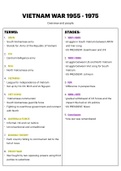
VIETNAM WAR 1955 - 1975
Overview and people
TERMS: STAGES:
1. ARVN 1. 1957 - 1965
- South Vietnamese army - struggle in South Vietnam between ARVN
- Stands for: Army of the Republic of Vietnam and Vier cong
- US PRESIDENT: Eisenhower and JFK
2. CIA
- Central intelligence army 2. 1965 - 1969
- struggle between US and North Vietnam
3. NVA - struggle between Viet cong for South
- North Vietnamese army Vietnam
- US PRESIDENT: Johnson
4. VIETMINH
- League for independence of Vietnam 3. N/A
- Set up by Ho Chi Minh and Vo Nguyen - di erence in perspectives
5. VIET CONG 4. 1969 - 1975
- ‘Vietnamese communists’ - gradual withdrawal of US forces and the
- South Vietnamese guerrilla force impact this had on US politics
- Fighting to overthrow government and connect - US PRESIDENT: Nixon
with North
5. Conclusion
6. GUERRILLA FORCE - how war was remembered
- Informal. Hit and run tactics
- Unconventional and untraditional
7. DOMINO THEORY
- Each country falling to communism led to the
fall of more
8. PROXY WAR
- War fought by two opposing powers using third
parties to substitute
ff
, PEOPLE:
1. Ho Chi Minh
- Founder of Vietnamese communist and
independence movement
- President of North Vietnam
2. General Vo Nguyen Giap
- Ho Chi Minh’s right hand man
- Founder of Vietnamese communist party
- Commander of North Vietnamese Army during
war
3. Ngo Dinh Diem
- President of Republic of Vietnam (south) from 1955
- 1963
- Assassinated by ARVN generals supported by CIA
4. Lyndon B. Johnson
- 36th President of USA 1963 - 1969
- Escalated US involvement in Vietnam to tens of
thousands of combat troops
- Started bombing of North Vietnam
5. Richard Nixon
- 37th President of USA 1969 - 1974
- Initially escalated US forces
- Withdrew US forces by 1973
6. General William Westmoreland
- Commanded US military in Vietnam from 1964 -
1968
- Including during Tet o ensive
- Strategy of attrition against Viet Cong and North
Vietnamese Army
ff
Overview and people
TERMS: STAGES:
1. ARVN 1. 1957 - 1965
- South Vietnamese army - struggle in South Vietnam between ARVN
- Stands for: Army of the Republic of Vietnam and Vier cong
- US PRESIDENT: Eisenhower and JFK
2. CIA
- Central intelligence army 2. 1965 - 1969
- struggle between US and North Vietnam
3. NVA - struggle between Viet cong for South
- North Vietnamese army Vietnam
- US PRESIDENT: Johnson
4. VIETMINH
- League for independence of Vietnam 3. N/A
- Set up by Ho Chi Minh and Vo Nguyen - di erence in perspectives
5. VIET CONG 4. 1969 - 1975
- ‘Vietnamese communists’ - gradual withdrawal of US forces and the
- South Vietnamese guerrilla force impact this had on US politics
- Fighting to overthrow government and connect - US PRESIDENT: Nixon
with North
5. Conclusion
6. GUERRILLA FORCE - how war was remembered
- Informal. Hit and run tactics
- Unconventional and untraditional
7. DOMINO THEORY
- Each country falling to communism led to the
fall of more
8. PROXY WAR
- War fought by two opposing powers using third
parties to substitute
ff
, PEOPLE:
1. Ho Chi Minh
- Founder of Vietnamese communist and
independence movement
- President of North Vietnam
2. General Vo Nguyen Giap
- Ho Chi Minh’s right hand man
- Founder of Vietnamese communist party
- Commander of North Vietnamese Army during
war
3. Ngo Dinh Diem
- President of Republic of Vietnam (south) from 1955
- 1963
- Assassinated by ARVN generals supported by CIA
4. Lyndon B. Johnson
- 36th President of USA 1963 - 1969
- Escalated US involvement in Vietnam to tens of
thousands of combat troops
- Started bombing of North Vietnam
5. Richard Nixon
- 37th President of USA 1969 - 1974
- Initially escalated US forces
- Withdrew US forces by 1973
6. General William Westmoreland
- Commanded US military in Vietnam from 1964 -
1968
- Including during Tet o ensive
- Strategy of attrition against Viet Cong and North
Vietnamese Army
ff


