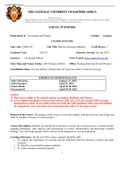
THE CATHOLIC UNIVERSITY OF EASTERN AFRICA
Mission statement:
Inspired by Jesus’ words; Consecrate them in the truth (Jn: 17:17) CUEA seeks to promote scientific research, quality
teaching and community service for the purpose of enhancing Christian living.
SCHOOL OF BUSINESS
Department of Accounting and Finance Campus Langata
COURSE OUTLINE
Unit Code: CMM 325 Unit Title: Business Research Methods Credit Hours: 3
Academic Year: 2021/22 Semester: Second, Jan-Apr 2022
Lecturer: Dr. Kimani Mburu CUEA E-mail:
Class Time and Venue: Friday 2:00-5:00 pm in RH 01 Office: Nsubuga Hall 2nd Flr Staff Room 2
Consultation times: Any day during working hours (8-5 pm) use email or send text message
IMPORTANT SEMESTER DATES
Start of lectures January 17, 2022
End of lectures April 13, 2022
Easter Break April 14-18, 2022
Exam period April 19-29, 2022
NOTES
(1) This course outline is for students taking Accounting, Banking, and Finance
(2) Every student should have access to the course CMM 325 (A, B, &F) on the ODEl learning
management system. If any online classes are held, the ODel platform will be used. In addition,
all assignments, tests, and other class communication will be in the same system.
Purpose of the Course: The purpose of the course is to provide students with the necessary knowledge and
skills to complete a business research project.
Course Description: Students are introduced to business research, the research process, research design,
sampling techniques, data analysis and presentation of results, interpretation and discussing research
findings. The knowledge gained will be used in the development of a research proposal.
Learning Outcomes: By the end of the course, students should be able:
1. To explain the importance of research and the difference between business research and other
research.
2. To identify a researchable business problem.
3. To write a business research proposal
1
, 4. To implement a research proposal by data collection and analysis, interpretation, and drawing
conclusions.
5. Course Content – Details of the course content are provided in the schedule below. The lecturer
reserves the right to make changes in the schedule without prior notice.
Class Contents/ Sub-Topics Recommended Reading Sources
schedule Topics
Week 1 Introductio ▪ What is research? Wilson, J. (2021) Chapter 1
Jan 21 n to ▪ Business research and other Kombo, D. K., & Tromp, D. L.
Business research (2006) Chapter 1.
Research ▪ Why study business research Kothari, C. R. (2007) Chapter 1
Methods methods?
▪ Who does research?
▪ Types of research
▪ Careers in research
Week 2 Business ▪ Approaches to business research Wilson, J. (2021) Chapter 2
Jan 28 Research ▪ Business research process Kothari, C. R. (2007) Chapter 1
▪ SoB business research guidelines
▪ Ethics, planning, action, and
presentation
Week 3 Conducting ▪ Generating research ideas Wilson, J. (2021) Chapter 2
Feb 4 Business ▪ Choosing a research topic Smith, M. (2007) Chapter 2
Research I ▪ Identifying and refining a Kombo, D. K., & Tromp, D. L.
research problem (2006) Chapter 2
▪ Writing a research problem Kothari, C. R. (2007) Chapter 2
backgound
▪ Research objectives and research
questions
Week 4 Conducting ▪ Research variables Kombo, D. K., & Tromp, D. L.
Feb 11 Business ▪ Antecedents and outcomes (2006) Chapter 1
Research II▪ Conceptual framework Creswell, J. W. (2011) Chapter 3
Week 5 Conducting ▪ What is literature review? Creswell, J. W. (2011) Chapter 2-3
Feb 18 Business ▪ Importance of literature review Wilson, J. (2021) Chapter 5
Research ▪ Theoretical and empirical review American Psychological Association
III ▪ Searching literature (APA). (2010) (or a recent edition)
▪ Journal rankings Smith, M. (2007) Chapter 3
▪ Critical literature review Kombo, D. K., & Tromp, D. L.
▪ Referencing styles (2006) Chapter 2-3
▪ Citations
▪ References and Bibliography
▪ Plagiarism
Week 6 Conducting ▪ Research design and Creswell, J. W. (2011) Part II
Feb 25 Business methodology Wilson, J. (2021) Chapter 6 and 9
Research ▪ Population and sample Smith, M. (2007) Chapters 6-9
IV ▪ Selection bias Kombo, D. K., & Tromp, D. L.
▪ Research philosophy (2006) Chapter 4
▪ Research designs, approaches Kothari, C. R. (2007) Chapter 3-5
2
Mission statement:
Inspired by Jesus’ words; Consecrate them in the truth (Jn: 17:17) CUEA seeks to promote scientific research, quality
teaching and community service for the purpose of enhancing Christian living.
SCHOOL OF BUSINESS
Department of Accounting and Finance Campus Langata
COURSE OUTLINE
Unit Code: CMM 325 Unit Title: Business Research Methods Credit Hours: 3
Academic Year: 2021/22 Semester: Second, Jan-Apr 2022
Lecturer: Dr. Kimani Mburu CUEA E-mail:
Class Time and Venue: Friday 2:00-5:00 pm in RH 01 Office: Nsubuga Hall 2nd Flr Staff Room 2
Consultation times: Any day during working hours (8-5 pm) use email or send text message
IMPORTANT SEMESTER DATES
Start of lectures January 17, 2022
End of lectures April 13, 2022
Easter Break April 14-18, 2022
Exam period April 19-29, 2022
NOTES
(1) This course outline is for students taking Accounting, Banking, and Finance
(2) Every student should have access to the course CMM 325 (A, B, &F) on the ODEl learning
management system. If any online classes are held, the ODel platform will be used. In addition,
all assignments, tests, and other class communication will be in the same system.
Purpose of the Course: The purpose of the course is to provide students with the necessary knowledge and
skills to complete a business research project.
Course Description: Students are introduced to business research, the research process, research design,
sampling techniques, data analysis and presentation of results, interpretation and discussing research
findings. The knowledge gained will be used in the development of a research proposal.
Learning Outcomes: By the end of the course, students should be able:
1. To explain the importance of research and the difference between business research and other
research.
2. To identify a researchable business problem.
3. To write a business research proposal
1
, 4. To implement a research proposal by data collection and analysis, interpretation, and drawing
conclusions.
5. Course Content – Details of the course content are provided in the schedule below. The lecturer
reserves the right to make changes in the schedule without prior notice.
Class Contents/ Sub-Topics Recommended Reading Sources
schedule Topics
Week 1 Introductio ▪ What is research? Wilson, J. (2021) Chapter 1
Jan 21 n to ▪ Business research and other Kombo, D. K., & Tromp, D. L.
Business research (2006) Chapter 1.
Research ▪ Why study business research Kothari, C. R. (2007) Chapter 1
Methods methods?
▪ Who does research?
▪ Types of research
▪ Careers in research
Week 2 Business ▪ Approaches to business research Wilson, J. (2021) Chapter 2
Jan 28 Research ▪ Business research process Kothari, C. R. (2007) Chapter 1
▪ SoB business research guidelines
▪ Ethics, planning, action, and
presentation
Week 3 Conducting ▪ Generating research ideas Wilson, J. (2021) Chapter 2
Feb 4 Business ▪ Choosing a research topic Smith, M. (2007) Chapter 2
Research I ▪ Identifying and refining a Kombo, D. K., & Tromp, D. L.
research problem (2006) Chapter 2
▪ Writing a research problem Kothari, C. R. (2007) Chapter 2
backgound
▪ Research objectives and research
questions
Week 4 Conducting ▪ Research variables Kombo, D. K., & Tromp, D. L.
Feb 11 Business ▪ Antecedents and outcomes (2006) Chapter 1
Research II▪ Conceptual framework Creswell, J. W. (2011) Chapter 3
Week 5 Conducting ▪ What is literature review? Creswell, J. W. (2011) Chapter 2-3
Feb 18 Business ▪ Importance of literature review Wilson, J. (2021) Chapter 5
Research ▪ Theoretical and empirical review American Psychological Association
III ▪ Searching literature (APA). (2010) (or a recent edition)
▪ Journal rankings Smith, M. (2007) Chapter 3
▪ Critical literature review Kombo, D. K., & Tromp, D. L.
▪ Referencing styles (2006) Chapter 2-3
▪ Citations
▪ References and Bibliography
▪ Plagiarism
Week 6 Conducting ▪ Research design and Creswell, J. W. (2011) Part II
Feb 25 Business methodology Wilson, J. (2021) Chapter 6 and 9
Research ▪ Population and sample Smith, M. (2007) Chapters 6-9
IV ▪ Selection bias Kombo, D. K., & Tromp, D. L.
▪ Research philosophy (2006) Chapter 4
▪ Research designs, approaches Kothari, C. R. (2007) Chapter 3-5
2