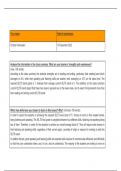
, In the article by Gadd and Phipps (2012), they refer to the challenges faced by psychological and,
specifically, neuropsychological assessment. Their study focused on a preliminary standardisation of the
Wisconsin Card Sorting Test (a non-verbal measure) for Setswana- speaking university students. The US
normative sample is described as participants (N = 899) aged 18 to 29 years who were screened
beforehand to exclude individuals with a history of neurological, learning, emotional and attention
difficulties. The South African sample consisted of university students (N = 93) from both genders,
between the ages of 18 and 29, who were screened in terms of hearing and visual impairments and any
history of psychiatric or neurological difficulties. These students were from the University of Limpopo,
Medunsa Campus. Answer Questions 1 to 8.
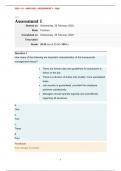
Question 1
There are similarities and differences between the South African and the original norm sample. Given
the purpose of the test, which characteristic(s) implies/imply that the local sample is appropriate?
1) age
2) absence of hearing and visual impairments
3) absence of psychiatric and neurological difficulties
4) all of the above
Question 2
The South African normative sample is not representative of the broader South African population aged
18 to 29 years in terms of …
a) age
b) gender
c) educational level
d) language
1) (a) (b)
2) (a) (c)
3) (c) (d)
4) (b) (d)
Question 3
Which unique characteristic would probably have the greatest effect on the performance of the local
sample in comparison to the original norm sample?
1) age
2) hearing or visual impairments
3) language
4) culture
Question 4
A full standardisation of the Wisconsin Card Sorting Test for the South African population as a whole
would imply a sample that is more representative than the present sample in terms of …
a) age
b) gender
c) educational level
d) language
e) impairments
1) (a) (b) (d)
2) (a) (c) (d)
3) (b) (c) (e)
4) (c) (d) (e)
specifically, neuropsychological assessment. Their study focused on a preliminary standardisation of the
Wisconsin Card Sorting Test (a non-verbal measure) for Setswana- speaking university students. The US
normative sample is described as participants (N = 899) aged 18 to 29 years who were screened
beforehand to exclude individuals with a history of neurological, learning, emotional and attention
difficulties. The South African sample consisted of university students (N = 93) from both genders,
between the ages of 18 and 29, who were screened in terms of hearing and visual impairments and any
history of psychiatric or neurological difficulties. These students were from the University of Limpopo,
Medunsa Campus. Answer Questions 1 to 8.
Question 1
There are similarities and differences between the South African and the original norm sample. Given
the purpose of the test, which characteristic(s) implies/imply that the local sample is appropriate?
1) age
2) absence of hearing and visual impairments
3) absence of psychiatric and neurological difficulties
4) all of the above
Question 2
The South African normative sample is not representative of the broader South African population aged
18 to 29 years in terms of …
a) age
b) gender
c) educational level
d) language
1) (a) (b)
2) (a) (c)
3) (c) (d)
4) (b) (d)
Question 3
Which unique characteristic would probably have the greatest effect on the performance of the local
sample in comparison to the original norm sample?
1) age
2) hearing or visual impairments
3) language
4) culture
Question 4
A full standardisation of the Wisconsin Card Sorting Test for the South African population as a whole
would imply a sample that is more representative than the present sample in terms of …
a) age
b) gender
c) educational level
d) language
e) impairments
1) (a) (b) (d)
2) (a) (c) (d)
3) (b) (c) (e)
4) (c) (d) (e)