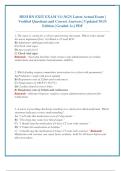
3.1.1 Chapter 3 – Multiple Choice - Questions
1. The following statements are definitions of leadership, except…
1 the process of articulating visions, embodying values and creating the
environment within which things can be accomplished
2 the process of making sense of what people are doing together so that
they will understand and be committed
3 a process of giving purpose to collective effort, and causing willing effort to
be expended to achieve such a purpose
4 the process of planning, organising, leading and controlling the resources
of the organisation
2. The following are important building blocks for successful leadership, except…
1 commitment
2 competencies
3 communication
4 seniority
3. The following are characteristics of organisations that communicate well,
except…
1 top management commitment
2 openness and honesty
3 sufficient time and money
4 one-way approach
4. The traits-based approach of leadership focuses on a number of categories of
traits. Which of the following is not one of these categories?
1 Motivation
2 Physical
3 Social
4 Personality
5. Which leadership model identifies leadership styles that would be effective
across all situations?
1 Transactional-based approach
2 Traits-based approach
3 Situational-based approach
4 Behavioural-based approach
1
, 6. This new leadership model is a combination of both transactional and
transformational leadership:
1 Strategic-based approach
2 Charismatic-based approach
3 Managerial-based approach
4 Behavioural-based approach
7. According to the managerial-based approach of leadership, effective managers
need to be competent in three macro components. Which of the following is not
one of these components?
1 Situational sensitivity component
2 Transactional management component
3 Transformational leadership component
4 Motivational skills component
8. The following are elements of strategic leadership practices for the 21st century,
except…
1 operating primarily through a domestic mindset
2 viewing organisational citizens as a critical resource
3 seeking to release and nurture people's creativity
4 seeking to acquire and leverage knowledge
9. Which one of the following is not, according to Barry, one of the four leadership
functions required for cross-functional teams to solve problems, manage projects
and develop policy?
1 Organising
2 Social integration
3 Envisioning
4 Working within the system
10. Nadler suggests extending the leadership role beyond the individual leader to
create institutionalised leadership. Which of the following will not be included in
institutionalised leadership?
1 The senior team
2 Broader senior management group
3 Labour unions
4 The entire organisation
11. Where transformational leadership seeks to empower and elevate followers,
______________ leadership seeks to keep followers weak and dependent and to
instil personal loyalty rather than commitment to ideals.
2
1. The following statements are definitions of leadership, except…
1 the process of articulating visions, embodying values and creating the
environment within which things can be accomplished
2 the process of making sense of what people are doing together so that
they will understand and be committed
3 a process of giving purpose to collective effort, and causing willing effort to
be expended to achieve such a purpose
4 the process of planning, organising, leading and controlling the resources
of the organisation
2. The following are important building blocks for successful leadership, except…
1 commitment
2 competencies
3 communication
4 seniority
3. The following are characteristics of organisations that communicate well,
except…
1 top management commitment
2 openness and honesty
3 sufficient time and money
4 one-way approach
4. The traits-based approach of leadership focuses on a number of categories of
traits. Which of the following is not one of these categories?
1 Motivation
2 Physical
3 Social
4 Personality
5. Which leadership model identifies leadership styles that would be effective
across all situations?
1 Transactional-based approach
2 Traits-based approach
3 Situational-based approach
4 Behavioural-based approach
1
, 6. This new leadership model is a combination of both transactional and
transformational leadership:
1 Strategic-based approach
2 Charismatic-based approach
3 Managerial-based approach
4 Behavioural-based approach
7. According to the managerial-based approach of leadership, effective managers
need to be competent in three macro components. Which of the following is not
one of these components?
1 Situational sensitivity component
2 Transactional management component
3 Transformational leadership component
4 Motivational skills component
8. The following are elements of strategic leadership practices for the 21st century,
except…
1 operating primarily through a domestic mindset
2 viewing organisational citizens as a critical resource
3 seeking to release and nurture people's creativity
4 seeking to acquire and leverage knowledge
9. Which one of the following is not, according to Barry, one of the four leadership
functions required for cross-functional teams to solve problems, manage projects
and develop policy?
1 Organising
2 Social integration
3 Envisioning
4 Working within the system
10. Nadler suggests extending the leadership role beyond the individual leader to
create institutionalised leadership. Which of the following will not be included in
institutionalised leadership?
1 The senior team
2 Broader senior management group
3 Labour unions
4 The entire organisation
11. Where transformational leadership seeks to empower and elevate followers,
______________ leadership seeks to keep followers weak and dependent and to
instil personal loyalty rather than commitment to ideals.
2