reproduction in vertebrate
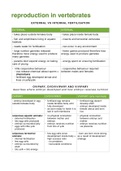
E X T E R N A L V S I N T E R N A L F E R T I L I S AT I O N
EXTERNAL INTERNAL
- takes place outside females body - takes place inside female body
- fish and amphibians living in aquatic - insects and terrestrial verterates
habitats
- needs water for fertilisation - can occur in any environment
- large number gametes released - fewer games produced therefore less
therefore more energy used to produce energy used to produce gametes
many gametes
- parents dont expend energy on taking - energy spent on ensuring fertilisation
care of young
- little cooperative behaviou - cooperative behaviour required
- ova release chemical attract sperm = between males and females
chemotaxi
- fertilised egg developed larvae and
lives on jelly/yolk
O V I PA RY, O V O V I V I PA RY A N D V I V I PA RY
describes where embryo developed and how embryo receives nutritio
OVIPARY OVOVIVIPARY VIVIPARY (only mammals)
- embryo developed in egg - fertilised egg remains - fertilised egg doesn't
outside females body inside females body until develop shel
fully developed - embryo developed inside
- as soon ready to hatch it is female uterus and born
laid in soft membrane live
oviparous aquatic animals - no physical connection - physical connection
- external fertilisatio between mother and between embryo and
- lots egg cells produce embry mothe
- embryo surrounded jell - embryo receives nutrition - embryo receives nutrition
- eggs with little yolk from lots of yolk via placenta
produced
oviparous terrestrial - few egg cells since - born are born more strong
animals development inside body = as a result of development
- internal fertilisatio high success rati strategy
- few egg cell - no predator
- embryo surrounded by - favourable conditions
shel
- lots yolk = lots energy
l
o
r
:
s
l
s
s
o
n
n
d
y
:
r
s
n
E X T E R N A L V S I N T E R N A L F E R T I L I S AT I O N
EXTERNAL INTERNAL
- takes place outside females body - takes place inside female body
- fish and amphibians living in aquatic - insects and terrestrial verterates
habitats
- needs water for fertilisation - can occur in any environment
- large number gametes released - fewer games produced therefore less
therefore more energy used to produce energy used to produce gametes
many gametes
- parents dont expend energy on taking - energy spent on ensuring fertilisation
care of young
- little cooperative behaviou - cooperative behaviour required
- ova release chemical attract sperm = between males and females
chemotaxi
- fertilised egg developed larvae and
lives on jelly/yolk
O V I PA RY, O V O V I V I PA RY A N D V I V I PA RY
describes where embryo developed and how embryo receives nutritio
OVIPARY OVOVIVIPARY VIVIPARY (only mammals)
- embryo developed in egg - fertilised egg remains - fertilised egg doesn't
outside females body inside females body until develop shel
fully developed - embryo developed inside
- as soon ready to hatch it is female uterus and born
laid in soft membrane live
oviparous aquatic animals - no physical connection - physical connection
- external fertilisatio between mother and between embryo and
- lots egg cells produce embry mothe
- embryo surrounded jell - embryo receives nutrition - embryo receives nutrition
- eggs with little yolk from lots of yolk via placenta
produced
oviparous terrestrial - few egg cells since - born are born more strong
animals development inside body = as a result of development
- internal fertilisatio high success rati strategy
- few egg cell - no predator
- embryo surrounded by - favourable conditions
shel
- lots yolk = lots energy
l
o
r
:
s
l
s
s
o
n
n
d
y
:
r
s
n