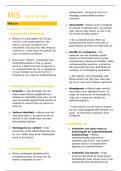
Abbreviations:
AA = Administrative Action JA = Judge of the Supreme Court of Appeal
OotS = Organ of the State MEC = Member of the Provincial Council
B = Supreme Court of Bophuthatswana P = President of the Supreme Court of Appeal
CC = Constitutional Court PAJA = Promotion of Administrative Justice Act 3 of 2000
BCLR = Butterworths Constitutional Law Reports RA = Appeal Court of Rhodesia (now Zimbabwe)
CJ = Chief Justice SCA = Supreme Court of Appeal
J = Judge
4 Key features of administrative law
• The public power - state authority - that is exercised by an organ of
state / natural or juristic person over another person/body in a
State Autority
subordinate position. The exercise of such STATE authority could
affect the rights/interests of the last-mentioned
• The conduct of state officials (administrators) when exercising a
Administrative Action
public power / performing a public function ito legislation
• The manner in which AA must be performed in exercising state
authority by the OotS / natural or juristic person.
• The Constitution states that all administrators exercising public
power must:
Just Administrative • act lawfully - must comply with requirements of the law
Action
• act reasonably - decision must be objective and sound
• must follow procedures that are fair
• must provide written reasons when rights of a person are
adversely affected
Control of • Means of correcting / rectifying AA that is not just/fair
Administrative Action • What is the remedy?
What is administrative law?
Administrative law forms part of public law
It regulates the activities of OotS and natural/juristic persons that exercise public powers / perform public
functions
Regulating the activities of OotS and natural/juristic persons include prescribing the procedures to be
followed when public powers are exercised or public functions are performed
Ensuring that such action is within boundaries of the law
Regulating also includes control over such action
Exam Study Notes for ADL 2601 Nov 2013 1
AA = Administrative Action JA = Judge of the Supreme Court of Appeal
OotS = Organ of the State MEC = Member of the Provincial Council
B = Supreme Court of Bophuthatswana P = President of the Supreme Court of Appeal
CC = Constitutional Court PAJA = Promotion of Administrative Justice Act 3 of 2000
BCLR = Butterworths Constitutional Law Reports RA = Appeal Court of Rhodesia (now Zimbabwe)
CJ = Chief Justice SCA = Supreme Court of Appeal
J = Judge
4 Key features of administrative law
• The public power - state authority - that is exercised by an organ of
state / natural or juristic person over another person/body in a
State Autority
subordinate position. The exercise of such STATE authority could
affect the rights/interests of the last-mentioned
• The conduct of state officials (administrators) when exercising a
Administrative Action
public power / performing a public function ito legislation
• The manner in which AA must be performed in exercising state
authority by the OotS / natural or juristic person.
• The Constitution states that all administrators exercising public
power must:
Just Administrative • act lawfully - must comply with requirements of the law
Action
• act reasonably - decision must be objective and sound
• must follow procedures that are fair
• must provide written reasons when rights of a person are
adversely affected
Control of • Means of correcting / rectifying AA that is not just/fair
Administrative Action • What is the remedy?
What is administrative law?
Administrative law forms part of public law
It regulates the activities of OotS and natural/juristic persons that exercise public powers / perform public
functions
Regulating the activities of OotS and natural/juristic persons include prescribing the procedures to be
followed when public powers are exercised or public functions are performed
Ensuring that such action is within boundaries of the law
Regulating also includes control over such action
Exam Study Notes for ADL 2601 Nov 2013 1