Topic 10: Alkanes
Fractional distillation of crude oil
Crude oil is a mixture of different hydrocarbons. It can be separated into the separate
molecules by fractional distillation as the different chain lengths of molecules result in them
having different boiling points.
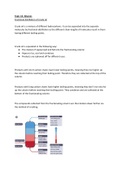
Crude oil is separated in the following way:
● The mixture if vapourised and fed into the fractionating column
● Vapours rise, cool and condense.
● Products are siphoned off for different uses.
Products with short carbon chains have lower boiling points, meaning they rise higher up
the column before reaching their boiling point. Therefore they are collected at the top of the
column.
Products with long carbon chains have higher boiling points, meaning they don’t rise very far
up the column before reaching their boiling point. They condense and are collected at the
bottom of the fractionating column.
The compounds collected from the fractionating column are then broken down further via
the method of cracking.
Fractional distillation of crude oil
Crude oil is a mixture of different hydrocarbons. It can be separated into the separate
molecules by fractional distillation as the different chain lengths of molecules result in them
having different boiling points.
Crude oil is separated in the following way:
● The mixture if vapourised and fed into the fractionating column
● Vapours rise, cool and condense.
● Products are siphoned off for different uses.
Products with short carbon chains have lower boiling points, meaning they rise higher up
the column before reaching their boiling point. Therefore they are collected at the top of the
column.
Products with long carbon chains have higher boiling points, meaning they don’t rise very far
up the column before reaching their boiling point. They condense and are collected at the
bottom of the fractionating column.
The compounds collected from the fractionating column are then broken down further via
the method of cracking.