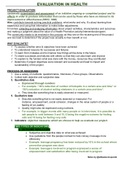
EVALUATION IN HEALTH
PROJECT EVALUATION
systematic examination and assessment of an initiative ongoing or completed project and its
effects in order to produce information that can be used by those who have an interest in its
improvement or effectiveness (WHO, 1998)
Aim: contribute towards solving practical problems: what works and why. It’s about learning from
experience and using that information to make better adjustments.
It involves collecting and analyzing information about project activities, characteristics and outcomes
and making a judgment about the value of a Health Promotion activity/intervention/program.
The community needs to be involved in this process as they are on the receiving end of the project
and we need to determine if the project was actually to their benefit or not.
WHY EVALUATE?
To assess whether aims & objectives have been achieved
To understand reasons for successes and failures
To learn from mistakes and to improve how things will be done in the future
To share successes and failures with others so that they can also learn and improve
To explain to the funders what was done with the money, resources they contributed
Determine if project objectives were relevant and successful and lead to impact and
sustainability of the project
PROCESS OF ASSESSING
1. Use a variety of methods: questionnaires, Interviews, Focus groups, Observations
2. Collect both objective and subjective data
3. Quantitative data
Expressed through numbers
For example: “30% reduction of number of hotspots in a certain area and time” or
“50% reduction of alcohol selling shebeens in a certain area and time”.
They describe something that is easily observed or measured.
4. Qualitative data
Describe something that is not easily observed or measured. For
instance, empowerment, social cohesion, changes in the value system of people or a
feeling of (un-)safety.
Quality might also be expressed using numbers.
For example, in bigger events with many people or in interviews, it is possible to
ask people to rank between 0 and 10, 0 being the negative extreme for feeling
safe and 10 being for feeling very safe.
5. Indicators: objective measures which we choose to help us evaluate our project.
TWO TYPES OF INDICATORS
A. OUTCOME INDICATORS
Subjective and objective data on what was achieved
Use quotations from the people involved to help convey message more
effectively
Example: teenage pregnancy has been reduced by 10% in the school where
prevention program was done
Example: teenagers involved in program expressed a sense of
empowerment and satisfaction after being involved in program
Notes by @silibazisomupereki
PROJECT EVALUATION
systematic examination and assessment of an initiative ongoing or completed project and its
effects in order to produce information that can be used by those who have an interest in its
improvement or effectiveness (WHO, 1998)
Aim: contribute towards solving practical problems: what works and why. It’s about learning from
experience and using that information to make better adjustments.
It involves collecting and analyzing information about project activities, characteristics and outcomes
and making a judgment about the value of a Health Promotion activity/intervention/program.
The community needs to be involved in this process as they are on the receiving end of the project
and we need to determine if the project was actually to their benefit or not.
WHY EVALUATE?
To assess whether aims & objectives have been achieved
To understand reasons for successes and failures
To learn from mistakes and to improve how things will be done in the future
To share successes and failures with others so that they can also learn and improve
To explain to the funders what was done with the money, resources they contributed
Determine if project objectives were relevant and successful and lead to impact and
sustainability of the project
PROCESS OF ASSESSING
1. Use a variety of methods: questionnaires, Interviews, Focus groups, Observations
2. Collect both objective and subjective data
3. Quantitative data
Expressed through numbers
For example: “30% reduction of number of hotspots in a certain area and time” or
“50% reduction of alcohol selling shebeens in a certain area and time”.
They describe something that is easily observed or measured.
4. Qualitative data
Describe something that is not easily observed or measured. For
instance, empowerment, social cohesion, changes in the value system of people or a
feeling of (un-)safety.
Quality might also be expressed using numbers.
For example, in bigger events with many people or in interviews, it is possible to
ask people to rank between 0 and 10, 0 being the negative extreme for feeling
safe and 10 being for feeling very safe.
5. Indicators: objective measures which we choose to help us evaluate our project.
TWO TYPES OF INDICATORS
A. OUTCOME INDICATORS
Subjective and objective data on what was achieved
Use quotations from the people involved to help convey message more
effectively
Example: teenage pregnancy has been reduced by 10% in the school where
prevention program was done
Example: teenagers involved in program expressed a sense of
empowerment and satisfaction after being involved in program
Notes by @silibazisomupereki