Bios256 Final Exam Review study guide
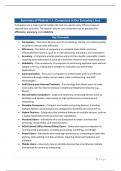
Midterm Review Chapter 24: The Digestive System • Functions of the Digestive System o Ingesting: taking food into mouth o Secretion: release of water, acid, buffers, and enzymes into lumen of GI tract. o Mixing and propulsion: churning and movement of food through GI tract. o Digestion: mechanical and chemical breakdown of food o Absorption: passage of digestion products from GI tract into blood and lymph o Defecation: elimination of feces from GI tract. • Overview of the Digestive System o Digestive System: consist of a group of organs that break down the food we eat into smaller molecules that can be use by body cells. o Gastrointestinal (GI) tract organs (alimentary canal): it is a continuous tube that extends from the mouth to the anus through the thoracic and abdominopelvic cavities. ▪ Organs include: mouth, most of pharynx, esophagus, stomach, small intestine, large intestine, rectum o Accessory digestive organs: includes teeth, tongue, salivary glands, liver, gallbladder, and pancreas o GI tract organs breaks down the food and help in digestion and accessory digestive organs provides enzymes and hormones as well as buffers and ions that line the tract break down the food chemically. • Digestive Processes- 6 basic processes o Ingestion: involves taking foods and liquids into the mouth (eating) o Secretion: everyday the cells within the walls of the GI tract and accessory digestive organs secrete total of about 7 liters of water, acid, buffers, and enzymes into the lumen of the tract. In this process saliva moisten dry food and contain salivary amylase which is a digestive enzyme that begins the digestion of carbohydrates. o Mobility (mixing and propulsion): alternating contractions and relaxations of smooth muscle in the walls of GI tract mix food and secretions and move them towards the anus. This capability of the GI tract to mix and move material along its length is called mobility. o Digestion: which is the process of breaking down ingested food into small molecules that can be used by body cells. mechanical digestion: the physical breakdown of large pieces of food into smaller pieces. The teeth cut and grind food before it is swallowed, and then smooth muscles of the stomach and small intestine churn the food to further assist the process, as a result, food molecules become dissolved and thoroughly mixed with digestive enzymes. Chemical digestion: begins in the moth with salivary amylase in saliva splitting complex carbohydrates into simple form. During the process the large carbohydrate, lipid, protein, and nucleic acid molecules in food split into smaller molecules by hydrolysis. Digestive enzymes produced by the salivary gland, tongue, stomach, pancreas, and small intestine catalyze these catabolic reactions. o Absorption: the movement of the products of digestion from the lumen of the GI tract into blood or lymph. Once absorbed, these substances circulate the cells throughout the body. A few substances in food can be absorbed without undergoing digestion. These include vitamins, ions, cholesterol, and water. o Defecation: removes indigestible substance from the body so that they do not accumulate inside the gut. The eliminated material is called feces or stool. The timing of defecation is controlled voluntarily by the conscious part of the brain but must be accomplished on a regular basis to prevent a backup if indigestible materials. • Layers of the GI tract- Structure and Function o The four layers of the tract from deep to superficial are the Mucosa, Submucosa, Muscularis, and Serosa/adventitia. o Mucosa: the inner lining of the GI tract, it is composed of a layer of epithelium in direct contact with the contents of the GI tract and a layer of connective tissue called the lamina propria and also a thing layer of smooth muscle. ▪ Epithelium: function in protection, secretion and absorption and lines the stomach and intestines. Among epithelial cells, exocrine cells are located, and it secrete mucus and fluid into the lumen of the tract, and several types of endocrine cells, collectively called enteroendocrine cells, which secrete hormones. ▪ Lamina propria: supports the epithelium and binds it to the muscularis mucosa. It also contains the majority of the cells of the mucosa-associated lymphatic tissue (MALT). These prominent lymphatic nodules contain immune system cells that protect against disease. MALT is present all along the GI tract, especially in tonsils, small intestines, appendix, and large intestines. ▪ Muscularis Mucosae: throws the mucous membrane of the stomach and small intestine into many small folds, which increase the surface area for digestion and absorption. o Submucosa: contains many blood and lymphatic vessels that receive absorbed food molecules. Also located in the submucosa is an extensive network of neurons known as the submucosal plexus. It may also contain glands and lymphatic tissue. o Muscularis: the muscularis of the mouth, pharynx, and superior and middle part of the esophagus contains skeletal muscle that produces voluntary swallowing. The skeletal muscle also forms the external anal sphincter which permits voluntary control of defecation. The smooth muscle is generally found in two sheets: circular fibers and longitudinal fibers. Involuntary contractions of the smooth muscle help break ...........................................continued......................................................
Written for
- Institution
- Chamberlain College Of Nursing
- Course
- BIOS 256 (BIOS256)
Document information
- Uploaded on
- June 16, 2021
- Number of pages
- 99
- Written in
- 2020/2021
- Type
- OTHER
- Person
- Unknown
Subjects
-
bios256 final exam review
-
functions of the digestive system
-
digestion mechanical and chemical breakdown of food