

FOOD RELATED CONSUMER
ISSUES
GENETICALLY MODIFIED FOODS
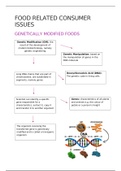
Genetic Modification (GM): the
result of the development of
modern biotechnology, namely
genetic engineering
Genetic Manipulation: based on
the manipulation of genes in the
DNA molecule
Long DNA chains that are part of Deoxyribonucleic Acid (DNA):
chromosomes, are subdivided in The genetic code in living cells
segments, namely genes
Scientist can identify a specific Genes: characteristics of all plants
gene responsible for a and animals e.g. the colour of
characteristics, extract it, copy it petals or a person’s height
and transfer it to another organism
The organism receiving the
transferred gene is genetically
modified and is called a transgenic
organism
,Top 10 genetically modified foods
1. Corn
2. Soy
3. Cotton
4. Papaya
5. Rice
6. Rapeseed (canola)
7. Potatoes
8. Tomatoes
9. Dairy products
10. Peas
ADVANTAGES FOR FARMERS, MANUFACTURERS AND
CONSUMERS
Crops are more pest resistance
- The need for pesticides is thus reduced
- Beneficial to the environment as less chemicals are being used
- Production costs are lowered, because less time and implements are needed
to spray crops
Crops are more resistant to herbicides
- Can be used effectively without harming the crop itself
Crops can be more resistant to disease and unfavourable conditions
- Can survive extreme temperatures, drought and frost
- Can grow in unproductive soil e.g. alkaline soil or marshes
- Areas with a low agriculture potential can be utilised to grow these crops
Crop yield and production of meat, eggs and milk improve
- Improves food security in a world with a rising human population
Increased shelf life
Have an improved processing and manufacturing characteristics
Cheaper due to the lower production costs
More plentiful
Some characteristics of GM crops can be improved
- Appearance , size, firmness, juiciness, seedlessness, taste and texture
, Can be more nutritious
- “golden rice” that has a high vitamin A content can play a role in fighting
malnutrition in developing countries
Can possibly use to make edible vaccines
- Some GM sheep produce a human protein in their milk that can be extracted
and used in the treatment of some lung diseases
- Bacteria and other micro-organism can be used in the manufacture of
medicines
Disadvantages of GM crops
Some people have allergic reactions to GM foods
- A protein causing allergies may be inserted into previously non-allergenic food
and this may cause an allergic reaction
The effect of transferred genes in other products is still unclear
Resistance to antibiotics
- If GM foods that are resistant to diseases and viruses are regularly
consumed, a person could become resistant to the effective treatment of
antibiotics
The negative impact of transferred genes on organisms in the environment
- Impact can be unpredictable and potentially uncontrollable
- GM plants and animals could be become super organism which would could
natural animal and plant species to die out
- GM can grow more quickly and be slaughtered at younger age
Summary of GMOs Advantages and Disadvantages
Positives Negatives
The food is of better quality and Genetically modifying foods can lead
taste as the flavours can be to environmental damage as plants
enhanced. and animals are grown and raised in
environments that would not
The food has a greater resistance normally sustain them, thus
to disease. damaging that environment.
Increased nutritional value of the Consumption of GMO’s increases the
foods as vitamins and minerals risk of individuals forming food-based
can be added to them. allergies.
Less herbicides and pesticides Cross pollination (the pollen from
can be used due to the greater modified plants mixes with the pollen
yield of food
ISSUES
GENETICALLY MODIFIED FOODS
Genetic Modification (GM): the
result of the development of
modern biotechnology, namely
genetic engineering
Genetic Manipulation: based on
the manipulation of genes in the
DNA molecule
Long DNA chains that are part of Deoxyribonucleic Acid (DNA):
chromosomes, are subdivided in The genetic code in living cells
segments, namely genes
Scientist can identify a specific Genes: characteristics of all plants
gene responsible for a and animals e.g. the colour of
characteristics, extract it, copy it petals or a person’s height
and transfer it to another organism
The organism receiving the
transferred gene is genetically
modified and is called a transgenic
organism
,Top 10 genetically modified foods
1. Corn
2. Soy
3. Cotton
4. Papaya
5. Rice
6. Rapeseed (canola)
7. Potatoes
8. Tomatoes
9. Dairy products
10. Peas
ADVANTAGES FOR FARMERS, MANUFACTURERS AND
CONSUMERS
Crops are more pest resistance
- The need for pesticides is thus reduced
- Beneficial to the environment as less chemicals are being used
- Production costs are lowered, because less time and implements are needed
to spray crops
Crops are more resistant to herbicides
- Can be used effectively without harming the crop itself
Crops can be more resistant to disease and unfavourable conditions
- Can survive extreme temperatures, drought and frost
- Can grow in unproductive soil e.g. alkaline soil or marshes
- Areas with a low agriculture potential can be utilised to grow these crops
Crop yield and production of meat, eggs and milk improve
- Improves food security in a world with a rising human population
Increased shelf life
Have an improved processing and manufacturing characteristics
Cheaper due to the lower production costs
More plentiful
Some characteristics of GM crops can be improved
- Appearance , size, firmness, juiciness, seedlessness, taste and texture
, Can be more nutritious
- “golden rice” that has a high vitamin A content can play a role in fighting
malnutrition in developing countries
Can possibly use to make edible vaccines
- Some GM sheep produce a human protein in their milk that can be extracted
and used in the treatment of some lung diseases
- Bacteria and other micro-organism can be used in the manufacture of
medicines
Disadvantages of GM crops
Some people have allergic reactions to GM foods
- A protein causing allergies may be inserted into previously non-allergenic food
and this may cause an allergic reaction
The effect of transferred genes in other products is still unclear
Resistance to antibiotics
- If GM foods that are resistant to diseases and viruses are regularly
consumed, a person could become resistant to the effective treatment of
antibiotics
The negative impact of transferred genes on organisms in the environment
- Impact can be unpredictable and potentially uncontrollable
- GM plants and animals could be become super organism which would could
natural animal and plant species to die out
- GM can grow more quickly and be slaughtered at younger age
Summary of GMOs Advantages and Disadvantages
Positives Negatives
The food is of better quality and Genetically modifying foods can lead
taste as the flavours can be to environmental damage as plants
enhanced. and animals are grown and raised in
environments that would not
The food has a greater resistance normally sustain them, thus
to disease. damaging that environment.
Increased nutritional value of the Consumption of GMO’s increases the
foods as vitamins and minerals risk of individuals forming food-based
can be added to them. allergies.
Less herbicides and pesticides Cross pollination (the pollen from
can be used due to the greater modified plants mixes with the pollen
yield of food



