

Meganandalvin
On this page, you find all documents, package deals, and flashcards offered by seller meganandalvin.
- 14
- 0
- 2
Community
- Followers
- Following
16 items
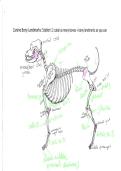
Canine Bony Landmarks Skeleton and labelled
Canine Bony Landmarks Skeleton and labelled - main bones and landmarks needed for anatomy knowledge and palpation skills
- Package deal
- Lecture notes
- • 1 pages •
Canine Bony Landmarks Skeleton and labelled - main bones and landmarks needed for anatomy knowledge and palpation skills
Canine and Equine lecture notes
includes canine nerve injuries, canine and equine RRE notes and equine h-wave notes
- Package deal
- • 3 items •
- Advanced Physiotherapeutic Techniques Lecture Notes • Lecture notes
- Canine Common Nerve injuries to forelimb and hindlimb • Lecture notes
- Equine Electrotherapy H-wave notes • Lecture notes
includes canine nerve injuries, canine and equine RRE notes and equine h-wave notes
Equine Electrotherapy H-wave notes
H-Wave electrotherapy uses a bipolar, exponentially decaying waveform for deep, non-fatiguing stimulation. It targets type I muscle fibres and smooth muscle, improving pain control and lymphatic drainage. By mimicking the H-reflex, it enhances microcirculation, reduces oedema, and supports tissue healing when applied safely and progressively.
- Package deal
- Lecture notes
- • 2 pages •
H-Wave electrotherapy uses a bipolar, exponentially decaying waveform for deep, non-fatiguing stimulation. It targets type I muscle fibres and smooth muscle, improving pain control and lymphatic drainage. By mimicking the H-reflex, it enhances microcirculation, reduces oedema, and supports tissue healing when applied safely and progressively.
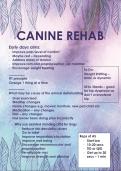
Colourful one page short tips for canine remedial exercises
Colourful one page short tips for canine remedial exercises, short term aims and application of exercises.
- Lecture notes
- • 1 pages •
Colourful one page short tips for canine remedial exercises, short term aims and application of exercises.
Canine Common Nerve injuries to forelimb and hindlimb
Canine peripheral nerve injuries cause characteristic gait and postural abnormalities. Suprascapular, radial, musculocutaneous, median, ulnar, femoral, sciatic, and peroneal nerves have specific origins, injury mechanisms, and clinical signs. Severity ranges from temporary neurapraxia to axonal damage, with recovery dependent on extent, location, and appropriate management or surgical intervention.
- Package deal
- Lecture notes
- • 3 pages •
Canine peripheral nerve injuries cause characteristic gait and postural abnormalities. Suprascapular, radial, musculocutaneous, median, ulnar, femoral, sciatic, and peroneal nerves have specific origins, injury mechanisms, and clinical signs. Severity ranges from temporary neurapraxia to axonal damage, with recovery dependent on extent, location, and appropriate management or surgical intervention.
Advanced Physiotherapeutic Techniques Lecture Notes
Lunging and long-reining improve equine fitness, balance, strength, and bone development without a rider, supporting preparation for ridden work. Lunging enhances rhythm and self-carriage, while long-reining develops straightness and posture. Both have contraindications, particularly for horses with joint, tendon, neurological, or spinal conditions.
- Package deal
- Lecture notes
- • 2 pages •
Lunging and long-reining improve equine fitness, balance, strength, and bone development without a rider, supporting preparation for ridden work. Lunging enhances rhythm and self-carriage, while long-reining develops straightness and posture. Both have contraindications, particularly for horses with joint, tendon, neurological, or spinal conditions.