Bones and joints - Study guides, Revision notes & Summaries

Looking for the best study guides, study notes and summaries about Bones and joints? On this page you'll find 70 study documents about Bones and joints.

All 70 results

Sort by:
FM COMAT | Questions and Correct Answers | Latest Update 2024/2025 | Graded A+
  • Exam (elaborations)

    FM COMAT | Questions and Correct Answers | Latest Update 2024/2025 | Graded A+

  • FM COMAT | Questions and Correct Answers | Latest Update 2024/2025 | Graded A+ A 60-year-old female presents to her primary care physician with hip pain which she reports is worse at the end of the day. Vital signs are obtained as follows: Height 1.32 m (60 in) Weight 104 kg (230 lbs) Temperature 37.6ºC (99.8ºF) Blood Pressure 135/85 mmHg Pulse 88/min Respiration 18/min O2 saturation 98% Physical examination reveals decreased range of motion in her affected joints and deformity o...
  • AdelineJean
    £9.68 More Info
Unit 8 - Physiology of Human Body Systems - Assignment A (Distinction) Unit 8 - Physiology of Human Body Systems - Assignment A (Distinction)
  • Essay

    Unit 8 - Physiology of Human Body Systems - Assignment A (Distinction)

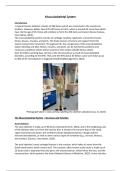
  • Hey! This is my first assignment for Unit 8 of the BTEC Level 3 Applied Science course, all about the musculoskeletal system. It covers the structure and function of bones, muscles, and joints, along with some common disorders and their treatments. I was really proud to achieve a Distinction for this work, and I hope it can help guide you too! Just a little reminder — please use this as a reference only and don’t copy it directly, as that could count as plagiarism. Good luck with your stud...
  • emziee
    £8.99 More Info
Cosmetology STATE BOARDS Wisconsin Already Graded A+
  • Exam (elaborations)

    Cosmetology STATE BOARDS Wisconsin Already Graded A+

  • Cosmetology STATE BOARDS Wisconsin Already Graded A+ 1. What branch of science focuses on the study of tiny living organisms? Answer: Microbiology. 2. What type of organism has only one cell? Answer: Bacteria. 3. Which bacteria do not cause disease? Answer: Non-pathogenic bacteria. 4. What type of bacteria causes infection and diseases? Answer: Pathogenic bacteria. 5. What shape do cocci bacteria have? Answer: Round. 6. Which bacteria grow in bunches? Answer: Staphylococc...
  • bestscores1
    £7.96 More Info
Anatomy And Physiology From Science to Life, 2nd Edition by Jenkins, Gail - Test Bank
  • Exam (elaborations)

    Anatomy And Physiology From Science to Life, 2nd Edition by Jenkins, Gail - Test Bank

  • 1. Which of the following tissues is always avascular? A) connective tissue D) epithelial tissue B) muscle tissue E) nervous tissue C) skeletal tissue Ans:  D Difficulty:  Medium 2. A scientist who examines tissue changes that might indicate disease is called a A) histologist. D) epidemologist B) radiologist. E) endocrinologist. C) pathologist. Ans:  C Difficulty:  Easy 3. The tissue lining body cavities is A) epithelial tissue. D) m...
  • ExamsExpert
    £15.99 More Info
ANATOMY AND PHYSIOLOGY STUDY GUIDE UPDATED QUESTIONS AND ANSWERS
  • Exam (elaborations)

    ANATOMY AND PHYSIOLOGY STUDY GUIDE UPDATED QUESTIONS AND ANSWERS

  • ANATOMY AND PHYSIOLOGY STUDY GUIDE UPDATED QUESTIONS AND ANSWERSWhich skeletal system is includes the ribs, sternum, skull, and vertebral column? (the center part of the skeleton) - CORRECT ANSWERAxial Skeleton Christian was hit on the head by a football. How does the skeletal system help prevent injury? The elastic bones of the skull help the skull reshape itself to prevent breakage. The fused bones of the skull lessen the impact on the brain. The spongy bones of the skull cause the b...
  • StudyAceHub
    £8.13 More Info
BIO 210 Final Exam Review Already Graded A+
  • Exam (elaborations)

    BIO 210 Final Exam Review Already Graded A+

  • BIO 210 Final Exam Review Already Graded A+ Define Homeostasis. - The existence and maintenance of a relatively constant internal environment within the body. What does the lymphatic system do, and what are its components? - The lymphatic system removes foreign substances from the blood and lymph, combats disease, maintains tissue fluid balance, and transports fats from the digestive tract. It consists of lymphatic vessels, lymph nodes, and lymphatic organs. What is the primary functio...
  • bestscores1
    £7.96 More Info
PRAXIS 5005 Science Already Rated A+
  • Exam (elaborations)

    PRAXIS 5005 Science Already Rated A+

  • PRAXIS 5005 Science Already Rated A+ 1. Scientific Method What is the general process of scientific inquiry? A. Hypothesis, prediction, test, analysis B. Question, hypothesis, prediction, test C. Question, analysis, test, hypothesis D. Hypothesis, analysis, prediction Answer: A. Hypothesis, prediction, test, analysis 2. Units of Measurement What are the three basic units of measurement in the metric system? A. Meter, liter, gram B. Centimeter, milliliter, milligram C. Kil...
  • bestscores1
    £7.96 More Info
ANAT-301 | Ultimate Anatomy & Physiology Master Guide – Joints, Muscles, and Nervous System Made Simple
  • Exam (elaborations)

    ANAT-301 | Ultimate Anatomy & Physiology Master Guide – Joints, Muscles, and Nervous System Made Simple

  • Master human anatomy the smart way with this detailed, exam-ready Anatomy & Physiology guide that covers everything from joint classifications and muscle origins to nerve functions and brain structures. Designed for medical, nursing, and pre-med students, this resource breaks down complex concepts into clear Q&A format—perfect for study groups, flashcards, or last-minute review. Learn how muscles move bones, how synovial joints work, and how the nervous system controls every action with clarit...
  • linusomondi
    £10.85 More Info
Rasmussen Pathophysiology Exam 1 Verified Solutions
  • Exam (elaborations)

    Rasmussen Pathophysiology Exam 1 Verified Solutions

  • Rasmussen Pathophysiology Exam 1 Verified Solutions 1. What is the function of mitochondria? - Mitochondria are known as the powerhouse of the cell and are primarily responsible for ATP production and cellular respiration. 2. What characterizes rough endoplasmic reticulum (Rough ER)? - The rough endoplasmic reticulum is distinguished by being studded with ribosomes. 3. What is smooth endoplasmic reticulum (Smooth ER)? - The smooth endoplasmic reticulum is the portion of the endopla...
  • bestscores1
    £8.96 More Info
Unit 8 - Musculoskeletal System (achieved DISTINCTION)
  • Essay

    Unit 8 - Musculoskeletal System (achieved DISTINCTION)

  • Detailed assignment (achieved DISTINCTION), including: ~ introduction ~ human skeleton ~ axial and appendicular ~ bones (all types) ~ planes of movement ~ joint types ~ anatomy of synovial joints ~ muscles ~ sliding filament theory ~ slow vs fast twitch ~ skeletomuscular disorder (tendinitis, carpal tunnel syndrome, osteoarthritis)
  • shahans2704
    £14.24 More Info
Get paid weekly? You can!
That summary you just bought made someone very happy. Also get paid weekly? Sell your revision notes on Stuvia!