
Exam (elaborations)
Coursework Unit 14 Physiological Conditions, graded at distinction. Detailed Care Plan.
NewCoursework Unit 14 Physiological Conditions, graded at distinction. Covering type 2 diabetes and Parkinson's
 oliviaslade
Exam (elaborations)
Coursework LAC unit 14 Physiological Conditions
NewFully referenced coursework unit 14, graded at distinction level
oliviaslade
Exam (elaborations)
Unit 14 LAB Coursework Physiological Conditions
NewFully referenced coursework unit 14 LAB
oliviaslade
Exam (elaborations)
Unit 14 Physiological Disorders Health and Social Care
NewFully referenced coursework, graded at distinction level.
oliviaslade

Essay
Unit 14 - Learning Aim A p1 and M1
Learning Aim A focuses on examining different types of physiological disorders and the processes used to diagnose them. Physiological disorders are medical conditions that affect the normal functioning of the body’s organs and systems. In this part of the unit, you will learn about a range of disorders such as diabetes, asthma, coronary heart disease, and others that may affect the respiratory, circulatory, digestive, or endocrine systems. You will explore the causes of these conditions, which...
 rebhecaibambu

Essay
Unit 14 - Learning aim C - Examine treatment and support for service users with physiological disorders
This learning aim focuses on helping you understand how individuals with physiological disorders (like diabetes, asthma, cancer, coronary heart disease, etc.) are treated and supported through medical interventions, lifestyle changes, and multi-agency care. You will explore how health and social care professionals work together to meet individual needs and how care is tailored depending on the type and severity of the disorder.
rebhecaibambu
Lecture notes
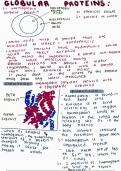
Globular and fibrous proteins
Has detailed and colourful notes about globular and fibrous proteins with structure and functions. Includes drawings images and examples. Includes notes about collagen, keratin, and cellulose. Notes about human body proteins
 anasthesiaremi
Presentation
OCR Cambridge Technical Fundamentals of IT Level 3 Unit 1 198 Flashcards
Enhance your learning experience with these comprehensive OCR Cambridge Technical IT Level 3 Unit 1 Flashcards. Perfect for students and educators alike, the set covers the entire unit, providing a valuable revision aid for exams and coursework. The flashcards are designed to be straightforward and easy to use, aiding in the retention of complex IT concepts and terminology. Crafted with care, each card is a testament to the craftsmanship of digital drawing, with the production technique highl...
 tillybrown07

Summary
ocr a level physics a chapter 14 notes
just an overly simplified summary lol
yguijhmoo
Summary
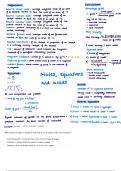
OCR A Level Chemistry Notes - Year 1
This document provides a comprehensive summary of Units 1-14 of OCR A Level Chemistry, covering key foundational topics essential for exam success: Unit 1 - Moles, Equations, and Acids: Focuses on the mole concept, stoichiometry, and acid-base reactions. It covers calculations involving moles, concentration, and key equations. Unit 2 - Atomic Structure: Explores the structure of atoms, electron configurations, and atomic models. Key concepts include isotopes, ionization energy, and periodi...
benpetter
Summary
a level biology biotechnology and cloning summary
summary notes on cloning and biotechnology topic in module 6, including natural and artificial plant and animal cloning, embryo splitting, twinning, tissue culture, micropropagation, batch and continuous fermentation, standard growth curve for bacteria population, aseptic techniques, direct and indirect food production.
 erikakumar

Other
Coursework
OCR level Cambridge technical health and social care course work. Full assignment from p1 to d3
maznahkhann2355

Summary
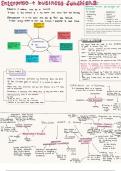
OCR a level business, Chapter 1
The first chapter of the OCR a level business course, covering the basic ideas about entrepreneurs, enterprises and the factors that can impact businesses.
hgw7

Other
over/under consumption/production
Description of how to set up the over/under consumptionproduction cases
 samiakalam1

Other
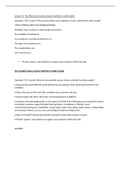
Assignment 2 support sheet- Unit 14
This is an assignment support sheet for health and social level 3, Unit 14- Long-term physiological conditions.
 NHSHero
Other
Unit 10- Lesson 14
This resource will help you to develop your answers for M1- Analyse the possible effects of poor nutrition for different individuals, and D1- Evaluate the possible causes of poor nutrition for different individuals. This resource focuses of nutritional deficiencies that can often occur in older people.
NHSHero
Essay
Unit 14- Task 4
P11- Describe strategies and frameworks available to support individuals in the terminal stages of long-term physiological conditions M4- Describe moral and ethical conflicts surrounding end of life care D3- Summarise potential ethical and moral conflicts between individual choice and wider society
NHSHero

Essay
Unit 14- Task 3
P8, P9, P10, M3 and D2 are all achieved and covered in this assignment.
NHSHero

Essay
Unit 14- Task 3
P8- Suggest services within the health and social care sector that can best support the needs of individuals with long-term physiological conditions P9- Explain the purpose of local service provision for people with long term physiological conditions P10- Explain the importance of best practice when supporting individuals with long-term physiological conditions M3- Analyse local service provision available for an individual with a long-term physiological condition D2- Evaluate the impact of ...
NHSHero
Essay
Unit 14- Task 2 Resub
P4- Explain possible effects of 2 long-term physiological conditions on the daily lives of individuals. P5- Describe 2 possible ways of monitoring a long-term physiological condition P6- Describe treatment available for two long-term physiological conditions P7- Explain 2 barriers to accessing treatment for long-term physiological conditions M2- Analyse the impact of current monitoring and treatment of long-term physiological conditions on an individual's life D1- Recommend ways of overcom...
NHSHero