

Aston University, Birmingham (ASTON)
Latest uploads at Aston University, Birmingham (ASTON). Looking for notes at Aston University, Birmingham (ASTON)? We have lots of notes, study guides and revision notes available for your school.
-
501
-
4
-
24
Courses at Aston University, Birmingham (ASTON)
Notes available for the following courses at Aston University, Birmingham (ASTON)
Latest content Aston University, Birmingham (ASTON)
• Haemopoiesis is a production of blood cells. • Haemopoiesis is a tightly regulated process that forms blood cells and haematology is a study of blood, and it involves the diagnosis and monitoring of diseases that are associated with blood and blood forming organs. • Blood cells are manufactured in the bone marrow and released into the peripheral blood once they mature. • Blood is a dynamic and crucial fluid providing molecular and cellular transport and has lots of regulatory functi...
• We're going to predominantly be looking at reference ranges, how they are used, how they are established, how effective they are in the healthcare environment specifically organ function testing. • The learning outcomes are, you have an appreciation for how biomedical scientists use biochemical tests, you’ll have an understanding of how we identify abnormal results, and we will also evaluate how good a particular test is at providing a diagnosis.
Aims and objectives. • Aim – To provide an overview of the major food manufacturing processes. – Objectives – Following this lecture you should be able to: • Explain the role of cooking in food safety. • Explain the role of refrigeration and freezing in food safety. • Describe the processes involved in pasteurisation and canning. • Describe catering systems including cook – chill, cook – freeze
• Aim – To study cleaning & disinfection practice in food hygiene and methods for assessing cleaning efficacy. • Objectives – Following this lecture you should be able to: • Explain the difference between cleaning & disinfection. • Define the terminology used in cleaning & disinfection. • Identify the strengths and limitations of a variety of cleaning and disinfection agents. • Describe methods available for the assessment of cleaning efficacy.
• Understand the difference in Phenotypic and Genotypic methods for epidemiological typing of pathogens. • Explain why sub-species typing is important in different scenarios. • Describe how to conduct and the reasoning for a number of phenotypic methods of typing such as: Serotyping, Phagetyping, Biotyping and Anitbiogram. • Describe how to conduct and the reasoning for a number of genotypic methods of typing such as: Plasmid RFLP, Chromosomal PFGE, and PCR-based methods. • T...
– To highlight current & emerging foodborne pathogens using Salmonella Campylobacter and E. coli O157 as examples. – Following this lecture you should be able to: • Relate the microbiology, epidemiology and pathogenicity of Salmonella, Campylobacter & E. coli O157. • Define the symptoms presented following infection with Salm. Camp. and E. coli. • Describe the routes of transmission of Salm. Camp. and E. coli and how they become associated with food.
To introduce food as a vehicle for foodborne disease. • Following this lecture, you should be able to: • Recognise the significance of food poisoning (FP) and foodborne disease (FBD). • Identify the variety of agents causing FP & FBD. • Understand the incidence of the major causative agents of FBD • Explain the reporting & notification system of FBD. • Recognise the factors contributing to FBD. • Define the legislative framework underpinning food safety in the UK.
From this lecture you should understand What is antibiotic resistance How antibiotic resistance emerges Main mechanisms of antibiotic resistance and suitable examples of each Difference between adaptive and mutational resistance What is antibiotic resistance. • The ability of bacteria to survive treatment by certain antibiotics. • Bacteria which are resistant to multiple antibiotics are called multi-drug resistant bacteria • MSRA- well known superbug. • MSRA- methycline re...
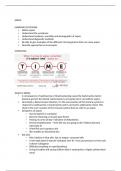
• Define sepsis • Understand the symptoms • Understand incidence, mortality and demographic of sepsis • Understand diagnostic methods • Be able to give examples of the different microorganisms that can cause sepsis • Describe approaches to treat sepsis
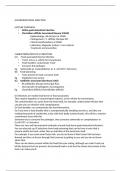
• Define gastrointestinal infection • Clostridium difficile Associated Disease (CDAD) - Epidemiology; risk factors for CDAD - Pathogenesis / C. difficile ribotype 027 - Clinical manifestations of CDAD - Laboratory diagnosis (culture / non-culture) - Treatment and prevention