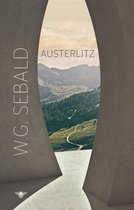
Austerlitz
Very different background/ style of writing to other authors.
A brings together the key ideas of the module.
Life and Career:
• Born Winfried Georg Maximilian Sebald, May 1944, Wertach, Bavaria, Germany
• Father served in Wehrmacht, imprisoned in P.O.W. camp in France until 1947
• Studied at universities in Freiburg and Switzerland, 1963-1966
• Taught at University of Manchester, 1966-1968
• Lecturer, then Professor, in German and European Literature, University of East
Anglia, 1970-2001
• Prose-poem After Nature (1988 [2003])
• Vertigo (1990 [1999]); The Emigrants (1992 [1996]); The Rings of Saturn (1995
[1998]); Austerlitz (2001)
• Killed in a car accident, December 2001
Sebald and War:
• Disturbed by German ‘conspiracy of silence’ about WWII and Holocaust
• ‘They [Germans] have the habit of avoidance. People don’t want to know. It’s as if it
never happened’.
(James Atlas, ‘W.G. Sebald: A Profile’, Paris Review 151 [1999], 278-95 (p. 284); qtd.
in Carol Bere, ‘The Book of Memory: W.G. Sebald’s The Emigrants and Austerlitz’,
Literary Review 46.1 [2002],
• ‘If you know in the generation before you that your parents, your uncles and aunts
were tacit accomplices, it’s difficult to say you haven’t anything to do with it. I’ve
always felt I had to know what happened in detail, and to try to understand why it
should have been so’.
(‘Recovered Memory’, interview with Maya Jaggi, Guardian, 22 September 2001,
• Legacy of war pervades all creative works, especially The Emigrants and Austerlitz;
also critical study of German postwar literature, Luftkrieg und Literatur (‘Air War and
Literature’) (1999) (published as On the Natural History of Destruction [2003])
• Post-war German lit screens out the war- according to Sebald.
• Sebald is interested in a long history of war- like Swift. E.g. Napoleonic Wars.
• ‘Austerlitz’- the name of a battle- A is an inheritor of a long history of European war.
Sebald and genre:
• Carol Bere: ‘Sebald’s writing defies easy genre classification, but is rather a mosaic of
several forms – prose fiction, which straddles the edges between fiction and fact;
essay; autobiography or memoir; and travel writing’.
-‘Book of Memory’
• Closest to a novel?
• Note the repeated inclusion of photographs
• Note the inclusion of factual material- history/ biography.
• Has at its centre real events- e.g. The Kindertransport.
• Takes place in real recognisable places.
• ‘Austerlitz’ is a composite of actual people:
•
Behind Austerlitz hide two or three, or perhaps three-and-a-half, real persons. One is a
colleague of mine and another is a person about whom I happened to see a Channel 4
documentary by sheer chance. I was captivated by the tale of an apparently English woman
[Susi Bechhöfer] who, as it transpired, had come to this country with her twin sister and been
brought up in a Welsh Calvinist household. One of the twins died and the surviving twin never
really knew that her origins were in a Munich orphanage.
(‘The Last Word’, interview with Maya Jaggi, The Guardian, 21 December 2001)
Very different background/ style of writing to other authors.
A brings together the key ideas of the module.
Life and Career:
• Born Winfried Georg Maximilian Sebald, May 1944, Wertach, Bavaria, Germany
• Father served in Wehrmacht, imprisoned in P.O.W. camp in France until 1947
• Studied at universities in Freiburg and Switzerland, 1963-1966
• Taught at University of Manchester, 1966-1968
• Lecturer, then Professor, in German and European Literature, University of East
Anglia, 1970-2001
• Prose-poem After Nature (1988 [2003])
• Vertigo (1990 [1999]); The Emigrants (1992 [1996]); The Rings of Saturn (1995
[1998]); Austerlitz (2001)
• Killed in a car accident, December 2001
Sebald and War:
• Disturbed by German ‘conspiracy of silence’ about WWII and Holocaust
• ‘They [Germans] have the habit of avoidance. People don’t want to know. It’s as if it
never happened’.
(James Atlas, ‘W.G. Sebald: A Profile’, Paris Review 151 [1999], 278-95 (p. 284); qtd.
in Carol Bere, ‘The Book of Memory: W.G. Sebald’s The Emigrants and Austerlitz’,
Literary Review 46.1 [2002],
• ‘If you know in the generation before you that your parents, your uncles and aunts
were tacit accomplices, it’s difficult to say you haven’t anything to do with it. I’ve
always felt I had to know what happened in detail, and to try to understand why it
should have been so’.
(‘Recovered Memory’, interview with Maya Jaggi, Guardian, 22 September 2001,
• Legacy of war pervades all creative works, especially The Emigrants and Austerlitz;
also critical study of German postwar literature, Luftkrieg und Literatur (‘Air War and
Literature’) (1999) (published as On the Natural History of Destruction [2003])
• Post-war German lit screens out the war- according to Sebald.
• Sebald is interested in a long history of war- like Swift. E.g. Napoleonic Wars.
• ‘Austerlitz’- the name of a battle- A is an inheritor of a long history of European war.
Sebald and genre:
• Carol Bere: ‘Sebald’s writing defies easy genre classification, but is rather a mosaic of
several forms – prose fiction, which straddles the edges between fiction and fact;
essay; autobiography or memoir; and travel writing’.
-‘Book of Memory’
• Closest to a novel?
• Note the repeated inclusion of photographs
• Note the inclusion of factual material- history/ biography.
• Has at its centre real events- e.g. The Kindertransport.
• Takes place in real recognisable places.
• ‘Austerlitz’ is a composite of actual people:
•
Behind Austerlitz hide two or three, or perhaps three-and-a-half, real persons. One is a
colleague of mine and another is a person about whom I happened to see a Channel 4
documentary by sheer chance. I was captivated by the tale of an apparently English woman
[Susi Bechhöfer] who, as it transpired, had come to this country with her twin sister and been
brought up in a Welsh Calvinist household. One of the twins died and the surviving twin never
really knew that her origins were in a Munich orphanage.
(‘The Last Word’, interview with Maya Jaggi, The Guardian, 21 December 2001)