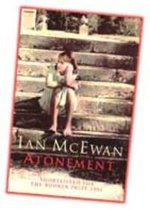
Atonement- Ian McEwan
Life and Family:
• Born 1948, Aldershot, Hampshire
• Father served in British Expeditionary Force (BEF) during WWII – injured
• Mother’s first husband killed in war
• Father an Army Officer; spent much of his childhood in the Far East, Germany and North
Africa
• Attended the University of Sussex and the University of East Anglia – first graduate of
Creative Writing MA
• First Love, Last Rites (1975); The Cement Garden (1978)
• The legacy of war is v. imp in formative years BUT McEwan’s father couldn’t stop talking
about the war (cf. Swift/Barker)
[My generation] very much grew up in the shadow [of World War II.] Our parents’ stories really did
dominate our childhoods. [...]
[We have] a guilty sense of not having been there to help, or some sort of connection to a past that
seems alive to us in ways we can’t really account for: we weren’t there and yet we sort of feel we were
because our childhoods were so shaped by those stories. It becomes emotionally, I think, quite
important, for our generation, to pay our dues, pay our respects to our parents who went through this.
-Interview on World Book Club, BBC World Service, 28 March 2005
<http://www.bbc.co.uk/worldservice/specials/133_wbc_archive_new/page4.shtml
The war was a living presence throughout my childhood. [...] Sometimes I found it hard to believe I
had not been alive in the summer of 1940.
Ian McEwan, introduction to The Imitation Game: Three Plays for Television (London: Jonathan Cape,
1981), pp. 9-20 (p. 17).
• War in McEwan’s fiction keeps returning.
• Themes of guilt, betrayal, remembrance.
• How violence can erupt as if from nowhere- impact of shocking violent events.
• Set at first in inter-war years in a country house in surrey > a world away from conflicts of
war? No- war overshadows.
• Sense that war may be imminent AND evidence of the ongoing legacy of the previous
conflict.
• E.g. Vase of Uncle Clem is broken. Uncle Clem was killed a week before the
armistice. Vase is completely shattered just as WWII begins.
• **Vase = a symbol for the destructiveness of history**
• Robbie knows nothing of father- was he called to the front in WWI?
• Sense of sons returning to the same place where there fathers fought.
• Mother Grace is a clairvoyant > women trying to make contact with lost husbands.
• ***** Sense of UNCANNY REPETITION of history *****
• Sense of sons returning to the same place where fathers fought. (note: Q on historical
progress)
All that fighting we did twenty-five years ago. All those dead. Now the Germans back in France. In two
days they’ll be here, taking everything we have. Who would have believed it? (p. 201)
As if WWI is literally happening again- e.g. Battle of Arras.
- Looming threats of WWII- father of Tallis family is a Civil Servant- plans being made to defend
London from German attack.
- E.g. Paul Marshall (cf. Lord Fanshawe)- stands to profit from war.
o Ultimately has some regret for his actions? But much more one-dimensional at first.
There loomed the greater challenge yet of Army Amo, the khaki bar with the Pass the Amo! slogan;
the concept rested on an assumption that spending on the Armed Forces must increase if Mr Hitler
did not pipe down; there was even a chance that the bar could become part of the standard-issue
Life and Family:
• Born 1948, Aldershot, Hampshire
• Father served in British Expeditionary Force (BEF) during WWII – injured
• Mother’s first husband killed in war
• Father an Army Officer; spent much of his childhood in the Far East, Germany and North
Africa
• Attended the University of Sussex and the University of East Anglia – first graduate of
Creative Writing MA
• First Love, Last Rites (1975); The Cement Garden (1978)
• The legacy of war is v. imp in formative years BUT McEwan’s father couldn’t stop talking
about the war (cf. Swift/Barker)
[My generation] very much grew up in the shadow [of World War II.] Our parents’ stories really did
dominate our childhoods. [...]
[We have] a guilty sense of not having been there to help, or some sort of connection to a past that
seems alive to us in ways we can’t really account for: we weren’t there and yet we sort of feel we were
because our childhoods were so shaped by those stories. It becomes emotionally, I think, quite
important, for our generation, to pay our dues, pay our respects to our parents who went through this.
-Interview on World Book Club, BBC World Service, 28 March 2005
<http://www.bbc.co.uk/worldservice/specials/133_wbc_archive_new/page4.shtml
The war was a living presence throughout my childhood. [...] Sometimes I found it hard to believe I
had not been alive in the summer of 1940.
Ian McEwan, introduction to The Imitation Game: Three Plays for Television (London: Jonathan Cape,
1981), pp. 9-20 (p. 17).
• War in McEwan’s fiction keeps returning.
• Themes of guilt, betrayal, remembrance.
• How violence can erupt as if from nowhere- impact of shocking violent events.
• Set at first in inter-war years in a country house in surrey > a world away from conflicts of
war? No- war overshadows.
• Sense that war may be imminent AND evidence of the ongoing legacy of the previous
conflict.
• E.g. Vase of Uncle Clem is broken. Uncle Clem was killed a week before the
armistice. Vase is completely shattered just as WWII begins.
• **Vase = a symbol for the destructiveness of history**
• Robbie knows nothing of father- was he called to the front in WWI?
• Sense of sons returning to the same place where there fathers fought.
• Mother Grace is a clairvoyant > women trying to make contact with lost husbands.
• ***** Sense of UNCANNY REPETITION of history *****
• Sense of sons returning to the same place where fathers fought. (note: Q on historical
progress)
All that fighting we did twenty-five years ago. All those dead. Now the Germans back in France. In two
days they’ll be here, taking everything we have. Who would have believed it? (p. 201)
As if WWI is literally happening again- e.g. Battle of Arras.
- Looming threats of WWII- father of Tallis family is a Civil Servant- plans being made to defend
London from German attack.
- E.g. Paul Marshall (cf. Lord Fanshawe)- stands to profit from war.
o Ultimately has some regret for his actions? But much more one-dimensional at first.
There loomed the greater challenge yet of Army Amo, the khaki bar with the Pass the Amo! slogan;
the concept rested on an assumption that spending on the Armed Forces must increase if Mr Hitler
did not pipe down; there was even a chance that the bar could become part of the standard-issue