

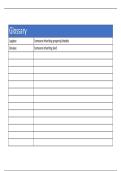
Glossary
Legatee Someone inheriting property/chattels
Devisee Someone inheriting land
, Divorced 2018/19 New will written Aug 2023
Married 2005 – valid wills leaving Married Dec 2023 –
Liz Marco Gemma
everything to the other moved in June 2022
Part-time Psychology
Disabled and unemployed Pedro (22) Albertina (19)
student with child
Want nothing to do with Pedro and have
not seen Pedro since the divorce. Child (minor)
2001/2 - 2004/5 - 2005 – 2006 – M 2018/9 – M and Jan 2022 June 2022 – Aug 2023 – Dec 2023 – Dec 23/
Pedro Albertina Marco and and L L Divorced & not – Met moved in will to G M and G Jan 24 -
born born Liz Married write wills seen Kids Gemma Married M dies
,Formalities
s.9 WA (amended
Age
Must be at least 18 years old (s7 WA) unless it is a privileged will
by s17
Administration of Cap.
Justice Act 1982) See capacity
1) No will is valid
Testandi
Animus
unless See intention
a) In writing,
signed by the
testator (or
Knowl. &
Approv.
another in his See Knowledge and approval
presence and
at his
direction) Conflict of interest – should not benefit under a will as it is a conflict of interest under code 6.1 – testator must get independent
Solicitor
b) It appears the legal advice to do so
testator As executor – would need to charge a fee as a solicitor to be the executor to an estate
intended for Fraud – must be deceived (failed attempts are irrelevant) includes false representation (Allen v M’Pherson) – Lord Lyndhurst,
Fraud/ undue
the signature ‘there cannot be a stronger instance of fraud’, deception of marriage (Wilkingson v Joughin), however gifts to other parties in the
Influence
to give effect marriage such as step-children are allowed as they are an innocent party. May be fraud if deceiving the solicitor. Can still be
to the will fraudulent if it is after the testators death (Re Rephael)
c) In the Undue Influence – Hall v Hall – pressure ‘of whatever character … importunity or threats, such as the testator has not the courage
presence of 2 to resist’ ‘a testator may be led but not driven; and his will must be the offspring of his own volition’
witnesses
who In Writing: Signing ‘chal’ without finishing signature was sufficient (In the Goods of Chalcraft) as was ‘your loving mother’ as it was
Formalities
d) sign the will recognisable who it was (In the Estate of Cook). If it is done by another – must be positive discernible direction, not mere
in the acquiescence (Barret v Bem). N/A for privileged wills.
presence of Witnesses: Witnesses cannot benefit under the will, nor can their spouse/civil partner (s15 WA). It does not invalidate the will,
the testator just means their gift lapses. Should include an attestation clause such as ‘signed by x in our presence and then by us in theirs’
, Capacity
Banks v Goodfellow – must understand
1) the nature of making a will
2) the extent of their property –
• does not need to be ‘every atom of his property’ (Waters v Waters) just a general idea
3) the claims they ought to consider –
• intervening circumstances may mean they can no longer comprehend (Harwood v Baker) and they must also be able to comprehend the relationship
to the legatee (Boughton v Knight), however, they can be capricious and don’t need to make sense to outsiders (Bird v Luckie) and can include non-
family members over family (Blackman v Man) so long as they understand claims they ought to consider
4) must not be suffering any delusion which may impact the will
• e.g. believing there is an international conspiracy against you (Kostic v Chaplin) or a disease which is impacting the brain (Sharp v Adam), however
early stage dementia is not enough to prove lack of capacity (Ewing v Ewing), nor is occasional lack of capacity e.g. trances (Brown v Pourau), nor
eccentricity (Mudway v Croft)
Parker v Felgate – however, valid if
1) testator has capacity when giving instructions,
• including attestations by medical professionals (In the Estate of Walker), however not if there is a lay intermediary as there is scope for error (Battan
Sing v Amirchand)
2) it is prepared in accordance with those instructions,
3) the testator executed the will understanding that it has been prepared in accordance with his instructions
It is the capacity to understand not actual understanding (Hoff v Atherton).
Alcoholism does not mean incapacity (Ayrey v Hill) unless the alcohol has such an effect that they do not understand what they are doing – drinking but not
drunk is ok (Chana v Chana) however, revoking a will whilst drunk in a pub is not (In the Estate of Heinke)
‘golden rule’ If the person is old and infirm, they should get a medical practitioner to attest for their capacity (Kenwood v Adams; Re Simpson)
may include aids such as reading aloud and confirming they understand (Buckenham v Dickinson)
Burden of Proof balance of probabilities (Barry v Butlin) –
• if rational, on those who want it set aside (Symes v Green) –
• court should be slow to find against capacity where the will is rational and is prepared by a solicitor (Burges v Hawes), if irrational, on those who want it
followed
Statutory wills can be made for those without capacity
Legatee Someone inheriting property/chattels
Devisee Someone inheriting land
, Divorced 2018/19 New will written Aug 2023
Married 2005 – valid wills leaving Married Dec 2023 –
Liz Marco Gemma
everything to the other moved in June 2022
Part-time Psychology
Disabled and unemployed Pedro (22) Albertina (19)
student with child
Want nothing to do with Pedro and have
not seen Pedro since the divorce. Child (minor)
2001/2 - 2004/5 - 2005 – 2006 – M 2018/9 – M and Jan 2022 June 2022 – Aug 2023 – Dec 2023 – Dec 23/
Pedro Albertina Marco and and L L Divorced & not – Met moved in will to G M and G Jan 24 -
born born Liz Married write wills seen Kids Gemma Married M dies
,Formalities
s.9 WA (amended
Age
Must be at least 18 years old (s7 WA) unless it is a privileged will
by s17
Administration of Cap.
Justice Act 1982) See capacity
1) No will is valid
Testandi
Animus
unless See intention
a) In writing,
signed by the
testator (or
Knowl. &
Approv.
another in his See Knowledge and approval
presence and
at his
direction) Conflict of interest – should not benefit under a will as it is a conflict of interest under code 6.1 – testator must get independent
Solicitor
b) It appears the legal advice to do so
testator As executor – would need to charge a fee as a solicitor to be the executor to an estate
intended for Fraud – must be deceived (failed attempts are irrelevant) includes false representation (Allen v M’Pherson) – Lord Lyndhurst,
Fraud/ undue
the signature ‘there cannot be a stronger instance of fraud’, deception of marriage (Wilkingson v Joughin), however gifts to other parties in the
Influence
to give effect marriage such as step-children are allowed as they are an innocent party. May be fraud if deceiving the solicitor. Can still be
to the will fraudulent if it is after the testators death (Re Rephael)
c) In the Undue Influence – Hall v Hall – pressure ‘of whatever character … importunity or threats, such as the testator has not the courage
presence of 2 to resist’ ‘a testator may be led but not driven; and his will must be the offspring of his own volition’
witnesses
who In Writing: Signing ‘chal’ without finishing signature was sufficient (In the Goods of Chalcraft) as was ‘your loving mother’ as it was
Formalities
d) sign the will recognisable who it was (In the Estate of Cook). If it is done by another – must be positive discernible direction, not mere
in the acquiescence (Barret v Bem). N/A for privileged wills.
presence of Witnesses: Witnesses cannot benefit under the will, nor can their spouse/civil partner (s15 WA). It does not invalidate the will,
the testator just means their gift lapses. Should include an attestation clause such as ‘signed by x in our presence and then by us in theirs’
, Capacity
Banks v Goodfellow – must understand
1) the nature of making a will
2) the extent of their property –
• does not need to be ‘every atom of his property’ (Waters v Waters) just a general idea
3) the claims they ought to consider –
• intervening circumstances may mean they can no longer comprehend (Harwood v Baker) and they must also be able to comprehend the relationship
to the legatee (Boughton v Knight), however, they can be capricious and don’t need to make sense to outsiders (Bird v Luckie) and can include non-
family members over family (Blackman v Man) so long as they understand claims they ought to consider
4) must not be suffering any delusion which may impact the will
• e.g. believing there is an international conspiracy against you (Kostic v Chaplin) or a disease which is impacting the brain (Sharp v Adam), however
early stage dementia is not enough to prove lack of capacity (Ewing v Ewing), nor is occasional lack of capacity e.g. trances (Brown v Pourau), nor
eccentricity (Mudway v Croft)
Parker v Felgate – however, valid if
1) testator has capacity when giving instructions,
• including attestations by medical professionals (In the Estate of Walker), however not if there is a lay intermediary as there is scope for error (Battan
Sing v Amirchand)
2) it is prepared in accordance with those instructions,
3) the testator executed the will understanding that it has been prepared in accordance with his instructions
It is the capacity to understand not actual understanding (Hoff v Atherton).
Alcoholism does not mean incapacity (Ayrey v Hill) unless the alcohol has such an effect that they do not understand what they are doing – drinking but not
drunk is ok (Chana v Chana) however, revoking a will whilst drunk in a pub is not (In the Estate of Heinke)
‘golden rule’ If the person is old and infirm, they should get a medical practitioner to attest for their capacity (Kenwood v Adams; Re Simpson)
may include aids such as reading aloud and confirming they understand (Buckenham v Dickinson)
Burden of Proof balance of probabilities (Barry v Butlin) –
• if rational, on those who want it set aside (Symes v Green) –
• court should be slow to find against capacity where the will is rational and is prepared by a solicitor (Burges v Hawes), if irrational, on those who want it
followed
Statutory wills can be made for those without capacity


