1
LECTURE 1: INTRODUCTION TO CX MANAGEMENT
Customer Experience: Big promises
93% of business leaders say that delivering a relevant and reliable customer experience is
critical to overall business performance
Customer Experience: Definition
Customer experience is a multidimensional construct focusing on a customer’s cognitive,
emotional, behavioural, sensorial and social responses to a firm’s offerings during the
customer’s entire purchase journey
- Formed through touchpoints which are embedded in a broader context and market by a
set of qualities that results in a value judgement by the customer
Process model for Customer Journey and Experience
The customer journey has three stages:
1) Prepurchase
2) Purchase
3) Post-purchase
→ They repeat over time and influence one another
1) Prepurchase stage → where awareness and initial impressions form
- Touchpoints:
- Brand-owned → website, ads, social media posts
- Partner-owned → retailers, affiliates
- Customer-owned → prior experience, expectations
- Social/external → reviews, WOM, influencers
, 2
- Customer behaviours:
- Need recognition → ‘I need this’
- Consideration → ‘Which brand should I choose?’
- Search → ‘Let me compare options’
2) Purchase stage → the transaction is made; where good/bad experiences shape
satisfaction
- Touchpoints: (same as previous)
- Brand-owned → website, ads, social media posts
- Partner-owned → retailers, affiliates
- Customer-owned → prior experience, expectations
- Social/external → reviews, WOM, influencers
- Customer behaviours:
- Choice selection
- Ordering
- Payment
3) Postpurchase stage → the stage where customer returns, becomes loyal or churns
- Touchpoints: (same as previous)
- Brand-owned → website, ads, social media posts
- Partner-owned → retailers, affiliates
- Customer-owned → prior experience, expectations
- Social/external → reviews, WOM, influencers
- Customer behaviours:
- Consumption
- Use
- Engagement
- Service requests
Types of touchpoints
1) Brand-owned → customer interactions that are designed and managed by the firm and
under the firm’s control
2) Partner-owned → customer interactions that are (jointly) designed, managed or
controlled by (the firm and) one or more of its partners
3) Customer-owned → customer interactions during the experience that are not (entirely)
owned or controlled by the firm, its partners or others
4) Social/external → recognizing the important role of interactions with others
The real customer journey: Nonlinear, messy and multi-directional
1) Stage 1: The impulse → emotional start
- The need for a product is recognized and triggered by a certain event
2) Stage 2: Inspiration → no commitment yet
- Once the need exists, the customer begins exploring (online, in-store)
→ This stage is for collecting ideas, not for making decisions
, 3
3) Stage 3: Advice and compare → most complex stage
- This stage is emphasized with customer loops → from online to offline
consultations and comparisons → not linear, they go back and forth
4) Stage 4: Purchase → influenced by prior loops
- Customer returns to store/online → makes a final choice → purchases
5) Stage 5: Installation → experience depends on partners
- The product is installed → delivered → involvement of any external partners
needed to complete installation
6) Stage 6: Utilization → creates future influence
- The customer uses the product → share their experiences online and offline word
of mouth sets place
Creating and capturing value
1) Creating value
- Understand the marketplace and customer needs and wants
- Designing a customer value-driven experience strategy
- Construct and integrated CX management approach
- Attract, convince and engage customers to create delight
2) Capturing value
- Capture value from customers with profitable (long-term) relationships
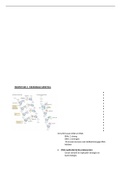
Customer Experience: Three components (Lemon & Verfhoef, 2016)
TCQ → Touchpoints, context and quality
Human (sales person,
consultant, customer
service)
Nature Digital (website, app,
chat)
Physical (store
environment, packaging)
Touchpoints → points of Prepurchase
interaction between
customer and brand → a Stage Purchase
3-dimensional cube
Postpurchase
Firm-controlled (ads,
website, staff)
Control
Non-firm-controlled
(WOM, reviews, social
media posts)
, 4
Motivation
Emotion
Individual context (inner layer)
Goals
Prior experience
Family
Friends
Social context → Influence of:
Social norms
Context → the internal and
Social media behaviour
external resources
available to the customer
Competitors
during an experience →
four nested layers Price comparisons
Market context
Availability
Trends
Economic conditions
Cultural setting
Environmental context (outer layer)
Regulations
Technological
infrastructure
Participation level → how involved the customer is (low/high)
Dimensionality → uni-dimensional (only functional) and
multi-dimensional (emotional, sensory, cognitive and social
combined)
Experience qualities →
attributes that describe the
→ High-quality experiences tend to be multi-dimensional
customer’s reaction to the
brand interaction
Valence → positive/negative → how pleasant or unpleasant the
experience feels
Ordinariness → ordinary/extraordinary → how time is perceived
during the experience
LECTURE 1: INTRODUCTION TO CX MANAGEMENT
Customer Experience: Big promises
93% of business leaders say that delivering a relevant and reliable customer experience is
critical to overall business performance
Customer Experience: Definition
Customer experience is a multidimensional construct focusing on a customer’s cognitive,
emotional, behavioural, sensorial and social responses to a firm’s offerings during the
customer’s entire purchase journey
- Formed through touchpoints which are embedded in a broader context and market by a
set of qualities that results in a value judgement by the customer
Process model for Customer Journey and Experience
The customer journey has three stages:
1) Prepurchase
2) Purchase
3) Post-purchase
→ They repeat over time and influence one another
1) Prepurchase stage → where awareness and initial impressions form
- Touchpoints:
- Brand-owned → website, ads, social media posts
- Partner-owned → retailers, affiliates
- Customer-owned → prior experience, expectations
- Social/external → reviews, WOM, influencers
, 2
- Customer behaviours:
- Need recognition → ‘I need this’
- Consideration → ‘Which brand should I choose?’
- Search → ‘Let me compare options’
2) Purchase stage → the transaction is made; where good/bad experiences shape
satisfaction
- Touchpoints: (same as previous)
- Brand-owned → website, ads, social media posts
- Partner-owned → retailers, affiliates
- Customer-owned → prior experience, expectations
- Social/external → reviews, WOM, influencers
- Customer behaviours:
- Choice selection
- Ordering
- Payment
3) Postpurchase stage → the stage where customer returns, becomes loyal or churns
- Touchpoints: (same as previous)
- Brand-owned → website, ads, social media posts
- Partner-owned → retailers, affiliates
- Customer-owned → prior experience, expectations
- Social/external → reviews, WOM, influencers
- Customer behaviours:
- Consumption
- Use
- Engagement
- Service requests
Types of touchpoints
1) Brand-owned → customer interactions that are designed and managed by the firm and
under the firm’s control
2) Partner-owned → customer interactions that are (jointly) designed, managed or
controlled by (the firm and) one or more of its partners
3) Customer-owned → customer interactions during the experience that are not (entirely)
owned or controlled by the firm, its partners or others
4) Social/external → recognizing the important role of interactions with others
The real customer journey: Nonlinear, messy and multi-directional
1) Stage 1: The impulse → emotional start
- The need for a product is recognized and triggered by a certain event
2) Stage 2: Inspiration → no commitment yet
- Once the need exists, the customer begins exploring (online, in-store)
→ This stage is for collecting ideas, not for making decisions
, 3
3) Stage 3: Advice and compare → most complex stage
- This stage is emphasized with customer loops → from online to offline
consultations and comparisons → not linear, they go back and forth
4) Stage 4: Purchase → influenced by prior loops
- Customer returns to store/online → makes a final choice → purchases
5) Stage 5: Installation → experience depends on partners
- The product is installed → delivered → involvement of any external partners
needed to complete installation
6) Stage 6: Utilization → creates future influence
- The customer uses the product → share their experiences online and offline word
of mouth sets place
Creating and capturing value
1) Creating value
- Understand the marketplace and customer needs and wants
- Designing a customer value-driven experience strategy
- Construct and integrated CX management approach
- Attract, convince and engage customers to create delight
2) Capturing value
- Capture value from customers with profitable (long-term) relationships
Customer Experience: Three components (Lemon & Verfhoef, 2016)
TCQ → Touchpoints, context and quality
Human (sales person,
consultant, customer
service)
Nature Digital (website, app,
chat)
Physical (store
environment, packaging)
Touchpoints → points of Prepurchase
interaction between
customer and brand → a Stage Purchase
3-dimensional cube
Postpurchase
Firm-controlled (ads,
website, staff)
Control
Non-firm-controlled
(WOM, reviews, social
media posts)
, 4
Motivation
Emotion
Individual context (inner layer)
Goals
Prior experience
Family
Friends
Social context → Influence of:
Social norms
Context → the internal and
Social media behaviour
external resources
available to the customer
Competitors
during an experience →
four nested layers Price comparisons
Market context
Availability
Trends
Economic conditions
Cultural setting
Environmental context (outer layer)
Regulations
Technological
infrastructure
Participation level → how involved the customer is (low/high)
Dimensionality → uni-dimensional (only functional) and
multi-dimensional (emotional, sensory, cognitive and social
combined)
Experience qualities →
attributes that describe the
→ High-quality experiences tend to be multi-dimensional
customer’s reaction to the
brand interaction
Valence → positive/negative → how pleasant or unpleasant the
experience feels
Ordinariness → ordinary/extraordinary → how time is perceived
during the experience