Science Medicine
Save
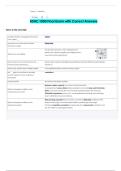
BSNC 1000 Final Exam with Correct Answers
Terms in this set (183)
compact bone is composed of structural osteon
units called ___
spongy bone contains lattice-shaped trabeculae
meshwork called
the dynamic process in which existing bone is
broken down (bone resorption) and replaced by a
define bone remodelling
new bone (bone deposition)
blood calcium level is maintained by the ___ blood calcium levels is maintained by parathyroid hormone (PTH) and activated by
hormone and activated by ___ Vitamin D
which body systems does mobility require musculoskeletal system and the nervous system
the __ plays a crucial role in ensuring cerebellum
smooth, balanced, and coordinated
movement
proprioception the sense of the body's position
Reduced cardiac capacity due to lack of physical activity.
Increased risk of venous stasis (blood pooling in veins) and deep vein thrombosis
effects of impaired mobility on the
(DVT), as muscle contractions that normally assist blood flow are reduced.
cardiovascular system
Orthostatic hypotension may occur, causing dizziness or fainting upon standing,
due to diminished vascular reflexes.
Reduced lung expansion from inactivity can lead to atelectasis (collapse of the
effects of impaired mobility on the alveoli in the lungs) and a decreased ability to perform gas exchange.
respiratory system Pooling of respiratory secretions increases the risk of pneumonia in patients who
are immobile for prolonged periods.
, Musculoskeletal system:
- Vertebral discs begin to thin
- spinal column compresses, reducing flexibility and height.
- Bone density decreases, making bones more brittle and prone to fractures
(especially in postmenopausal women).
- Cartilage becomes stiffer
age related changes that impact mobility - muscle mass decreases, leading to reduced strength and slower movement.
(vertebral discs, spinal column, bone - Ligaments lose elasticity, which increases the risk of joint stiffness and limits range
density, gender, cartilage, ligaments, reflex, of motion.
sensation, balance, appetite, absorption, Neurological function:
constipation) - Slower reflexes
- Altered sensation
- Reduced balance
Nutrition:
- Reduced appetite
- Decreased absorption
- Increased constipation risk
a systemic skeletal disorder characterized by low density and micro-architectural
define osteoporosis
deterioration
- an imbalance in bone remodelling - bone resorption exceeds bone deposition
osteoporosis vs bone remodelling
- the rate of bone remodelling increases
osteoporosis
which disease is often referred to as a
because it progresses without symptoms until a fracture occurs - thus early
"silent disease", why?
detection is key
what is t-score? BMD compared to that of a healthy 30 year old
-age (65+)
what are two non modifiable risk factors for
-postmenopausal women due to a decline in estrogen which results in rapid bone
osteoporosis
loss
Primary osteoporosis: Associated with normal aging and hormonal changes (e.g.,
postmenopausal women).
Secondary osteoporosis: caused by another condition or from the treatment of
variations in osteoporosis: primary vs another condition
secondary -Examples of causes:
-- Medication use: long term corticosteroid use
-- Medical conditions related to an increase in bone loss: -- disruptions in calcium
homeostasis
the maximum bone mass achieved in life
peak bone mass
from that point onward bone density will slowly decline
puberty vs bone remodelling bone formation exceeds bone resoprtion
osteoporosis
what are two reasons why females are at a because
higher risk for ___ 1. females develop lower peak bone mass (due to genetics)
2. menopause in females leads to a sharp decrease in bone mass due to drop in
estrogens
1. promote growth plate closure
three functions of estrogen 2. regulate rate of bone remodeling
3. promote collagen formation
what does androgen do increase cortical bone thickness and peak bone mass
Save
BSNC 1000 Final Exam with Correct Answers
Terms in this set (183)
compact bone is composed of structural osteon
units called ___
spongy bone contains lattice-shaped trabeculae
meshwork called
the dynamic process in which existing bone is
broken down (bone resorption) and replaced by a
define bone remodelling
new bone (bone deposition)
blood calcium level is maintained by the ___ blood calcium levels is maintained by parathyroid hormone (PTH) and activated by
hormone and activated by ___ Vitamin D
which body systems does mobility require musculoskeletal system and the nervous system
the __ plays a crucial role in ensuring cerebellum
smooth, balanced, and coordinated
movement
proprioception the sense of the body's position
Reduced cardiac capacity due to lack of physical activity.
Increased risk of venous stasis (blood pooling in veins) and deep vein thrombosis
effects of impaired mobility on the
(DVT), as muscle contractions that normally assist blood flow are reduced.
cardiovascular system
Orthostatic hypotension may occur, causing dizziness or fainting upon standing,
due to diminished vascular reflexes.
Reduced lung expansion from inactivity can lead to atelectasis (collapse of the
effects of impaired mobility on the alveoli in the lungs) and a decreased ability to perform gas exchange.
respiratory system Pooling of respiratory secretions increases the risk of pneumonia in patients who
are immobile for prolonged periods.
, Musculoskeletal system:
- Vertebral discs begin to thin
- spinal column compresses, reducing flexibility and height.
- Bone density decreases, making bones more brittle and prone to fractures
(especially in postmenopausal women).
- Cartilage becomes stiffer
age related changes that impact mobility - muscle mass decreases, leading to reduced strength and slower movement.
(vertebral discs, spinal column, bone - Ligaments lose elasticity, which increases the risk of joint stiffness and limits range
density, gender, cartilage, ligaments, reflex, of motion.
sensation, balance, appetite, absorption, Neurological function:
constipation) - Slower reflexes
- Altered sensation
- Reduced balance
Nutrition:
- Reduced appetite
- Decreased absorption
- Increased constipation risk
a systemic skeletal disorder characterized by low density and micro-architectural
define osteoporosis
deterioration
- an imbalance in bone remodelling - bone resorption exceeds bone deposition
osteoporosis vs bone remodelling
- the rate of bone remodelling increases
osteoporosis
which disease is often referred to as a
because it progresses without symptoms until a fracture occurs - thus early
"silent disease", why?
detection is key
what is t-score? BMD compared to that of a healthy 30 year old
-age (65+)
what are two non modifiable risk factors for
-postmenopausal women due to a decline in estrogen which results in rapid bone
osteoporosis
loss
Primary osteoporosis: Associated with normal aging and hormonal changes (e.g.,
postmenopausal women).
Secondary osteoporosis: caused by another condition or from the treatment of
variations in osteoporosis: primary vs another condition
secondary -Examples of causes:
-- Medication use: long term corticosteroid use
-- Medical conditions related to an increase in bone loss: -- disruptions in calcium
homeostasis
the maximum bone mass achieved in life
peak bone mass
from that point onward bone density will slowly decline
puberty vs bone remodelling bone formation exceeds bone resoprtion
osteoporosis
what are two reasons why females are at a because
higher risk for ___ 1. females develop lower peak bone mass (due to genetics)
2. menopause in females leads to a sharp decrease in bone mass due to drop in
estrogens
1. promote growth plate closure
three functions of estrogen 2. regulate rate of bone remodeling
3. promote collagen formation
what does androgen do increase cortical bone thickness and peak bone mass