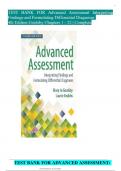
TEST BANK FOR Advanced Assessment Interpreting
Findings and Formulating Differential Diagnoses
5th Edition Goolsby Chapters 1 - 22 | CompleteQ
, TABLEQOFQCONTENTS
➢ ChapterQ1.QAssessmentQandQClinicalQDecisionQMaking:QAnQOverview
➢ ChapterQ2.QGenomicQAssessment:QInterpretingQFindingsQandQFormulatingQDifferentialQDiagnoses
➢ ChapterQ3.QSkin
➢ ChapterQ4.QHead,QFace,QandQNeck
➢ ChapterQ5.QTheQEye
➢ ChapterQ6.QEar,QNose,QMouth,QandQThroat
➢ ChapterQ7.QCardiacQandQPeripheralQVascularQSystems
➢ ChapterQ8.QRespiratoryQSystem
➢ ChapterQ9.QBreasts
➢ ChapterQ10.QAbdomen
➢ ChapterQ11.QGenitourinaryQSystem
➢ ChapterQ12.QMaleQReproductiveQSystem
➢ ChapterQ13.QFemaleQReproductiveQSystem
➢ ChapterQ14.QMusculoskeletalQSystem
➢ ChapterQ15.QNeurologicalQSystem
➢ ChapterQ16.QNonspecificQComplaints
➢ ChapterQ17.QPsychiatricQMentalQHealth
➢ ChapterQ18.QPediatricQPatients
➢ ChapterQ19.QPregnantQPatients
➢ ChapterQ20.QAssessmentQofQtheQTransgenderQorQGenderQDiverseQAdult
➢ ChapterQ21.QOlderQPatients
➢ ChapterQ22.QPersonsQWithQDisabilities
, ➢ ChapterQ1.QAssessmentQandQClinicalQDecisionQMaking:QAnQOverview
MultipleQ Choice
IdentifyQtheQchoiceQthatQbestQcompletesQtheQstatementQorQanswersQtheQquestion.
Q 1. WhichQtypeQofQclinicalQdecision-makingQisQmostQreliable?
A. Intuitive
B. Analytical
C. Experiential
D. Augenblick
Q 2. WhichQofQtheQfollowingQisQfalse?QToQobtainQadequateQhistory,Qhealth-careQprovidersQmustQbe:
A. MethodicalQandQsystematic
B. AttentiveQtoQtheQpatient’sQverbalQandQnonverbalQl
anguage
C. AbleQtoQaccuratelyQinterpretQtheQpatient’sQrespons
es
D. AdeptQatQreadingQintoQtheQpatient’sQstatements
Q 3. EssentialQpartsQofQaQhealthQhistoryQincludeQallQofQtheQfollowingQexcept:
A. ChiefQcomplaint
B. HistoryQofQtheQpresentQillness
C. CurrentQvitalQsigns
D. AllQofQtheQaboveQareQessentialQhistoryQco
mponents
Q 4. WhichQofQtheQfollowingQisQfalse?QWhileQperformingQtheQphysicalQexamination,QtheQexaminerQmustQbeQableQto:
A. DifferentiateQbetweenQnormalQandQabnormalQfindings
B. RecallQknowledgeQofQaQrangeQofQconditionsQandQtheirQassociatedQsignsQa
ndQsymptoms
C. RecognizeQhowQcertainQconditionsQaffectQtheQresponseQtoQotherQconditions
D. ForeseeQunpredictableQfindings
Q 5. TheQfollowingQisQtheQleastQreliableQsourceQofQinformationQforQdiagnosticQstatistics:
, A. Evidence-basedQinvestigations
B. PrimaryQreportsQofQresearch
C. EstimationQbasedQonQaQprovider’sQexpe
rience
D. PublishedQmeta-analyses
Q 6. TheQfollowingQcanQbeQusedQtoQassistQinQsoundQclinicalQdecision-making:
A. AlgorithmQpublishedQinQaQpeer-
reviewedQjournalQarticle
B. ClinicalQpracticeQguidelines
C. Evidence-basedQresearch
D. AllQofQtheQabove
Q 7. IfQaQdiagnosticQstudyQhasQhighQsensitivity,Q thisQindicatesQa:
A. HighQpercentageQofQpersonsQwithQtheQgivenQconditionQwillQhaveQanQa
bnormalQresult
B. LowQpercentageQofQpersonsQwithQtheQgivenQconditionQwillQhaveQanQab
normalQresult
C. LowQlikelihoodQofQnormalQresultQinQpersonsQwithoutQaQgivenQcondition
D. NoneQofQtheQabove
Q 8. IfQaQdiagnosticQstudyQhasQhighQspecificity,Q thisQindicatesQa:
A. LowQpercentageQofQhealthyQindividualsQwillQshowQaQnormalQresult
B. HighQpercentageQofQhealthyQindividualsQwillQshowQaQnormalQresul
t
C. HighQpercentageQofQindividualsQwithQaQdisorderQwillQshowQaQnor
malQresult
D. LowQpercentageQofQindividualsQwithQaQdisorderQwillQshowQanQab
normalQresult
Q 9. AQlikelihoodQratioQaboveQ1QindicatesQthatQaQdiagnosticQtestQshowingQa:
A. PositiveQresultQisQstronglyQassociatedQwithQtheQdisease
B. NegativeQresultQisQstronglyQassociatedQwithQabsenceQofQt
heQdisease
C. PositiveQresultQisQweaklyQassociatedQwithQtheQdisease
D. NegativeQresultQisQweaklyQassociatedQwithQabsenceQofQth
eQdisease
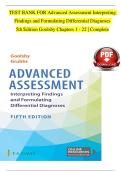
Findings and Formulating Differential Diagnoses
5th Edition Goolsby Chapters 1 - 22 | CompleteQ
, TABLEQOFQCONTENTS
➢ ChapterQ1.QAssessmentQandQClinicalQDecisionQMaking:QAnQOverview
➢ ChapterQ2.QGenomicQAssessment:QInterpretingQFindingsQandQFormulatingQDifferentialQDiagnoses
➢ ChapterQ3.QSkin
➢ ChapterQ4.QHead,QFace,QandQNeck
➢ ChapterQ5.QTheQEye
➢ ChapterQ6.QEar,QNose,QMouth,QandQThroat
➢ ChapterQ7.QCardiacQandQPeripheralQVascularQSystems
➢ ChapterQ8.QRespiratoryQSystem
➢ ChapterQ9.QBreasts
➢ ChapterQ10.QAbdomen
➢ ChapterQ11.QGenitourinaryQSystem
➢ ChapterQ12.QMaleQReproductiveQSystem
➢ ChapterQ13.QFemaleQReproductiveQSystem
➢ ChapterQ14.QMusculoskeletalQSystem
➢ ChapterQ15.QNeurologicalQSystem
➢ ChapterQ16.QNonspecificQComplaints
➢ ChapterQ17.QPsychiatricQMentalQHealth
➢ ChapterQ18.QPediatricQPatients
➢ ChapterQ19.QPregnantQPatients
➢ ChapterQ20.QAssessmentQofQtheQTransgenderQorQGenderQDiverseQAdult
➢ ChapterQ21.QOlderQPatients
➢ ChapterQ22.QPersonsQWithQDisabilities
, ➢ ChapterQ1.QAssessmentQandQClinicalQDecisionQMaking:QAnQOverview
MultipleQ Choice
IdentifyQtheQchoiceQthatQbestQcompletesQtheQstatementQorQanswersQtheQquestion.
Q 1. WhichQtypeQofQclinicalQdecision-makingQisQmostQreliable?
A. Intuitive
B. Analytical
C. Experiential
D. Augenblick
Q 2. WhichQofQtheQfollowingQisQfalse?QToQobtainQadequateQhistory,Qhealth-careQprovidersQmustQbe:
A. MethodicalQandQsystematic
B. AttentiveQtoQtheQpatient’sQverbalQandQnonverbalQl
anguage
C. AbleQtoQaccuratelyQinterpretQtheQpatient’sQrespons
es
D. AdeptQatQreadingQintoQtheQpatient’sQstatements
Q 3. EssentialQpartsQofQaQhealthQhistoryQincludeQallQofQtheQfollowingQexcept:
A. ChiefQcomplaint
B. HistoryQofQtheQpresentQillness
C. CurrentQvitalQsigns
D. AllQofQtheQaboveQareQessentialQhistoryQco
mponents
Q 4. WhichQofQtheQfollowingQisQfalse?QWhileQperformingQtheQphysicalQexamination,QtheQexaminerQmustQbeQableQto:
A. DifferentiateQbetweenQnormalQandQabnormalQfindings
B. RecallQknowledgeQofQaQrangeQofQconditionsQandQtheirQassociatedQsignsQa
ndQsymptoms
C. RecognizeQhowQcertainQconditionsQaffectQtheQresponseQtoQotherQconditions
D. ForeseeQunpredictableQfindings
Q 5. TheQfollowingQisQtheQleastQreliableQsourceQofQinformationQforQdiagnosticQstatistics:
, A. Evidence-basedQinvestigations
B. PrimaryQreportsQofQresearch
C. EstimationQbasedQonQaQprovider’sQexpe
rience
D. PublishedQmeta-analyses
Q 6. TheQfollowingQcanQbeQusedQtoQassistQinQsoundQclinicalQdecision-making:
A. AlgorithmQpublishedQinQaQpeer-
reviewedQjournalQarticle
B. ClinicalQpracticeQguidelines
C. Evidence-basedQresearch
D. AllQofQtheQabove
Q 7. IfQaQdiagnosticQstudyQhasQhighQsensitivity,Q thisQindicatesQa:
A. HighQpercentageQofQpersonsQwithQtheQgivenQconditionQwillQhaveQanQa
bnormalQresult
B. LowQpercentageQofQpersonsQwithQtheQgivenQconditionQwillQhaveQanQab
normalQresult
C. LowQlikelihoodQofQnormalQresultQinQpersonsQwithoutQaQgivenQcondition
D. NoneQofQtheQabove
Q 8. IfQaQdiagnosticQstudyQhasQhighQspecificity,Q thisQindicatesQa:
A. LowQpercentageQofQhealthyQindividualsQwillQshowQaQnormalQresult
B. HighQpercentageQofQhealthyQindividualsQwillQshowQaQnormalQresul
t
C. HighQpercentageQofQindividualsQwithQaQdisorderQwillQshowQaQnor
malQresult
D. LowQpercentageQofQindividualsQwithQaQdisorderQwillQshowQanQab
normalQresult
Q 9. AQlikelihoodQratioQaboveQ1QindicatesQthatQaQdiagnosticQtestQshowingQa:
A. PositiveQresultQisQstronglyQassociatedQwithQtheQdisease
B. NegativeQresultQisQstronglyQassociatedQwithQabsenceQofQt
heQdisease
C. PositiveQresultQisQweaklyQassociatedQwithQtheQdisease
D. NegativeQresultQisQweaklyQassociatedQwithQabsenceQofQth
eQdisease