BLP WS14/15
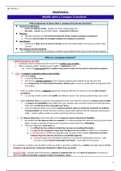
Insolvency
Identify when a Company is Insolvent
Why is important to know when a company has become insolvent?
Practical considerations
o Lack of an ability to trade – buying new stock, paying wages etc.
o Buy back – cannot out of profits/capital – statement of solvency.
Directors
o The duty of directors to act in the best interests of the company changes on insolvency.
o Directors may be liable for wrongful trading if the company is insolvent.
Loan finance
o Insolvency is likely to be an event of de fault which will enable holders of security to enforce their
security.
The company may be wound up
o Creditors have to prove a company is unable to pay its debts for the court to wind up the company.
When is a Company Insolvent?
s.122(1)(f) Insolvency Act 1986:
A company may be wound up by the court if it is “unable to pay its debts”.
When a company will be “unable to pay its debts” is defined by s.123.
This is the main ground that a creditor must prove in order for the court to wind up the company.
s.123 – A company is deemed unable to pay its debts:
(1)(a): If a creditor:
Is owed £750 or more.
Has served a statutory demand on the company requiring the company to pay the sum and;
the company has, for three weeks thereafter, failed to pay or come to an alternative arrangement with
the creditor.
(1)(b): A creditor obtains a judgment against the company AND tries to enforce it, but the debt remains
unsatisfied.
I.e. you have tried to send in the bailiffs and failed to recover. But costly/uncertain/long– go to court.
(1)(e): Cash Flow Test: It is proved to the satisfaction of the court that the company is unable to pay its debts.
On balance of probabilities (more likely than not) company does not have resources to discharge those
debts that will fall due in the reasonable near future.
Look for indicative factors such as the company having to agree to restructure payments to creditors.
Communications e.g. emails from the company may provide evidence that the company cannot pay its
debts – need to adduce evidence so time consuming and less certainty.
(2): Balance Sheet test: If the total value of the company’s assets is less than its liabilities
Be mindful that the balance sheet is a snapshot- it is entirely possible the value of assets (e.g. due to bad
debts, change in valuation of assets such as premises, means that this is misleading).
This test is therefore rarely used, as:
It is difficult for the creditor to obtain the necessary accounting information.
It is easy for the company to argue that the figures are out of date or subject to re-evaluation.
s.123(1)(a) and s.123(1)(b) are arguably easier to prove as the creditor need show no further
evidence than the statutory demand or unsatisfied judgment.
Eurosail: Makes clear that balance sheet test is not purely mathematical exercise – take
account of events beyond reasonable near future – more likely to be accurate.
If a company is "unable to pay its debts" under any of the s.123 tests, a petition by a creditor (amongst others) for the
company to be placed into compulsory liquidation is likely to be successful.
Sch B1 IA 1986 – provides that if the directors appoint an administrator then the Point of Insolvency is the time at
which the notice of intention to Appoint is filed at Companies’ House.
1
, BLP WS14/15
Directors’ Duties on Insolvency
Duty to s.172 CA 2006
promote Directors have a duty to promote the success of the company – increase long term value of
success of the company’s shares for the members as a whole
creditors s.172(3) provides that this duty is subject to “any enactment or rule of law requiring
directors… to consider or act in the interests of creditors of the company”.
(reversed
o The effect of this is to “shift” the duty to promote success of “the company” to “the
through
creditors” when the company enters insolvency (real not remote risk of insolvency)
s.172(3). – Recover as much as possible for them/preserve assets.
o The provision does not state when creditors’ interests are to be considered. This is
left to the common law.
s.174 CA 2006
Directors still have a duty to exercise reasonable care, skill and diligence
Wrongful s.214 Insolvency Act 1986:
Trading s.214(2): If a company is insolvent (a)
and a director (c)
knew OR ought to have known, that there was no reasonable prospect that the company
would avoid insolvent liquidation (b)
THEN: a director may be liable under s.214(1) to “make such contribution to the company’s assets
as the court thinks proper” from own personal assets (liquidator or administrator can make order)
o Subjective and objective threshold s.214(4) … what ought to know is what would be
known or ascertained, or reached or taken, by a reasonably diligent person having
both:
(a) Objective: The general knowledge, skill and experience that may reasonably
be expected of a person carrying out the same functions as are carried out by
that director in relation to the company, and;
(b) Subjective: the general knowledge, skill and experience that that director has.
s.214(3): ‘Every step’ defense: The court may not make such an order if it is satisfied that the
Defence: director “took every step with a view to minimizing the potential loss to the company’s
Practical steps creditors”.
for directors What’s already been done and what would satisfy every step? What hasn’t been done?
when o On insolvency, the directors therefore should be:
insolvency Taking professional advice ASAP – i.e. legal and accountancy
seems pending Minimizing further goods taken on credit – do not take on any more debt
Rigorously pursue and collecting debts
Negotiate installment for creditors
Keeping full minutes (evidence)
Updating accounts regularly to establish and monitor the financial position of the
company
Keeping the board fully updated with matters
Changing terms and conditions – immediate payment
Should you resign as a director? You do not need to – if over time, the company
is not salvageable, you can.
Fraudulent Civil claim brought by liquidator or administrator, where Director or any other person who is party to
Trading the ‘carrying on of a business with the intent to defraud creditors.
s.213 IA Sunshine Defense: If director genuinely believed things would get better, then this is a defense no
matter how objectively unrealistic that belief.
Director or other person liable to make contributions to the company’s assets as the court thinks
proper. (s.213(2) IA)
Criminal Sanctions can be brought under (s.993 CA 2006)
2
Insolvency
Identify when a Company is Insolvent
Why is important to know when a company has become insolvent?
Practical considerations
o Lack of an ability to trade – buying new stock, paying wages etc.
o Buy back – cannot out of profits/capital – statement of solvency.
Directors
o The duty of directors to act in the best interests of the company changes on insolvency.
o Directors may be liable for wrongful trading if the company is insolvent.
Loan finance
o Insolvency is likely to be an event of de fault which will enable holders of security to enforce their
security.
The company may be wound up
o Creditors have to prove a company is unable to pay its debts for the court to wind up the company.
When is a Company Insolvent?
s.122(1)(f) Insolvency Act 1986:
A company may be wound up by the court if it is “unable to pay its debts”.
When a company will be “unable to pay its debts” is defined by s.123.
This is the main ground that a creditor must prove in order for the court to wind up the company.
s.123 – A company is deemed unable to pay its debts:
(1)(a): If a creditor:
Is owed £750 or more.
Has served a statutory demand on the company requiring the company to pay the sum and;
the company has, for three weeks thereafter, failed to pay or come to an alternative arrangement with
the creditor.
(1)(b): A creditor obtains a judgment against the company AND tries to enforce it, but the debt remains
unsatisfied.
I.e. you have tried to send in the bailiffs and failed to recover. But costly/uncertain/long– go to court.
(1)(e): Cash Flow Test: It is proved to the satisfaction of the court that the company is unable to pay its debts.
On balance of probabilities (more likely than not) company does not have resources to discharge those
debts that will fall due in the reasonable near future.
Look for indicative factors such as the company having to agree to restructure payments to creditors.
Communications e.g. emails from the company may provide evidence that the company cannot pay its
debts – need to adduce evidence so time consuming and less certainty.
(2): Balance Sheet test: If the total value of the company’s assets is less than its liabilities
Be mindful that the balance sheet is a snapshot- it is entirely possible the value of assets (e.g. due to bad
debts, change in valuation of assets such as premises, means that this is misleading).
This test is therefore rarely used, as:
It is difficult for the creditor to obtain the necessary accounting information.
It is easy for the company to argue that the figures are out of date or subject to re-evaluation.
s.123(1)(a) and s.123(1)(b) are arguably easier to prove as the creditor need show no further
evidence than the statutory demand or unsatisfied judgment.
Eurosail: Makes clear that balance sheet test is not purely mathematical exercise – take
account of events beyond reasonable near future – more likely to be accurate.
If a company is "unable to pay its debts" under any of the s.123 tests, a petition by a creditor (amongst others) for the
company to be placed into compulsory liquidation is likely to be successful.
Sch B1 IA 1986 – provides that if the directors appoint an administrator then the Point of Insolvency is the time at
which the notice of intention to Appoint is filed at Companies’ House.
1
, BLP WS14/15
Directors’ Duties on Insolvency
Duty to s.172 CA 2006
promote Directors have a duty to promote the success of the company – increase long term value of
success of the company’s shares for the members as a whole
creditors s.172(3) provides that this duty is subject to “any enactment or rule of law requiring
directors… to consider or act in the interests of creditors of the company”.
(reversed
o The effect of this is to “shift” the duty to promote success of “the company” to “the
through
creditors” when the company enters insolvency (real not remote risk of insolvency)
s.172(3). – Recover as much as possible for them/preserve assets.
o The provision does not state when creditors’ interests are to be considered. This is
left to the common law.
s.174 CA 2006
Directors still have a duty to exercise reasonable care, skill and diligence
Wrongful s.214 Insolvency Act 1986:
Trading s.214(2): If a company is insolvent (a)
and a director (c)
knew OR ought to have known, that there was no reasonable prospect that the company
would avoid insolvent liquidation (b)
THEN: a director may be liable under s.214(1) to “make such contribution to the company’s assets
as the court thinks proper” from own personal assets (liquidator or administrator can make order)
o Subjective and objective threshold s.214(4) … what ought to know is what would be
known or ascertained, or reached or taken, by a reasonably diligent person having
both:
(a) Objective: The general knowledge, skill and experience that may reasonably
be expected of a person carrying out the same functions as are carried out by
that director in relation to the company, and;
(b) Subjective: the general knowledge, skill and experience that that director has.
s.214(3): ‘Every step’ defense: The court may not make such an order if it is satisfied that the
Defence: director “took every step with a view to minimizing the potential loss to the company’s
Practical steps creditors”.
for directors What’s already been done and what would satisfy every step? What hasn’t been done?
when o On insolvency, the directors therefore should be:
insolvency Taking professional advice ASAP – i.e. legal and accountancy
seems pending Minimizing further goods taken on credit – do not take on any more debt
Rigorously pursue and collecting debts
Negotiate installment for creditors
Keeping full minutes (evidence)
Updating accounts regularly to establish and monitor the financial position of the
company
Keeping the board fully updated with matters
Changing terms and conditions – immediate payment
Should you resign as a director? You do not need to – if over time, the company
is not salvageable, you can.
Fraudulent Civil claim brought by liquidator or administrator, where Director or any other person who is party to
Trading the ‘carrying on of a business with the intent to defraud creditors.
s.213 IA Sunshine Defense: If director genuinely believed things would get better, then this is a defense no
matter how objectively unrealistic that belief.
Director or other person liable to make contributions to the company’s assets as the court thinks
proper. (s.213(2) IA)
Criminal Sanctions can be brought under (s.993 CA 2006)
2