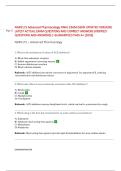
NGR5172 Advanced Pharmacology FINAL EXAM (NEW UPDATED VERSION)
Page | 1 LATEST ACTUAL EXAM QUESTIONS AND CORRECT ANSWERS (VERIFIED
QUESTIONS AND ANSWERS) | GUARANTEED PASS A+ [2026]
NGR5172 – Advanced Pharmacology
1. What is the mechanism of action of ACE inhibitors?
A) Block beta-adrenergic receptors
B) Inhibit angiotensin-converting enzyme
C) Increase aldosterone secretion
D) Block calcium channels
Rationale: ACE inhibitors prevent the conversion of angiotensin I to angiotensin II, reducing
vasoconstriction and aldosterone release.
2. Which side effect is most commonly associated with ACE inhibitors?
A) Bradycardia
B) Cough
C) Hypoglycemia
D) Constipation
Rationale: ACE inhibitors increase bradykinin levels, which can lead to a persistent dry cough.
3. Which drug is the first-line treatment for an acute asthma exacerbation?
A) Salmeterol
B) Albuterol (short-acting beta-agonist)
C) Montelukast
D) Prednisone
Rationale: Short-acting beta-agonists provide rapid bronchodilation for acute asthma attacks.
EXAMPREPMASTER
, 4. A patient taking warfarin should avoid which vitamin to prevent interference with therapy?
A) Vitamin C
B) Vitamin K
C) Vitamin D
Page | 2 D) Vitamin B12
Rationale: Vitamin K antagonizes warfarin’s anticoagulant effect.
5. Which antibiotic is associated with ototoxicity?
A) Gentamicin
B) Amoxicillin
C) Ciprofloxacin
D) Azithromycin
Rationale: Aminoglycosides, like gentamicin, can cause hearing loss due to ototoxicity.
6. Which drug class is primarily used to reduce cholesterol absorption in the intestines?
A) Statins
B) Ezetimibe
C) Fibrates
D) Niacin
Rationale: Ezetimibe inhibits intestinal absorption of cholesterol.
7. What is the antidote for acetaminophen toxicity?
A) Naloxone
B) Atropine
C) N-acetylcysteine
D) Flumazenil
Rationale: N-acetylcysteine replenishes glutathione and prevents hepatotoxicity from
acetaminophen overdose.
8. Which drug is a loop diuretic?
A) Furosemide
B) Hydrochlorothiazide
EXAMPREPMASTER
, C) Spironolactone
D) Mannitol
Rationale: Loop diuretics inhibit the Na⁺-K⁺-2Cl⁻ symporter in the loop of Henle, causing potent
diuresis.
Page | 3
9. What is a major adverse effect of aminoglycosides?
A) Hepatotoxicity
B) Ototoxicity and nephrotoxicity
C) Hyperkalemia
D) Hypoglycemia
Rationale: Aminoglycosides can damage kidneys and inner ear hair cells.
10. Which drug is classified as a selective serotonin reuptake inhibitor (SSRI)?
A) Fluoxetine
B) Amitriptyline
C) Lithium
D) Diazepam
Rationale: Fluoxetine inhibits serotonin reuptake, increasing serotonergic activity.
11. A patient on digoxin presents with nausea, vomiting, and visual disturbances. What should
the nurse suspect?
A) Hypokalemia
B) Digoxin toxicity
C) Hyperglycemia
D) Hypotension
Rationale: Digoxin toxicity presents with gastrointestinal and visual symptoms, often exacerbated
by electrolyte imbalances.
12. Which drug class is used to treat Type 2 Diabetes by increasing insulin sensitivity?
A) Sulfonylureas
B) Biguanides (Metformin)
C) Thiazolidinediones
D) DPP-4 inhibitors
EXAMPREPMASTER
, Rationale: Metformin improves insulin sensitivity and decreases hepatic glucose production.
13. Which medication is used as first-line therapy for heart failure with reduced ejection
fraction?
Page | 4
A) Beta-blocker
B) ACE inhibitor
C) Calcium channel blocker
D) Digoxin
Rationale: ACE inhibitors reduce afterload and preload, improving survival in HFrEF.
14. A patient develops a red man syndrome after vancomycin infusion. What is the appropriate
action?
A) Stop infusion and give antihistamine
B) Continue infusion slowly
C) Switch to aminoglycoside
D) Give epinephrine
Rationale: Red man syndrome is an infusion-related histamine reaction; slowing infusion and
antihistamines treat it.
15. Which of the following is a proton pump inhibitor?
A) Ranitidine
B) Omeprazole
C) Aluminum hydroxide
D) Metoclopramide
Rationale: PPIs inhibit H⁺/K⁺ ATPase in parietal cells, reducing gastric acid secretion.
16. What is the mechanism of action of beta-blockers in hypertension?
A) Vasodilation via calcium channels
B) Block beta-adrenergic receptors, reducing heart rate and contractility
C) Increase diuresis
D) Inhibit ACE
Rationale: Beta-blockers reduce cardiac output by blocking sympathetic stimulation.
EXAMPREPMASTER
Page | 1 LATEST ACTUAL EXAM QUESTIONS AND CORRECT ANSWERS (VERIFIED
QUESTIONS AND ANSWERS) | GUARANTEED PASS A+ [2026]
NGR5172 – Advanced Pharmacology
1. What is the mechanism of action of ACE inhibitors?
A) Block beta-adrenergic receptors
B) Inhibit angiotensin-converting enzyme
C) Increase aldosterone secretion
D) Block calcium channels
Rationale: ACE inhibitors prevent the conversion of angiotensin I to angiotensin II, reducing
vasoconstriction and aldosterone release.
2. Which side effect is most commonly associated with ACE inhibitors?
A) Bradycardia
B) Cough
C) Hypoglycemia
D) Constipation
Rationale: ACE inhibitors increase bradykinin levels, which can lead to a persistent dry cough.
3. Which drug is the first-line treatment for an acute asthma exacerbation?
A) Salmeterol
B) Albuterol (short-acting beta-agonist)
C) Montelukast
D) Prednisone
Rationale: Short-acting beta-agonists provide rapid bronchodilation for acute asthma attacks.
EXAMPREPMASTER
, 4. A patient taking warfarin should avoid which vitamin to prevent interference with therapy?
A) Vitamin C
B) Vitamin K
C) Vitamin D
Page | 2 D) Vitamin B12
Rationale: Vitamin K antagonizes warfarin’s anticoagulant effect.
5. Which antibiotic is associated with ototoxicity?
A) Gentamicin
B) Amoxicillin
C) Ciprofloxacin
D) Azithromycin
Rationale: Aminoglycosides, like gentamicin, can cause hearing loss due to ototoxicity.
6. Which drug class is primarily used to reduce cholesterol absorption in the intestines?
A) Statins
B) Ezetimibe
C) Fibrates
D) Niacin
Rationale: Ezetimibe inhibits intestinal absorption of cholesterol.
7. What is the antidote for acetaminophen toxicity?
A) Naloxone
B) Atropine
C) N-acetylcysteine
D) Flumazenil
Rationale: N-acetylcysteine replenishes glutathione and prevents hepatotoxicity from
acetaminophen overdose.
8. Which drug is a loop diuretic?
A) Furosemide
B) Hydrochlorothiazide
EXAMPREPMASTER
, C) Spironolactone
D) Mannitol
Rationale: Loop diuretics inhibit the Na⁺-K⁺-2Cl⁻ symporter in the loop of Henle, causing potent
diuresis.
Page | 3
9. What is a major adverse effect of aminoglycosides?
A) Hepatotoxicity
B) Ototoxicity and nephrotoxicity
C) Hyperkalemia
D) Hypoglycemia
Rationale: Aminoglycosides can damage kidneys and inner ear hair cells.
10. Which drug is classified as a selective serotonin reuptake inhibitor (SSRI)?
A) Fluoxetine
B) Amitriptyline
C) Lithium
D) Diazepam
Rationale: Fluoxetine inhibits serotonin reuptake, increasing serotonergic activity.
11. A patient on digoxin presents with nausea, vomiting, and visual disturbances. What should
the nurse suspect?
A) Hypokalemia
B) Digoxin toxicity
C) Hyperglycemia
D) Hypotension
Rationale: Digoxin toxicity presents with gastrointestinal and visual symptoms, often exacerbated
by electrolyte imbalances.
12. Which drug class is used to treat Type 2 Diabetes by increasing insulin sensitivity?
A) Sulfonylureas
B) Biguanides (Metformin)
C) Thiazolidinediones
D) DPP-4 inhibitors
EXAMPREPMASTER
, Rationale: Metformin improves insulin sensitivity and decreases hepatic glucose production.
13. Which medication is used as first-line therapy for heart failure with reduced ejection
fraction?
Page | 4
A) Beta-blocker
B) ACE inhibitor
C) Calcium channel blocker
D) Digoxin
Rationale: ACE inhibitors reduce afterload and preload, improving survival in HFrEF.
14. A patient develops a red man syndrome after vancomycin infusion. What is the appropriate
action?
A) Stop infusion and give antihistamine
B) Continue infusion slowly
C) Switch to aminoglycoside
D) Give epinephrine
Rationale: Red man syndrome is an infusion-related histamine reaction; slowing infusion and
antihistamines treat it.
15. Which of the following is a proton pump inhibitor?
A) Ranitidine
B) Omeprazole
C) Aluminum hydroxide
D) Metoclopramide
Rationale: PPIs inhibit H⁺/K⁺ ATPase in parietal cells, reducing gastric acid secretion.
16. What is the mechanism of action of beta-blockers in hypertension?
A) Vasodilation via calcium channels
B) Block beta-adrenergic receptors, reducing heart rate and contractility
C) Increase diuresis
D) Inhibit ACE
Rationale: Beta-blockers reduce cardiac output by blocking sympathetic stimulation.
EXAMPREPMASTER