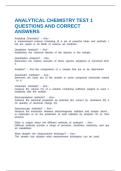
ANALYTICAL CHEMISTRY TEST 1
QUESTIONS AND CORRECT
ANSWERS
AnalyticalA2Chemistry?A2-A2Ans--
aA2measurementA2scienceA2consistingA2ofA2aA2setA2ofA2powerfulA2ideasA2andA2methodsA2t
hatA2areA2usefulA2inA2allA2fieldsA2ofA2scienceA2adA2medicine.
QualitativeA2Analysis?A2-A2Ans--
establishesA2theA2chemicalA2identityA2ofA2theA2speciesA2inA2theA2sample.
QuantitativeA2Analysis?A2-A2Ans--
determinesA2theA2relativeA2amountsA2ofA2theseA2speciesA2(analytes)A2inA2numericalA2term
s.
Analytes?A2-A2Ans--theA2componentsA2ofA2aA2sampleA2thatA2areA2toA2beA2determined
GravimetricA2methods?A2-A2Ans--
determineA2theA2massA2(m)A2ofA2theA2analyteA2orA2someA2compoundA2chemicallyA2related
A2toA2it.
VolumetricA2methods?A2-A2Ans--
measureA2theA2volumeA2(V)A2ofA2aA2solutionA2containingA2sufficientA2reagentA2toA2reactA2c
ompletelyA2withA2theA2analyte.
ElectroanalyticalA2methods?A2-A2Ans--
measureA2theA2electricalA2propertiesA2asA2potentialA2(E),A2currentA2(I),A2resistanceA2(R)A2a
ndA2quantityA2ofA2electricalA2chargeA2(C).
SpectroscopicA2methods?A2-A2Ans--
measureA2theA2interactionA2betweenA2electromagneticA2radiationA2andA2analyteA2atomsA2
orA2moleculesA2orA2onA2theA2productionA2ofA2suchA2radiationA2byA2analytes.A2IRA2vs.A2fluor
escence
WhatA2isA2uniqueA2aboutA2theA2differentA2methodsA2ofA2analysis?A2-A2Ans--
DifferentA2methodsA2provideA2aA2rangeA2ofA2precision,A2sensitivity,A2selectivity,A2andA2spe
edA2capabilities.
WhatA2dictatesA2theA2measurementA2technique?A2-A2Ans--
TheA2sampleA2sizeA2dictatesA2whatA2measurementA2techniquesA2canA2beA2used.
QUESTIONS AND CORRECT
ANSWERS
AnalyticalA2Chemistry?A2-A2Ans--
aA2measurementA2scienceA2consistingA2ofA2aA2setA2ofA2powerfulA2ideasA2andA2methodsA2t
hatA2areA2usefulA2inA2allA2fieldsA2ofA2scienceA2adA2medicine.
QualitativeA2Analysis?A2-A2Ans--
establishesA2theA2chemicalA2identityA2ofA2theA2speciesA2inA2theA2sample.
QuantitativeA2Analysis?A2-A2Ans--
determinesA2theA2relativeA2amountsA2ofA2theseA2speciesA2(analytes)A2inA2numericalA2term
s.
Analytes?A2-A2Ans--theA2componentsA2ofA2aA2sampleA2thatA2areA2toA2beA2determined
GravimetricA2methods?A2-A2Ans--
determineA2theA2massA2(m)A2ofA2theA2analyteA2orA2someA2compoundA2chemicallyA2related
A2toA2it.
VolumetricA2methods?A2-A2Ans--
measureA2theA2volumeA2(V)A2ofA2aA2solutionA2containingA2sufficientA2reagentA2toA2reactA2c
ompletelyA2withA2theA2analyte.
ElectroanalyticalA2methods?A2-A2Ans--
measureA2theA2electricalA2propertiesA2asA2potentialA2(E),A2currentA2(I),A2resistanceA2(R)A2a
ndA2quantityA2ofA2electricalA2chargeA2(C).
SpectroscopicA2methods?A2-A2Ans--
measureA2theA2interactionA2betweenA2electromagneticA2radiationA2andA2analyteA2atomsA2
orA2moleculesA2orA2onA2theA2productionA2ofA2suchA2radiationA2byA2analytes.A2IRA2vs.A2fluor
escence
WhatA2isA2uniqueA2aboutA2theA2differentA2methodsA2ofA2analysis?A2-A2Ans--
DifferentA2methodsA2provideA2aA2rangeA2ofA2precision,A2sensitivity,A2selectivity,A2andA2spe
edA2capabilities.
WhatA2dictatesA2theA2measurementA2technique?A2-A2Ans--
TheA2sampleA2sizeA2dictatesA2whatA2measurementA2techniquesA2canA2beA2used.