

NOLS WILDERNESS MEDICINE WFR Practice Test with all
Correct & 100% Verified Answers |Actual Complete Exam|
Already Graded A+
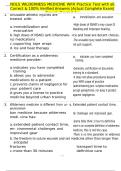
1. Unusable athletic injuries are
a. immobilization and evacuation
treated with:
-High doses of NSAID's may cause GI
a. immobilization and
bleeding and improper healing.
evacuation
b. high doses of NSAID (anti inflammato- -Ice and heat are decent choices.
ry) medications -The unusable injury needs immobilization,
c. supporting tape wraps not just support.
d. Ice and heat therapy
2. Certification as a wilderness a. indicates you have completed
medicine provider: training
a. indicates you have completed -Generally, certification on documents
training training to a standard.
b. allows you to administer -It does not allow procedures beyond
medications to a patient
your WFR scope of practice
c. prevents claims of negligence for
(administering pre- scription medications
your patient care
except epinephrine), nor does it protect
d. gives you a license to practice
against negligence.
medicine beyond urban training
3. Wilderness medicine is different from ur- a. Extended patient contact time,
environmen-
ban medicine because wilderness tal challenges and improvised gear.
medi- cine has:
-Some folks think 1 hour to definitive
a. extended patient contact time, care is an accepted definition of wilderness
en- vironmental challenges and medicine, this is not the case.
improvised gear -There is no time parameter on wilderness
b. the freedom to suture wounds and set medicine other than longer than
anticipated
fractures transport time to
c. more than 30 minutes definitive care
,NOLS WILDERNESS MEDICINE WFR Practice Test with all
Correct & 100% Verified Answers |Actual Complete Exam|
Already
d. different hypothermia Gradedtreatment
protocols A+ and transport time.
-We don't suture wounds or set
fractures and hypothermia treatment
principles are the same regardless of
location.
, NOLS WILDERNESS MEDICINE WFR Practice Test with all
Correct & 100% Verified Answers |Actual Complete Exam|
Already Graded A+b. can be treated with a
4. The most common injuries
consistently reported on hypothermia
wilderness expeditions are
a. lower leg fractures
b. shoulder dislocations
c. soft tissue wounds
d. open chest wounds
5. A patient in compensatory shock:
a. should be treated with
epinephrine by auto-injector
b. is compensating for the injury
and does not need treatment
c. maintains adequate perfusion
with vasoconstriction, increased
HR and RR
d. will have a slow HR and RR and
altered mental status
6. Compartment syndrome is
a. pressure in a muscle secondary to
an injury
b. managed with cool compresses
and massage
c. usually a geriatric problem
d. primarily a pediatric problem
7. A hypothermic patient
a. loses most of their heat through
their head
Correct & 100% Verified Answers |Actual Complete Exam|
Already Graded A+
1. Unusable athletic injuries are
a. immobilization and evacuation
treated with:
-High doses of NSAID's may cause GI
a. immobilization and
bleeding and improper healing.
evacuation
b. high doses of NSAID (anti inflammato- -Ice and heat are decent choices.
ry) medications -The unusable injury needs immobilization,
c. supporting tape wraps not just support.
d. Ice and heat therapy
2. Certification as a wilderness a. indicates you have completed
medicine provider: training
a. indicates you have completed -Generally, certification on documents
training training to a standard.
b. allows you to administer -It does not allow procedures beyond
medications to a patient
your WFR scope of practice
c. prevents claims of negligence for
(administering pre- scription medications
your patient care
except epinephrine), nor does it protect
d. gives you a license to practice
against negligence.
medicine beyond urban training
3. Wilderness medicine is different from ur- a. Extended patient contact time,
environmen-
ban medicine because wilderness tal challenges and improvised gear.
medi- cine has:
-Some folks think 1 hour to definitive
a. extended patient contact time, care is an accepted definition of wilderness
en- vironmental challenges and medicine, this is not the case.
improvised gear -There is no time parameter on wilderness
b. the freedom to suture wounds and set medicine other than longer than
anticipated
fractures transport time to
c. more than 30 minutes definitive care
,NOLS WILDERNESS MEDICINE WFR Practice Test with all
Correct & 100% Verified Answers |Actual Complete Exam|
Already
d. different hypothermia Gradedtreatment
protocols A+ and transport time.
-We don't suture wounds or set
fractures and hypothermia treatment
principles are the same regardless of
location.
, NOLS WILDERNESS MEDICINE WFR Practice Test with all
Correct & 100% Verified Answers |Actual Complete Exam|
Already Graded A+b. can be treated with a
4. The most common injuries
consistently reported on hypothermia
wilderness expeditions are
a. lower leg fractures
b. shoulder dislocations
c. soft tissue wounds
d. open chest wounds
5. A patient in compensatory shock:
a. should be treated with
epinephrine by auto-injector
b. is compensating for the injury
and does not need treatment
c. maintains adequate perfusion
with vasoconstriction, increased
HR and RR
d. will have a slow HR and RR and
altered mental status
6. Compartment syndrome is
a. pressure in a muscle secondary to
an injury
b. managed with cool compresses
and massage
c. usually a geriatric problem
d. primarily a pediatric problem
7. A hypothermic patient
a. loses most of their heat through
their head


