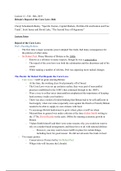
Lecture 7 - Jan. 30th, 2019
Idiosyncratic Approaches
Margaret Hermann, “Explaining Foreign Policy Behaviour Using the Personal Characteristics of
Political Leaders”
Kaiser Wilhelm and World War 1
- German emperor
- Thought to be much to blame for WWI
- He had several interesting personality traits
- Injured during childbirth - led to physical defect of left arm
- Concealed the defect - him and others around him very self conscious of it
Wilhelm’s upbringing: “Masculine Overcompensation”
- Because of his childhood environment, his personality was affected
Wilhelm’s impact on German foreign policy
Perception and Misperception
- Perception matters greatly
- How is information coming in? Does everyone see things the same way?
One stimulus - one response?
- Would all subjects respond to a stimulus in the same way?
- Oftentimes no, ex:
- What are people taking in from the information?
Emotions can influence decisions
- Emotions can push us away from rational thinking
Prejudices or biases influence how information is received and interpreted
- Things that you believe to be true beforehand will influence how you receive the
information.
- Ex: John Foster Dulles: American diplomat, named Secretary of State in 1950’s (key
period during the cold war) had core beliefs about the Soviet Union and Marxists / strong
anti-communist bias. This framed all of the information he received.
Belief-systems serve as shortcuts
- We know from many psychological studies that people rely a lot on
beliefs/frameworks/ways of understanding how the world operates.
- Humans tend to err systematically
Idiosyncratic Approaches
Margaret Hermann, “Explaining Foreign Policy Behaviour Using the Personal Characteristics of
Political Leaders”
Kaiser Wilhelm and World War 1
- German emperor
- Thought to be much to blame for WWI
- He had several interesting personality traits
- Injured during childbirth - led to physical defect of left arm
- Concealed the defect - him and others around him very self conscious of it
Wilhelm’s upbringing: “Masculine Overcompensation”
- Because of his childhood environment, his personality was affected
Wilhelm’s impact on German foreign policy
Perception and Misperception
- Perception matters greatly
- How is information coming in? Does everyone see things the same way?
One stimulus - one response?
- Would all subjects respond to a stimulus in the same way?
- Oftentimes no, ex:
- What are people taking in from the information?
Emotions can influence decisions
- Emotions can push us away from rational thinking
Prejudices or biases influence how information is received and interpreted
- Things that you believe to be true beforehand will influence how you receive the
information.
- Ex: John Foster Dulles: American diplomat, named Secretary of State in 1950’s (key
period during the cold war) had core beliefs about the Soviet Union and Marxists / strong
anti-communist bias. This framed all of the information he received.
Belief-systems serve as shortcuts
- We know from many psychological studies that people rely a lot on
beliefs/frameworks/ways of understanding how the world operates.
- Humans tend to err systematically