HUMAN RESOURCE MANAGEMENT IN PUBLIC ORGANISATIONS
INSTRUMENTAL DIMENSION
Chapter 1: The basic elements of the instrumental dimension
1. The role of social partners in setting up instrumental systems
- System to negotiate the labour conditions in industry and service organizations
o Who? Social partners (trade unions, employer organizations + government)
o What? Setting up socio-economic regulations
o Result: Socio-economic policy making
- Leading to Neo-Corporatist institutions = a system of consultation and policy making in
industrialized countries by which the government and social partners come to socio-
economic agreements in a tripartite consultative structure
o Neo-corporatism in Belgium: interest groups are so well integrated in the political
system that they have the power to regulate socio-economic policy making; trade
unions are everywhere (even in the board of UGent, and they have a lot of power! ->
is this necessary?)
- Two models: the Rhineland model versus the Anglo-Saxon model
o Europe (1980s): Rhineland model = institutional regulations between trade unions
and employers that led to satisfaction of the social partners strong influence on
socio-economic framework in which HRM was constituted
- The importance of socio-economic stakeholders in HRM
2. The core business of the instrumental dimension !
- Instrumental dimension: work systems, procedures, rules, other instruments that uphold and
regulate the collaboration of people in an organization
- Basic principle of HRM= the employee’s expectation that the required service is based on his
needs and wishes
a. The administrative service: the necessity of paperwork
- Transactional services:
o = personnel transactions that are directed at routine and information
o Necessary for every department + require less contact with service provider
o Administrative and ‘record-keeping’ character makes automation possible
o Less intense, rather simple and more easy to organize than transformational
o Administrative tasks, paperwork, giving advice and information about routine-based
activities
- Transformational services:
o Oriented at project-based method, less administrative + not routine-based activities
o Need more profound technical, juridical and managerial expertise
o Complex + require HRM professionalism: greater degree of expertise and problem-
solving capacity
o Related to change management designed to develop the employee and organization
o Require personal contact with internal clients + add more value
Transactional Transformational
Routine based (e.g. money withdrawal in the Transformation = changing things, it’s not a
bank: it’s a transaction) routine. (e.g. hybrid learning systems due to
covid)
Relative easy process Complex
, HUMAN RESOURCE MANAGEMENT IN PUBLIC ORGANISATIONS
Mostly not personal Mostly personal, because you need human
intervention to change things
Low competencies required Complex tasks where you need to think
Basic service Complex service
Example: Administration of personnel development: listing and registering students enrolled in this
course = transaction <> teaching = transformational
b. The administrative service: From simple to complex work organization (‘work design’)
- Not only administrative services, but also efficient and effective organization of work
processes: clear organization of work processes + clear demarcation of activities and
positions
- Tayloristic principles (= scientific management principles)
o = trend within management theory that wanted to shape the management of work
processes in a scientific way (work specialization)
o Led to a strong hierarchical structure of work relations
Hierarchy is confirmed by Weber: classic bureaucracy (rigid organization with
clarity, predictability, obedience)
“The one best way to do the job”, “optimal mode of production”- Taylor
o Deskilling of employees, as the work is split up in small task units employees
need only limited knowledge and skills
(+): employees are easily employable, at lowest price, can be performed by
unskilled workers
(-): possible ‘degrading’ of the work because thinking and doing are
separated, employee has less authority and autonomy in the workplace
- Deskilling leads to reskilling = executives and managers who take over control and
management work and thus have to posses the necessary knowledge and skills
- Reskilling and upgrading: jobs become more complex, need more skills to fulfil the exigencies
of the task
o Instead of constantly deskilling, some tasks are put together which leads to
enrichment of job content (cf. multitasking)
o reskilling and complex work organization = trend in post-industrial society
- New ways of defining jobs:
o From narrowly defined, routinized tasks to re-integration of tasks and multitasking
o From direct control to relative autonomy and devolution of management functions
to workers
o From deskilling to multiskilling and upskilling
o A shift in the unit of production from the individual to the group
o A shift from (technical and bureaucratic) system integration to social integration
through communicative action and co-operation in self-directed teams
- “Jobs Characteristics Model”: focuses on the motivating potential of task characteristics
- “Job demand-control Model” (Karasek): emphasizes the number of job demands and the
capacity for personal control over the job
o Job demands: physical, psychological, social or organizational aspects of the job that
require a certain effort of cost (e.g. work pressure, work overload, complex work)
o Job control: physical, psychological, social or organizational aspects of the job that
are related to skills or to the authority to make decisions (e.g. personal growth,
competencies, goal achievement)
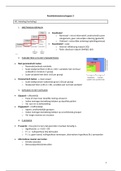
o 4 possible job situations:
INSTRUMENTAL DIMENSION
Chapter 1: The basic elements of the instrumental dimension
1. The role of social partners in setting up instrumental systems
- System to negotiate the labour conditions in industry and service organizations
o Who? Social partners (trade unions, employer organizations + government)
o What? Setting up socio-economic regulations
o Result: Socio-economic policy making
- Leading to Neo-Corporatist institutions = a system of consultation and policy making in
industrialized countries by which the government and social partners come to socio-
economic agreements in a tripartite consultative structure
o Neo-corporatism in Belgium: interest groups are so well integrated in the political
system that they have the power to regulate socio-economic policy making; trade
unions are everywhere (even in the board of UGent, and they have a lot of power! ->
is this necessary?)
- Two models: the Rhineland model versus the Anglo-Saxon model
o Europe (1980s): Rhineland model = institutional regulations between trade unions
and employers that led to satisfaction of the social partners strong influence on
socio-economic framework in which HRM was constituted
- The importance of socio-economic stakeholders in HRM
2. The core business of the instrumental dimension !
- Instrumental dimension: work systems, procedures, rules, other instruments that uphold and
regulate the collaboration of people in an organization
- Basic principle of HRM= the employee’s expectation that the required service is based on his
needs and wishes
a. The administrative service: the necessity of paperwork
- Transactional services:
o = personnel transactions that are directed at routine and information
o Necessary for every department + require less contact with service provider
o Administrative and ‘record-keeping’ character makes automation possible
o Less intense, rather simple and more easy to organize than transformational
o Administrative tasks, paperwork, giving advice and information about routine-based
activities
- Transformational services:
o Oriented at project-based method, less administrative + not routine-based activities
o Need more profound technical, juridical and managerial expertise
o Complex + require HRM professionalism: greater degree of expertise and problem-
solving capacity
o Related to change management designed to develop the employee and organization
o Require personal contact with internal clients + add more value
Transactional Transformational
Routine based (e.g. money withdrawal in the Transformation = changing things, it’s not a
bank: it’s a transaction) routine. (e.g. hybrid learning systems due to
covid)
Relative easy process Complex
, HUMAN RESOURCE MANAGEMENT IN PUBLIC ORGANISATIONS
Mostly not personal Mostly personal, because you need human
intervention to change things
Low competencies required Complex tasks where you need to think
Basic service Complex service
Example: Administration of personnel development: listing and registering students enrolled in this
course = transaction <> teaching = transformational
b. The administrative service: From simple to complex work organization (‘work design’)
- Not only administrative services, but also efficient and effective organization of work
processes: clear organization of work processes + clear demarcation of activities and
positions
- Tayloristic principles (= scientific management principles)
o = trend within management theory that wanted to shape the management of work
processes in a scientific way (work specialization)
o Led to a strong hierarchical structure of work relations
Hierarchy is confirmed by Weber: classic bureaucracy (rigid organization with
clarity, predictability, obedience)
“The one best way to do the job”, “optimal mode of production”- Taylor
o Deskilling of employees, as the work is split up in small task units employees
need only limited knowledge and skills
(+): employees are easily employable, at lowest price, can be performed by
unskilled workers
(-): possible ‘degrading’ of the work because thinking and doing are
separated, employee has less authority and autonomy in the workplace
- Deskilling leads to reskilling = executives and managers who take over control and
management work and thus have to posses the necessary knowledge and skills
- Reskilling and upgrading: jobs become more complex, need more skills to fulfil the exigencies
of the task
o Instead of constantly deskilling, some tasks are put together which leads to
enrichment of job content (cf. multitasking)
o reskilling and complex work organization = trend in post-industrial society
- New ways of defining jobs:
o From narrowly defined, routinized tasks to re-integration of tasks and multitasking
o From direct control to relative autonomy and devolution of management functions
to workers
o From deskilling to multiskilling and upskilling
o A shift in the unit of production from the individual to the group
o A shift from (technical and bureaucratic) system integration to social integration
through communicative action and co-operation in self-directed teams
- “Jobs Characteristics Model”: focuses on the motivating potential of task characteristics
- “Job demand-control Model” (Karasek): emphasizes the number of job demands and the
capacity for personal control over the job
o Job demands: physical, psychological, social or organizational aspects of the job that
require a certain effort of cost (e.g. work pressure, work overload, complex work)
o Job control: physical, psychological, social or organizational aspects of the job that
are related to skills or to the authority to make decisions (e.g. personal growth,
competencies, goal achievement)
o 4 possible job situations: