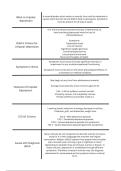
A mood disorder which varies in severity from mild to moderate to
What is Unipolar
severe. Both the ICD-10 and DSM-5 help to distinguish. Symptoms
depression must be present for at least 2 weeks.
5 or more symptoms present during a 2 week period, at
least one being depressed mood or loss of
interest/pleasure
Symptoms:
DSM-V Criteria for Depressed mood
Unipolar depression Loss of interest
Significant weight gain/loss
Insomnia/hypersomnia,
Less physical movement
Recurrent thoughts of death.
Symptoms must cause clinically significant distress or
impairment in any social/occupational functioning.
Symptoms Criteria
Symptoms must not be due to the direct physiological effects of
a substance or medical condition.
May begin at any time from adolescence onwards.
Average onset late 20s, most common ages 25-44.
Features of Unipolar
Depression USA - 3.4% of sufferers commit suicide
1/3 partly recover, 1/3 completely recover
Female sufferers outnumber males 2:1
Lowering mood, reduction in energy, decrease in activity.
Tiredness, guilt, worthlessness, weight loss.
ICD-10 Criteria F32.0 - Mild depressive episode
F32.1 - Moderate depressive episode
F32.2 - Severe depressive episode (no symptoms)
F32.3 - Severe depressive episode (psychotic symptoms)
Many cultures do not recognise the disorder and do not have a
word for it in their language that matches the English
connotation. Watters (2010) explains how people have shoulder
Issues with Diagnosis pain, stomach pain, burning in gut or tightness in chest
depending on whether they are Chinese, Iranian or Korean. In
(AO3)
these cultures, depression is manifested through different
symptoms. Therefore a western clinician may not diagnose
depression for some people as the symptoms have a cultural
form.
, Using DSM-5 can be seen as unreliable. 0.28 Kappa value (low) for
agreement between diagnostic practitioners. A Kappa value of
0.28 indicates low inter rater reliability, meaning that different
clinicians often disagree on the same patient's diagnosis.
Lieblich et al (2015) - full agreement on only 4 to 15% of diagnosis.
More Issues with
It highlights issues with diagnostic reliability, meaning that a
Diagnosis (AO3) patient might receive different diagnoses depending on the
practitioner, which can lead to inconsistent or inappropriate
treatment.
Monoamines are neurotransmitters (NT'S) that contain amino
acid.
Hypothesis states that those with low levels of these NT'S in
their brain have depression.
These NT'S include Dopamine, Seratonin, Noradrenaline.
Monoamine Hypothesis
Delgardo (2000) - deficiency of seratonin in Central Nervous
(Biological) System (CNS) and depleted levels of noradrenaline/dopamine
leads to monoamine deficiency.
Since drugs that help raise levels of these NT'S in the brain
help with the symptoms of depression, this also suggests that
depression comes from a deficiency in these NT'S.
Seratonin - regulate all other NT'S (Noradrenaline, Dopamine...).
No regulation leads to unpredictable thinking patterns.
Low Seratonin -> Low Noradrenaline -> low alertness, energy,
high anxiety
Monoamine
Hypothesis - What Dopamine - attention + motivation, pleasure + reward. Low
NT'S do dopamine -> diminished interest/pleasure.
Noradrenaline - fight or flight responses including heart rate,
blood pressure etc
Antidepressants work by increasing a patients level of the
Monoamine NT'S. NT'S can increase within hours but symptoms
may take up to 6 weeks to improve.
Lack of Monoamines may explain the 10-15% decrease of the
hippocampus (responsible for memories and producing new
Monoamine Hypothesis
neurons).
Antidepressants
Increasing monoamine levels through Selective Seratonin
Reuptake Inhibitors (SSRI'S) leads to release of neurotrophic
factors (Support survival and growth of different neurons)
which increases neurogenesis (the making of neurons). This
suggests the Monoamine hyoothesis stands, but there is more
to it.
What is Unipolar
severe. Both the ICD-10 and DSM-5 help to distinguish. Symptoms
depression must be present for at least 2 weeks.
5 or more symptoms present during a 2 week period, at
least one being depressed mood or loss of
interest/pleasure
Symptoms:
DSM-V Criteria for Depressed mood
Unipolar depression Loss of interest
Significant weight gain/loss
Insomnia/hypersomnia,
Less physical movement
Recurrent thoughts of death.
Symptoms must cause clinically significant distress or
impairment in any social/occupational functioning.
Symptoms Criteria
Symptoms must not be due to the direct physiological effects of
a substance or medical condition.
May begin at any time from adolescence onwards.
Average onset late 20s, most common ages 25-44.
Features of Unipolar
Depression USA - 3.4% of sufferers commit suicide
1/3 partly recover, 1/3 completely recover
Female sufferers outnumber males 2:1
Lowering mood, reduction in energy, decrease in activity.
Tiredness, guilt, worthlessness, weight loss.
ICD-10 Criteria F32.0 - Mild depressive episode
F32.1 - Moderate depressive episode
F32.2 - Severe depressive episode (no symptoms)
F32.3 - Severe depressive episode (psychotic symptoms)
Many cultures do not recognise the disorder and do not have a
word for it in their language that matches the English
connotation. Watters (2010) explains how people have shoulder
Issues with Diagnosis pain, stomach pain, burning in gut or tightness in chest
depending on whether they are Chinese, Iranian or Korean. In
(AO3)
these cultures, depression is manifested through different
symptoms. Therefore a western clinician may not diagnose
depression for some people as the symptoms have a cultural
form.
, Using DSM-5 can be seen as unreliable. 0.28 Kappa value (low) for
agreement between diagnostic practitioners. A Kappa value of
0.28 indicates low inter rater reliability, meaning that different
clinicians often disagree on the same patient's diagnosis.
Lieblich et al (2015) - full agreement on only 4 to 15% of diagnosis.
More Issues with
It highlights issues with diagnostic reliability, meaning that a
Diagnosis (AO3) patient might receive different diagnoses depending on the
practitioner, which can lead to inconsistent or inappropriate
treatment.
Monoamines are neurotransmitters (NT'S) that contain amino
acid.
Hypothesis states that those with low levels of these NT'S in
their brain have depression.
These NT'S include Dopamine, Seratonin, Noradrenaline.
Monoamine Hypothesis
Delgardo (2000) - deficiency of seratonin in Central Nervous
(Biological) System (CNS) and depleted levels of noradrenaline/dopamine
leads to monoamine deficiency.
Since drugs that help raise levels of these NT'S in the brain
help with the symptoms of depression, this also suggests that
depression comes from a deficiency in these NT'S.
Seratonin - regulate all other NT'S (Noradrenaline, Dopamine...).
No regulation leads to unpredictable thinking patterns.
Low Seratonin -> Low Noradrenaline -> low alertness, energy,
high anxiety
Monoamine
Hypothesis - What Dopamine - attention + motivation, pleasure + reward. Low
NT'S do dopamine -> diminished interest/pleasure.
Noradrenaline - fight or flight responses including heart rate,
blood pressure etc
Antidepressants work by increasing a patients level of the
Monoamine NT'S. NT'S can increase within hours but symptoms
may take up to 6 weeks to improve.
Lack of Monoamines may explain the 10-15% decrease of the
hippocampus (responsible for memories and producing new
Monoamine Hypothesis
neurons).
Antidepressants
Increasing monoamine levels through Selective Seratonin
Reuptake Inhibitors (SSRI'S) leads to release of neurotrophic
factors (Support survival and growth of different neurons)
which increases neurogenesis (the making of neurons). This
suggests the Monoamine hyoothesis stands, but there is more
to it.