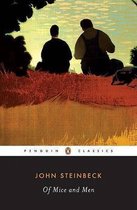
OMAM REVISION
INTRO: The didactic novella ‘Of Mice And Men’ by John Steinbeck raises awareness on the ill
treatment of migrant workers during the great Depression. Set against the 1930’s Californian
backdrop, the novella follows two farm workers – George Milton and Lennie Small - as they
try and achieve their own version of the impossible American Dream. In the essay I will
explore how Steinbeck portrays… DISCUSS THE QUESTION AND WHAT YOU WILL TALK
ABOUT IN THE ESSAY.
GEORGE
Intro: He is a complex character which conveys themes of friendship, responsibility, and the
pursuit of the American Dream. George's character is marked by his intelligence, loyalty, and
the burden of caring for Lennie, which leads him to make difficult decisions throughout the
novel.
Para1: Dynamic between George and Lennie in which George is the leader making decisions
and providing guidance. He is practical and intelligent, often seen as a father figure to Lennie
since his Aunt Clara is dead.
‘Think I’d let you carry your own work card’ – shows responsibility over Lennie and that he
cannot be trusted on his own.
‘’Hide in the brush until I come for you” – this instruction shows his authority and protective
nature and how Lennie is dependent on George so highlights the theme of friendship.
A 1930’s reader would be surprised to see these two migrant workers travelling together as
this was unusual at the time of the Great Depression. They would be happy to see someone
as reckless as Lennie has a caretaker and someone to look after him seeing that he would
not survive alone.
Para2: Presents George as a short-tempered individual who often takes his anger out on the
helpless Lennie.
‘ You crazy bastard, blubbering like a baby’ – the simile conveys a sense of impatience on
George’s part and he struggles to empathise with Lennie’s sadness. The expletive perhaps
indicates George feels anger due to Lennie’s unintelligence and childish nature.
‘Give it here!’ – the exclamatory shows George’s control over Lennie and that his word must
be obeyed. Punctuation shows his voice is raised
A 1930’s reader would feel a sense of empathy towards George as people with learning
difficulties, Like Lennie, were treated as relative outcasts and inconveniences towards
society and Steinbeck wanted to shed a light on this issue.
, Para 3: Shows he is a harder worker and has ambition to own a piece of land with Lennie
one day. He also wants to achieve the freedom of being his own boss and to be free from
their hardships.
‘live off the fatta the land’ – this metaphor indicates that George will finally enjoy the fruits
of his labour and have the luxurious life he has been longing for. Perhaps tired and wants to
be independent and wealthy. ‘fat’ connotes rich opulent lifestyle and self-sufficiency.
‘spose there was a carnival or a circus come to town, or a ball game or any damn thing’
– juxtaposes current life and do things for own amusement. Contrast to monotonous,
challenging life. Determiner shows type is irrelevant but find pleasure and escape from
itinerant labour.
George’s dream is not an individual aspiration but symbolises collective desire for a better
life and struggle for survival that many faced during the great depression. Reflection of
American dream shows hard work and determination was the hope for success. However,
this came very rarely and a 1930’s reader would know their fate was not of success.
Conclusion: George is a protective, intelligent and loyal character. His relationship with
Lennie, even though he is firm at times underscores the importance of friendship even in
difficult circumstances. His commitment to Lennie is stronger that his desire for freedom.
INTRO: The didactic novella ‘Of Mice And Men’ by John Steinbeck raises awareness on the ill
treatment of migrant workers during the great Depression. Set against the 1930’s Californian
backdrop, the novella follows two farm workers – George Milton and Lennie Small - as they
try and achieve their own version of the impossible American Dream. In the essay I will
explore how Steinbeck portrays… DISCUSS THE QUESTION AND WHAT YOU WILL TALK
ABOUT IN THE ESSAY.
GEORGE
Intro: He is a complex character which conveys themes of friendship, responsibility, and the
pursuit of the American Dream. George's character is marked by his intelligence, loyalty, and
the burden of caring for Lennie, which leads him to make difficult decisions throughout the
novel.
Para1: Dynamic between George and Lennie in which George is the leader making decisions
and providing guidance. He is practical and intelligent, often seen as a father figure to Lennie
since his Aunt Clara is dead.
‘Think I’d let you carry your own work card’ – shows responsibility over Lennie and that he
cannot be trusted on his own.
‘’Hide in the brush until I come for you” – this instruction shows his authority and protective
nature and how Lennie is dependent on George so highlights the theme of friendship.
A 1930’s reader would be surprised to see these two migrant workers travelling together as
this was unusual at the time of the Great Depression. They would be happy to see someone
as reckless as Lennie has a caretaker and someone to look after him seeing that he would
not survive alone.
Para2: Presents George as a short-tempered individual who often takes his anger out on the
helpless Lennie.
‘ You crazy bastard, blubbering like a baby’ – the simile conveys a sense of impatience on
George’s part and he struggles to empathise with Lennie’s sadness. The expletive perhaps
indicates George feels anger due to Lennie’s unintelligence and childish nature.
‘Give it here!’ – the exclamatory shows George’s control over Lennie and that his word must
be obeyed. Punctuation shows his voice is raised
A 1930’s reader would feel a sense of empathy towards George as people with learning
difficulties, Like Lennie, were treated as relative outcasts and inconveniences towards
society and Steinbeck wanted to shed a light on this issue.
, Para 3: Shows he is a harder worker and has ambition to own a piece of land with Lennie
one day. He also wants to achieve the freedom of being his own boss and to be free from
their hardships.
‘live off the fatta the land’ – this metaphor indicates that George will finally enjoy the fruits
of his labour and have the luxurious life he has been longing for. Perhaps tired and wants to
be independent and wealthy. ‘fat’ connotes rich opulent lifestyle and self-sufficiency.
‘spose there was a carnival or a circus come to town, or a ball game or any damn thing’
– juxtaposes current life and do things for own amusement. Contrast to monotonous,
challenging life. Determiner shows type is irrelevant but find pleasure and escape from
itinerant labour.
George’s dream is not an individual aspiration but symbolises collective desire for a better
life and struggle for survival that many faced during the great depression. Reflection of
American dream shows hard work and determination was the hope for success. However,
this came very rarely and a 1930’s reader would know their fate was not of success.
Conclusion: George is a protective, intelligent and loyal character. His relationship with
Lennie, even though he is firm at times underscores the importance of friendship even in
difficult circumstances. His commitment to Lennie is stronger that his desire for freedom.