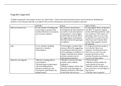
Cognitive Approach
(Cognitive approach concentrates on how our mind works – looks at internal mental processes such as attention, thinking and
memory. It sees human mind like a computer that receives information, processes it and gives response)
Andrade Laney Baron-Cohen
Why was carried out To test whether doodling aids No previous research has To investigate theory of mind in
concentration, measured by investigated the false beliefs for AS/HFA. To improve original
recall performance on memory a positive event and explored study which had problems: only
test (no prior studies). consequences; to investigate two options so 50% chance of
positive false memory effects guessing; some were too easy,
by suggesting to participants could have been solved by eye
that they had loved asparagus direction; more females than
as children. males; Only opposite choices;
No glossary.
Aim To see whether doodling To investigate a positive false To replicate previous study; to
improves or hinders memory effects by suggesting test whether there was
concentration. to participants that they had negative correlation between
loved asparagus as children; To the scores on eyes test and
explore consequences of false autism spectrum; to test
positive memory and its whether females scored better
underlying mechanism. on eyes test than males.
Behavior investigated -Whether doodling affects -Whether a memory for false -Theory of mind
concentration positive event could be -Whether autistic adults can
-By hindering or improving it implanted read emotion in the eyes
-Does doodling distract -Whether telling a subject that -Whether autistic adults score
attention away from task they had loved asparagus as low in the Eyes test and high on
-Or improve performance by children led them to self-report the AQ test
aiding arousal. a belief that this was true -Whether there is gender
, memory difference.
-Whether a false positive belief
for asparagus led to
consequences such as
willingness to order it in
restaurant.
Why cognitive approach Andre studies cognitive process Laney studies cognitive process Baron-Cohen is investigating
of attention and how a of memory. Tries to implant cognitive process of Theory of
secondary task such as positive false memory for mind in AS/HFA through eyes
doodling may hinder/improve loving asparagus as a child and test, which measures first stage
performance on a primary task, the consequences of this in of theory of mind – attributing
if doodling will aid terms of whether someone a relevant mental state.
concentration assessed by would order it in restaurant
memory task. and in exp.2 whether the
picture of asparagus made it
more appealing.
IV and DV IV: doodling and non-doodling IV: love group and control IV: autistic or not; males or
DV: Mean correct recall, false group; believers and non- females
alarms and memory scores. believers DV: Scores on eyes test and AQ.
DV: ratings on critical items on
both questionnaires in sessions
1&2, comparison.
Sample Opportunity sampling; 40 Volunteer sampling; received Group 1-volunteer sampling via
subjects, only 5 males; UK. credit for participating; 128 magazine, 15 males AS/HFA;
undergraduates 77% females Group 2-opportunity sampling,
(exp.1); 103 undergraduates – 122 normal adults from Exeter
received course credits (exp. 2) or Cambridge public library
users;
Group 3-opportunity sampling,
103 undergraduates at
(Cognitive approach concentrates on how our mind works – looks at internal mental processes such as attention, thinking and
memory. It sees human mind like a computer that receives information, processes it and gives response)
Andrade Laney Baron-Cohen
Why was carried out To test whether doodling aids No previous research has To investigate theory of mind in
concentration, measured by investigated the false beliefs for AS/HFA. To improve original
recall performance on memory a positive event and explored study which had problems: only
test (no prior studies). consequences; to investigate two options so 50% chance of
positive false memory effects guessing; some were too easy,
by suggesting to participants could have been solved by eye
that they had loved asparagus direction; more females than
as children. males; Only opposite choices;
No glossary.
Aim To see whether doodling To investigate a positive false To replicate previous study; to
improves or hinders memory effects by suggesting test whether there was
concentration. to participants that they had negative correlation between
loved asparagus as children; To the scores on eyes test and
explore consequences of false autism spectrum; to test
positive memory and its whether females scored better
underlying mechanism. on eyes test than males.
Behavior investigated -Whether doodling affects -Whether a memory for false -Theory of mind
concentration positive event could be -Whether autistic adults can
-By hindering or improving it implanted read emotion in the eyes
-Does doodling distract -Whether telling a subject that -Whether autistic adults score
attention away from task they had loved asparagus as low in the Eyes test and high on
-Or improve performance by children led them to self-report the AQ test
aiding arousal. a belief that this was true -Whether there is gender
, memory difference.
-Whether a false positive belief
for asparagus led to
consequences such as
willingness to order it in
restaurant.
Why cognitive approach Andre studies cognitive process Laney studies cognitive process Baron-Cohen is investigating
of attention and how a of memory. Tries to implant cognitive process of Theory of
secondary task such as positive false memory for mind in AS/HFA through eyes
doodling may hinder/improve loving asparagus as a child and test, which measures first stage
performance on a primary task, the consequences of this in of theory of mind – attributing
if doodling will aid terms of whether someone a relevant mental state.
concentration assessed by would order it in restaurant
memory task. and in exp.2 whether the
picture of asparagus made it
more appealing.
IV and DV IV: doodling and non-doodling IV: love group and control IV: autistic or not; males or
DV: Mean correct recall, false group; believers and non- females
alarms and memory scores. believers DV: Scores on eyes test and AQ.
DV: ratings on critical items on
both questionnaires in sessions
1&2, comparison.
Sample Opportunity sampling; 40 Volunteer sampling; received Group 1-volunteer sampling via
subjects, only 5 males; UK. credit for participating; 128 magazine, 15 males AS/HFA;
undergraduates 77% females Group 2-opportunity sampling,
(exp.1); 103 undergraduates – 122 normal adults from Exeter
received course credits (exp. 2) or Cambridge public library
users;
Group 3-opportunity sampling,
103 undergraduates at