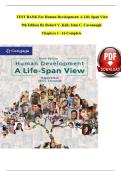
TEST BANK For Human Development: A Life-Span View
c c c c c c c
c 9th Edition By Robert V. Kail; John C. Cavanaugh Chapters 1 -
c c c c c c c c c c c
c 16 Complete
c
,Table Of Contents c c
1. The Study of Human Development.
c c c c
Part I: PRENATAL DEVELOPMENT, INFANCY, AND EARLY CHILDHOOD.
c c c c c c c
2. Biological Foundations: Heredity, Prenatal Development, and Birth.
c c c c c c
3. Tools for Exploring the World: Physical, Perceptual, and Motor Development.
c c c c c c c c c
4. The Emergence of Thought and Language: Cognitive Development in Infancy and Early Childhood.
c c c c c c c c c c c c
5. Entering the Social World: Socioemotional Development in Infancy and Early Childhood.
c c c c c c c c c c
Part II: SCHOOL-AGE CHILDREN AND ADOLESCENTS.
c c c c c
6. Off to School: Cognitive and Physical Development in Middle Childhood.
c c c c c c c c c
7. Expanding Social Horizons: Socioemotional Development in Middle Childhood.
c c c c c c c
8. Rites of Passage: Physical and Cognitive Development in Adolescence.
c c c c c c c c
9. Moving Into the Adult Social World: Socioemotional Development in Adolescence.
c c c c c c c c c
Part III: YOUNG AND MIDDLE ADULTHOOD.
c c c c c
10. Becoming an Adult: Physical, Cognitive, and Personality Development in Young Adulthood.
c c c c c c c c c c
11. Being With Others: Forming Relationships in Young and Middle Adulthood.
c c c c c c c c c
12. Work, Leisure, and Retirement. c c c
13. Making It in Midlife: The Biopsychosocial Challenges of Middle Adulthood.
c c c c c c c c c
Part IV: LATE ADULTHOOD.
c c c
14. The Personal Context of Later Life: Physical, Cognitive, and Mental Health Issues.
c c c c c c c c c c c
15. Social Aspects of Later Life: Psychosocial, Retirement, Relationship, and Societal Issues.
c c c c c c c c c c
16. The Final Passage: Dying and Bereavement.
c c c c c
, 1. The Study of Human Development. c c c c
Thescientificstudyofhumandevelopmentcanbestbedescribedas
c c c c c c c c c c
ANSWER:a. multidisciplinary c
b. focusedongroupsratherthanindividuals c c c c c
c. non-theoretical
d. emphasizing stability over change c c c
2. Whichtermdoesnotbelonginthisgroup?
c c c c c c c
a. experiential
b. nurture
c. environmental
ANSWER:d. hereditary c
3. Dr. Kim takes a strong nature position with regard to the origins of intellectual
c c c c c c c c c c c c c
disabilities. Therefore, she would most likely hypothesize that her son‘s intellectu al
c c c c c c c c c c c c
disability (formally known as mental retardation) is due to
c c c c c c c c c
a. her parenting style
c c c
ANSWER:b. his genes c c
c. his exposure to a toxic chemical prior to birth
c c c c c c c c c
d. his exposure to Rubella prior to birth
c c c c c c c
4. The notionthatdevelopment isbest describedinterms ofaseriesofabrupt shifts in
c c c c c c c c c c c c c c c c
behavior best fits with the approach.
c c c c c c
a. nature
b. nurture
c. continuity
ANSWER:d. discontinuity c
5. Cleo, a director of a daycare, uses terms like ―pre-K,‖ ―K-3,‖ and the ―upper-
c c c c c c c c c c c c c
elementary.‖ These ideas are most compatible with a view.
c c c c c c c c c
a. context-specificity
b. hereditary
, c. continuity
ANSWER:d. discontinuity c
6. Dr. Fletcher is attempting to determine whether adult criminals were rule-breakers
c c c c c c c c c c c
throughout their childhood or whether they suddenly turned to a life of crime. Her
c c c c c c c c c c c c c c
research is most concerned with which issue of human development?
c c c c c c c c c c
a. nature versus nurture c c
b. universal versus context-specific development c c c
c. biological versus sociocultural forces c c c
ANSWER:d. continuity versus discontinuity c c c
7. Mustafa is interested in determining whether children develop virtually the sa me
c c c c c c c c c c c
c way in Algeria as they do in other parts of the world. Mustafa‘s research deals primarily
c c c c c c c c c c c c c c c
c with the c issue of human development. c c c
a.psychologicalversusbiologicalforces
c c c c
ANSWER:b. universal versus context-specific development c c c c
c.natureversusnurture
c c c
d. continuity versus discontinuity
c c c
8. When Clarisse says, ―It doesn‘t matter if they are French, Swedish, or Chinese, kids
c c c c c c c c c c c c c
c are kids,‖ she is espousing a
c c position concerning human development.
c c c c c c
a. discontinuous
c
ANSWER:b.universal c
c. nurture
c
d. context-specific
c
9. Viviana notices that children seem to mature socially much faster in Costa Ric a
c c c c c c c c c c c c c
than in the Canada. Viviana is most likely to support a position regarding h uman
c c c c c c c c c c c c c c c
development.
c
a. nature
b. discontinuous
ANSWER:c. context-specific c
c c c c c c c
c 9th Edition By Robert V. Kail; John C. Cavanaugh Chapters 1 -
c c c c c c c c c c c
c 16 Complete
c
,Table Of Contents c c
1. The Study of Human Development.
c c c c
Part I: PRENATAL DEVELOPMENT, INFANCY, AND EARLY CHILDHOOD.
c c c c c c c
2. Biological Foundations: Heredity, Prenatal Development, and Birth.
c c c c c c
3. Tools for Exploring the World: Physical, Perceptual, and Motor Development.
c c c c c c c c c
4. The Emergence of Thought and Language: Cognitive Development in Infancy and Early Childhood.
c c c c c c c c c c c c
5. Entering the Social World: Socioemotional Development in Infancy and Early Childhood.
c c c c c c c c c c
Part II: SCHOOL-AGE CHILDREN AND ADOLESCENTS.
c c c c c
6. Off to School: Cognitive and Physical Development in Middle Childhood.
c c c c c c c c c
7. Expanding Social Horizons: Socioemotional Development in Middle Childhood.
c c c c c c c
8. Rites of Passage: Physical and Cognitive Development in Adolescence.
c c c c c c c c
9. Moving Into the Adult Social World: Socioemotional Development in Adolescence.
c c c c c c c c c
Part III: YOUNG AND MIDDLE ADULTHOOD.
c c c c c
10. Becoming an Adult: Physical, Cognitive, and Personality Development in Young Adulthood.
c c c c c c c c c c
11. Being With Others: Forming Relationships in Young and Middle Adulthood.
c c c c c c c c c
12. Work, Leisure, and Retirement. c c c
13. Making It in Midlife: The Biopsychosocial Challenges of Middle Adulthood.
c c c c c c c c c
Part IV: LATE ADULTHOOD.
c c c
14. The Personal Context of Later Life: Physical, Cognitive, and Mental Health Issues.
c c c c c c c c c c c
15. Social Aspects of Later Life: Psychosocial, Retirement, Relationship, and Societal Issues.
c c c c c c c c c c
16. The Final Passage: Dying and Bereavement.
c c c c c
, 1. The Study of Human Development. c c c c
Thescientificstudyofhumandevelopmentcanbestbedescribedas
c c c c c c c c c c
ANSWER:a. multidisciplinary c
b. focusedongroupsratherthanindividuals c c c c c
c. non-theoretical
d. emphasizing stability over change c c c
2. Whichtermdoesnotbelonginthisgroup?
c c c c c c c
a. experiential
b. nurture
c. environmental
ANSWER:d. hereditary c
3. Dr. Kim takes a strong nature position with regard to the origins of intellectual
c c c c c c c c c c c c c
disabilities. Therefore, she would most likely hypothesize that her son‘s intellectu al
c c c c c c c c c c c c
disability (formally known as mental retardation) is due to
c c c c c c c c c
a. her parenting style
c c c
ANSWER:b. his genes c c
c. his exposure to a toxic chemical prior to birth
c c c c c c c c c
d. his exposure to Rubella prior to birth
c c c c c c c
4. The notionthatdevelopment isbest describedinterms ofaseriesofabrupt shifts in
c c c c c c c c c c c c c c c c
behavior best fits with the approach.
c c c c c c
a. nature
b. nurture
c. continuity
ANSWER:d. discontinuity c
5. Cleo, a director of a daycare, uses terms like ―pre-K,‖ ―K-3,‖ and the ―upper-
c c c c c c c c c c c c c
elementary.‖ These ideas are most compatible with a view.
c c c c c c c c c
a. context-specificity
b. hereditary
, c. continuity
ANSWER:d. discontinuity c
6. Dr. Fletcher is attempting to determine whether adult criminals were rule-breakers
c c c c c c c c c c c
throughout their childhood or whether they suddenly turned to a life of crime. Her
c c c c c c c c c c c c c c
research is most concerned with which issue of human development?
c c c c c c c c c c
a. nature versus nurture c c
b. universal versus context-specific development c c c
c. biological versus sociocultural forces c c c
ANSWER:d. continuity versus discontinuity c c c
7. Mustafa is interested in determining whether children develop virtually the sa me
c c c c c c c c c c c
c way in Algeria as they do in other parts of the world. Mustafa‘s research deals primarily
c c c c c c c c c c c c c c c
c with the c issue of human development. c c c
a.psychologicalversusbiologicalforces
c c c c
ANSWER:b. universal versus context-specific development c c c c
c.natureversusnurture
c c c
d. continuity versus discontinuity
c c c
8. When Clarisse says, ―It doesn‘t matter if they are French, Swedish, or Chinese, kids
c c c c c c c c c c c c c
c are kids,‖ she is espousing a
c c position concerning human development.
c c c c c c
a. discontinuous
c
ANSWER:b.universal c
c. nurture
c
d. context-specific
c
9. Viviana notices that children seem to mature socially much faster in Costa Ric a
c c c c c c c c c c c c c
than in the Canada. Viviana is most likely to support a position regarding h uman
c c c c c c c c c c c c c c c
development.
c
a. nature
b. discontinuous
ANSWER:c. context-specific c