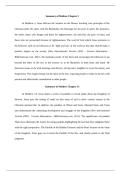
ENG3703
ASSIGNMENT 3 2025
UNIQUE NO.
DUE DATE: SEPTEMBER 2025
, ENG3703 Assignment 3 2025
Critical Comparison of Intrinsic and Extrinsic Approaches to the Study of
Literature
Introduction
The study of literature has long been shaped by debates around how best to approach
a text: should one focus primarily on its internal, aesthetic, and formal features, or
should one emphasise the social, cultural, and political contexts that inform and are
reflected in literary works? These two broad approaches—commonly termed intrinsic
and extrinsic—have each generated distinctive forms of literary criticism. Intrinsic
approaches, such as New Criticism and Formalism, prioritise close reading and textual
autonomy, viewing literature as a self-contained aesthetic object. Extrinsic approaches,
such as Marxist criticism, feminist theory, postcolonial studies, and cultural materialism,
regard literature as a cultural product deeply embedded in historical, ideological, and
political contexts. This essay critically compares these two modes of literary study,
examining their theoretical underpinnings, critical practices, and respective strengths
and weaknesses. It also reflects on the possibility of integrating both perspectives in
order to achieve a more comprehensive understanding of literature.
Theoretical Foundations of Intrinsic Approaches
Intrinsic approaches to literature stress the primacy of the text itself. They emerged
partly as a reaction against earlier modes of criticism—such as biographical or historical
criticism—that privileged authorial intention or historical context over the text.
New Criticism, developed in the United States in the mid-20th century,
emphasised the idea of the text as an autonomous object, independent of
external influences (Brooks, 1947). Its key practices included close reading,
identifying irony, paradox, ambiguity, and tension as central to meaning. The
ASSIGNMENT 3 2025
UNIQUE NO.
DUE DATE: SEPTEMBER 2025
, ENG3703 Assignment 3 2025
Critical Comparison of Intrinsic and Extrinsic Approaches to the Study of
Literature
Introduction
The study of literature has long been shaped by debates around how best to approach
a text: should one focus primarily on its internal, aesthetic, and formal features, or
should one emphasise the social, cultural, and political contexts that inform and are
reflected in literary works? These two broad approaches—commonly termed intrinsic
and extrinsic—have each generated distinctive forms of literary criticism. Intrinsic
approaches, such as New Criticism and Formalism, prioritise close reading and textual
autonomy, viewing literature as a self-contained aesthetic object. Extrinsic approaches,
such as Marxist criticism, feminist theory, postcolonial studies, and cultural materialism,
regard literature as a cultural product deeply embedded in historical, ideological, and
political contexts. This essay critically compares these two modes of literary study,
examining their theoretical underpinnings, critical practices, and respective strengths
and weaknesses. It also reflects on the possibility of integrating both perspectives in
order to achieve a more comprehensive understanding of literature.
Theoretical Foundations of Intrinsic Approaches
Intrinsic approaches to literature stress the primacy of the text itself. They emerged
partly as a reaction against earlier modes of criticism—such as biographical or historical
criticism—that privileged authorial intention or historical context over the text.
New Criticism, developed in the United States in the mid-20th century,
emphasised the idea of the text as an autonomous object, independent of
external influences (Brooks, 1947). Its key practices included close reading,
identifying irony, paradox, ambiguity, and tension as central to meaning. The