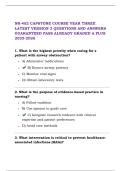
NR-452 CAPSTONE COURSE YEAR THREE
LATEST VERSION 3 QUESTIONS AND ANSWERS
GUARANTEED PASS ALREADY GRADED A PLUS
2025-2026
1. What is the highest priority when caring for a
patient with airway obstruction?
• A) Administer medications
• B) Ensure airway patency
• C) Monitor vital signs
• D) Obtain laboratory tests
2. What is the purpose of evidence-based practice in
nursing?
• A) Follow tradition
• B) Use opinion to guide care
• C) Integrate research evidence with clinical
expertise and patient preferences
• D) Avoid new methods
3. What intervention is critical to prevent healthcare-
associated infections (HAIs)?
, • A) Limiting family visits
• B) Prescribing antibiotics
• C) Strict hand hygiene protocols
• D) Daily laboratory testing
4. In ethical decision-making, what principle
emphasizes respect for patients' right to make
informed choices?
• A) Justice
• B) Beneficence
• C) Autonomy
• D) Non-maleficence
5. Which nursing action best supports patient safety
during medication administration?
• A) Rush administration
• B) Skip patient identification
• C) Follow the "five rights" of medication
administration
• D) Ignore allergy history
6. What is the role of clinical judgment in nursing?
, • A) Following orders without question
• B) Making informed decisions based on
assessment, experience, and patient data
• C) Relying solely on protocols
• D) Avoiding involvement
7. Which lab value indicates a need for caution when
administering anticoagulant therapy?
• A) Hemoglobin 14 g/dL
• B) INR 4.5
• C) Platelets 200,000/mm³
• D) White blood cells 8,000/mm³
8. What is a primary responsibility of the nurse during
patient discharge planning?
• A) Provide medication samples
• B) Schedule follow-up appointments
• C) Educate patient and family on care needs and
resources
• D) Complete insurance paperwork only
9. Which symptom indicates worsening respiratory
distress in a patient with pneumonia?
, • A) Clear lung sounds
• B) Increasing cyanosis and labored breathing
• C) Normal oxygen saturation
• D) Stable heart rate
10. When caring for a postoperative patient, what is the
priority to prevent complications?
• A) Encourage early ambulation
• B) Monitor for signs of infection and bleeding
• C) Limit fluid intake
• D) Administer pain meds only
11. What is the role of a nurse in managing patient
pain?
• A) Ignore patient reports
• B) Assess pain regularly and advocate for adequate
pain control
• C) Avoid using pain scales
• D) Restrict analgesics
12. What infection control precaution should be used
for a patient with tuberculosis?
LATEST VERSION 3 QUESTIONS AND ANSWERS
GUARANTEED PASS ALREADY GRADED A PLUS
2025-2026
1. What is the highest priority when caring for a
patient with airway obstruction?
• A) Administer medications
• B) Ensure airway patency
• C) Monitor vital signs
• D) Obtain laboratory tests
2. What is the purpose of evidence-based practice in
nursing?
• A) Follow tradition
• B) Use opinion to guide care
• C) Integrate research evidence with clinical
expertise and patient preferences
• D) Avoid new methods
3. What intervention is critical to prevent healthcare-
associated infections (HAIs)?
, • A) Limiting family visits
• B) Prescribing antibiotics
• C) Strict hand hygiene protocols
• D) Daily laboratory testing
4. In ethical decision-making, what principle
emphasizes respect for patients' right to make
informed choices?
• A) Justice
• B) Beneficence
• C) Autonomy
• D) Non-maleficence
5. Which nursing action best supports patient safety
during medication administration?
• A) Rush administration
• B) Skip patient identification
• C) Follow the "five rights" of medication
administration
• D) Ignore allergy history
6. What is the role of clinical judgment in nursing?
, • A) Following orders without question
• B) Making informed decisions based on
assessment, experience, and patient data
• C) Relying solely on protocols
• D) Avoiding involvement
7. Which lab value indicates a need for caution when
administering anticoagulant therapy?
• A) Hemoglobin 14 g/dL
• B) INR 4.5
• C) Platelets 200,000/mm³
• D) White blood cells 8,000/mm³
8. What is a primary responsibility of the nurse during
patient discharge planning?
• A) Provide medication samples
• B) Schedule follow-up appointments
• C) Educate patient and family on care needs and
resources
• D) Complete insurance paperwork only
9. Which symptom indicates worsening respiratory
distress in a patient with pneumonia?
, • A) Clear lung sounds
• B) Increasing cyanosis and labored breathing
• C) Normal oxygen saturation
• D) Stable heart rate
10. When caring for a postoperative patient, what is the
priority to prevent complications?
• A) Encourage early ambulation
• B) Monitor for signs of infection and bleeding
• C) Limit fluid intake
• D) Administer pain meds only
11. What is the role of a nurse in managing patient
pain?
• A) Ignore patient reports
• B) Assess pain regularly and advocate for adequate
pain control
• C) Avoid using pain scales
• D) Restrict analgesics
12. What infection control precaution should be used
for a patient with tuberculosis?