Unit 3 - AC1.1
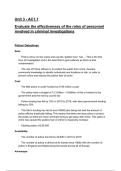
Evaluate the effectiveness of the roles of personnel
involved in criminal investigations
Police/ Detectives
Role:
· First to arrive on the scene and use the ‘golden hour’ rule. – This is the first
hour of investigation and is the best time to get evidence as there is less
contamination.
· The role of Police officers is to protect the public from crime, develop
community knowledge to identify individuals and locations at risk, in order to
prevent crime and reduce the publics fear of crime.
Cost:
· The Met police is under funded by £159 million a year
· The police have a budget of 12.3 billion – 8.6billion of this is funded by the
government and the rest by council tax
· Police funding has fell by 19% in 2010 to 2018, with direct government funding
falling by 30%
· This fall in funding has led to over 45000 jobs being lost and the amount of
police officers drastically falling. This means that there are less police to protect
the public so there are more criminals trying to get away with crime. This spike in
crime has caused the publics fear of crime to massively increase.
· Starting salary of £29,000
Availability:
· The number of police has fell by 20,600 in 2010 to 2019
· The number of police is almost at its lowest since 1980s with the number of
police in England and Wales being the lowest across all of Europe.
Advantages:
, · The police are available 24/7 and respond to crimes at any time – this means
that police are able to respond to crimes much quicker, which also increases the
publics safety as they won’t have to wait long for police to deal with a crime. This
makes the area more secure and safe
· Police are trained and specialists in dealing with crime – this means that no
matter the type of crime which is occurring, the police will always be able to sort it out
as they are trained to deal with any unexpected scenario. This means that crimes are
dealt with quicker and more efficiently.
· Police officers are able to remain calm under pressure and still help people in
intense situations – this means that during any type of scenario, the police have the
skills needed to be able to help and reduce fear. This can be helpful in a negotiation
etc where they may have to keep calm under pressure in order to save lives
Disadvantages:
o Police officers are negatively perceived by the public and have a bad reputation – This
means that some people choose to deliberately not report crimes to them as they don’t
think they will help. This means that more crimes go unreported which gives off the
impression that criminals are free to do crime as no one will report them. This decreases
the publics sense of safety
o Budget costs mean that police lack the training which they need to be able to
effectively deal with crimes. This means that crimes are not being dealt with properly,
due to the fact that they are not trained properly to deal with these crimes. This could
cause miscarriages of justice as they are not trained and do not have the knowledge of
how to deal with crimes and what to look out for in offenders, this makes the public lose
trust in the police and negatively affects their perception.
o Furthermore, budget costs also mean that are there are fewer police officers to even
deal with crimes. This is shown by how the number of police fell by 20,600 from 2010 to
2019. This means that crimes are not being dealt with swiftly and people are having to
wait longer for someone to report to their call, this is an issue as people who are in real
emergencies are having to wait to even report the crime. This causes screening out (the
process of the police choosing which offences to investigate fully), which means that
some crimes are not investigated and people are unable to get the justice they deserve.
This also gives off the impression that the police do not care about certain crimes, which
causes crime rates to increase as criminals think they can simply get away with the
crime. For example, 60% of all car crime is screened out by the police.
o EXPERTISE: The police have been criticised for institutional racism and have been
known to be bias during investigations. This is an issue as their decisions regarding who
to arrest or attempt to convict may be influenced by their own personal discriminatory
attributes and not based on evidence. This means that innocent people are being
arrested for crimes which they did not do and the real offenders getting away with it. This
wrongful conviction could mentally affect them in a serious way, such as developing
mental health issues as a result of the police failing to investigate properly. A case which
shows when the police have shown institutional racism is in the case of Stephen
Evaluate the effectiveness of the roles of personnel
involved in criminal investigations
Police/ Detectives
Role:
· First to arrive on the scene and use the ‘golden hour’ rule. – This is the first
hour of investigation and is the best time to get evidence as there is less
contamination.
· The role of Police officers is to protect the public from crime, develop
community knowledge to identify individuals and locations at risk, in order to
prevent crime and reduce the publics fear of crime.
Cost:
· The Met police is under funded by £159 million a year
· The police have a budget of 12.3 billion – 8.6billion of this is funded by the
government and the rest by council tax
· Police funding has fell by 19% in 2010 to 2018, with direct government funding
falling by 30%
· This fall in funding has led to over 45000 jobs being lost and the amount of
police officers drastically falling. This means that there are less police to protect
the public so there are more criminals trying to get away with crime. This spike in
crime has caused the publics fear of crime to massively increase.
· Starting salary of £29,000
Availability:
· The number of police has fell by 20,600 in 2010 to 2019
· The number of police is almost at its lowest since 1980s with the number of
police in England and Wales being the lowest across all of Europe.
Advantages:
, · The police are available 24/7 and respond to crimes at any time – this means
that police are able to respond to crimes much quicker, which also increases the
publics safety as they won’t have to wait long for police to deal with a crime. This
makes the area more secure and safe
· Police are trained and specialists in dealing with crime – this means that no
matter the type of crime which is occurring, the police will always be able to sort it out
as they are trained to deal with any unexpected scenario. This means that crimes are
dealt with quicker and more efficiently.
· Police officers are able to remain calm under pressure and still help people in
intense situations – this means that during any type of scenario, the police have the
skills needed to be able to help and reduce fear. This can be helpful in a negotiation
etc where they may have to keep calm under pressure in order to save lives
Disadvantages:
o Police officers are negatively perceived by the public and have a bad reputation – This
means that some people choose to deliberately not report crimes to them as they don’t
think they will help. This means that more crimes go unreported which gives off the
impression that criminals are free to do crime as no one will report them. This decreases
the publics sense of safety
o Budget costs mean that police lack the training which they need to be able to
effectively deal with crimes. This means that crimes are not being dealt with properly,
due to the fact that they are not trained properly to deal with these crimes. This could
cause miscarriages of justice as they are not trained and do not have the knowledge of
how to deal with crimes and what to look out for in offenders, this makes the public lose
trust in the police and negatively affects their perception.
o Furthermore, budget costs also mean that are there are fewer police officers to even
deal with crimes. This is shown by how the number of police fell by 20,600 from 2010 to
2019. This means that crimes are not being dealt with swiftly and people are having to
wait longer for someone to report to their call, this is an issue as people who are in real
emergencies are having to wait to even report the crime. This causes screening out (the
process of the police choosing which offences to investigate fully), which means that
some crimes are not investigated and people are unable to get the justice they deserve.
This also gives off the impression that the police do not care about certain crimes, which
causes crime rates to increase as criminals think they can simply get away with the
crime. For example, 60% of all car crime is screened out by the police.
o EXPERTISE: The police have been criticised for institutional racism and have been
known to be bias during investigations. This is an issue as their decisions regarding who
to arrest or attempt to convict may be influenced by their own personal discriminatory
attributes and not based on evidence. This means that innocent people are being
arrested for crimes which they did not do and the real offenders getting away with it. This
wrongful conviction could mentally affect them in a serious way, such as developing
mental health issues as a result of the police failing to investigate properly. A case which
shows when the police have shown institutional racism is in the case of Stephen