100% satisfaction guarantee Immediately available after payment Both online and in PDF No strings attached 4.2 TrustPilot
logo-home
Exam (elaborations)

ISA Arborist Certification Glossary & Terms Question and Answers [100% Correct] 2025/2026

Rating
-
Sold
-
Pages
72
Grade
A+
Uploaded on
02-09-2025
Written in
2025/2026

ISA Arborist Certification Glossary & Terms Question and Answers [100% Correct] 2025/2026 What term refers to the nonliving components of an ecosystem, such as soil, air, and water? Abiotic Which plant hormone promotes seed dormancy and causes stomatal closure? Abscisic acid (ABA) What is the name of the cell structure that allows a leaf to separate from the stem? Abscission zone What does the term "acceptable risk" refer to in relation to tree management? The level of risk a tree owner is willing to accept before considering tree failure How is acidic soil characterized in terms of pH? It has a pH less than 7.0 What group of microorganisms has characteristics of both fungi and bacteria and contributes to the smell of fresh rain? Actinomycetes What does the term "action" refer to in the context of carabineers and snap gates? The number of distinct motions required to open them What is the term for the point at which pest management actions should be taken? Action threshold 1 Which type of crotch is considered stronger and less likely to fail during high winds? Acute crotches What does adaptive growth in trees help to achieve? It helps distribute forces evenly by increasing wood production in areas of structural weakness What is the boundary on the ground that indicates the spread of a tree's branches? Drip line What process describes the adhesion of molecules to the surface of solids or liquids? Adsorption What type of assessment provides detailed information about specific tree parts or site conditions? Advanced assessment What type of growth arises from dormant or new buds on the main branches or stems in response to light and moisture? Adventitious/epicormic growth What is an adventitious root? A root that arises from the stem or other parts of the plant in response to moisture and darkness What process involves providing air to the soil to alleviate compaction? Aeration What type of device is used to elevate a worker to the crown of a tree? Aerial lift device 2 How is aerial rescue defined? The method of bringing an injured worker down from a tree What term describes roots that grow from stems towards the soil and can anchor the tree? Aerial roots What type of microorganisms require free, gaseous oxygen for growth? Aerobic microorganisms What term refers to a soil cluster made of sand, silt, or clay bonded together by exudates from microorganisms? Aggregate What is agroforestry? A land-use management system where trees or shrubs are grown alongside crops or pastureland What is the commonly used trade name for an air tool used to excavate soil within the root zone of trees? Air Spade™ What is the name of the highest point in a tree's lightning protection system? Air terminal What device uses compressed air to excavate soil and minimize damage to tree roots? Air tool How is alkaline soil characterized in terms of pH? It has a pH greater than 7.0 3 What are alkaloids? Substances produced by trees that contain nitrogen and are used for medicinal purposes What is the term for two parallel rows of trees, typically of the same species, form, and age? Allée What does allelopathy refer to in trees? The production of substances by one tree that negatively affect nearby trees What is the term for leaves that are arranged alternately at nodes? Alternate leaves What enzyme breaks down starch into glucose molecules? Amylase What type of microorganisms thrive in environments without free oxygen? Anaerobic microorganisms What is an amon-eye nut used for in tree care? To fasten through-hardware anchor(s) when cabling trees What is the term for hardware that is used to anchor or terminate cables in trees? Anchor What is an anchor-tree used for in tree care? It provides supplemental support in a guying installation 4 What term refers to hardwood trees that produce seeds enclosed in an ovary, such as oaks and maples? Angiosperms What are anions in fertilizer? Negatively charged atoms or molecules that plants absorb in water What organization sets the standards for various industries, including arboriculture? ANSI What is ANSI A300? A set of performance standards used in arboriculture to write specifications What standard provides safety guidelines for arborists in the United States? ANSI Z133 What part of a flower produces pollen? Anther What chemical gives red pigments to plant organs, including leaves? Anthocyanin What is an antitranspirant? A substance applied to foliage to reduce water loss What type of pruning tool cuts against a flat non-cutting surface? Anvil-type pruning tool What term describes the inhibition of lateral bud growth by the terminal bud? 5 6 Apical dominance What is the function of an apical meristem? It increases the length of stems and roots and produces flowers What is the apoplast in trees? The framework of non-living cells and cell walls that store bound water What does an appraisal of a tree involve? Placing a monetary value on the tree What are approach distances? The minimum required distances between energized conductors and personnel What is arboriculture? The art and science of managing trees and woody plants What is an arborist? A professional trained to manage trees and other woody plants What is an arborist trainee? An individual undergoing on-the-job training to manage trees and woody plants What is arbuscular mycorrhizae? A type of mycorrhiza that infects the internal root cells of trees and is common in deciduous forests armillaria root disease: cause death to trees under all types of stress by reducing absorption and translocation of water and minerals from the soil to the tree. arthropods: microscopic insects and mites that are vital in processing soil organic matter and mineralizing detritus. ascender: attached to the rope, this piece of equipment will grip in one direction (down) and slide in the other (up) allowing the climber to ascend up the rope in contrast with descender. auger: auxin: a tool that bores holes in wood. a tree growth regulator that controls cell elongation. axial parenchyma: axil: cells that run in a vertical direction on the trunk. the point of attachment of a leaf petiole to a stem. back cut: a cut made on a tree trunk or branch, opposite from the notch, face cut, or undercut. back flow preventer: a device required by law to prevent water and chemical back flow by means of an air gap or one-way valve. bacteria: organisms that break down organic and inorganic materials such as fungi, insects, and animals in the soil. They also detoxify harmful substances and adjust the soil pH. Many also convert nitrogen in the air to a usable form for tree growth. Bacteria can be found everywhere that life can be supported. B&B: Balled and Burlapped trees, also called Balled in Burlap, have been dug so the soil around the roots remains undisturbed. B&P: Balled and Potted trees with a ball of earth and placed in a container. 7 a rigging sling(s), usually with at least one spliced eye and a Prusik to position the load balancer: line. bark: a protective covering on the outside of a tree trunk and made of an outer periderm and an inner phloem. It keeps moisture and gases in the tree and resists attack by insects and microorganisms. bark distortions: overgrown knots, mechanical wounds, holes of all types, ingrown bark, and other defects which can be seen on the bark appearance. bark fissures: form on trees whose bark plates only divide in one direction such as oaks. Some trees, such as beech, do not form fissures because the bark plates divide in two directions as the tree grows in girth. barrier zone: chemical boundary within wood that is present at the time of wounding and resists the spread of pathogens. basal rot: decay of the lower trunk, flare, or buttress roots, also called butt rot. basic assessment: beneficial organisms: a detailed visual inspection of a tree and the surrounding site. insects and other organisms that promote plant health or assist in the control of pest populations. berm: of water. berry: bifurcation: soil added in a linear form above grade for a specified purpose, such as controlling the flow a simple fleshy fruit. the natural division of a branch or stem into two or more stems. 8 bimetallic connector: the connector on a lightning protection system consisting of two or more types of metals intended to reduce the likelihood of forming an electrolytic couple. biodegradable: the environment. biodiversity: capable of being broken down by natural, organic processes and reabsorbed into biological diversity in an environment as indicated by a number of different species of plants and animals. biological control management: the management of pests using organisms that focus on control of plant competition, allelopathy, animals, insects, or pathogens. biomass: a mass that contains some form of living cells. biorational pesticide: microbial byproducts. biostimulant: a pesticide formulated from naturally occurring plant extracts, microbes, or any substance or microorganism applied to plants with the aim to enhance nutrition efficiency, abiotic stress tolerance and/or crop quality traits, regardless of its nutrients content. biotic: bleeding: blight: pertaining to living organisms and their ecological and physiological relations. the flow of sap from plant wounds. any disease that kills young plant tissues. block and tackle: BMP: a system of two or more pulleys and rope used to lift or pull heavy loads. Best Management Practices are the best industry standards based on scientific research and current knowledge. 9 bole: bond: the main trunk of a tree below the branches. an electrical connection between an electrically conductive object and a component of a lightning protection system that is intended to significantly reduce potential differences created by lightning currents. bonsai: boom: bore cut: botanicals: boughs: BR: bracing: the art of managing tree growth through root pruning to maintain a miniature size. the long, movable arm of an aerial device or crane. using the tip of a chain saw to cut into or through the middle of a piece of wood. compounds and pesticides made from plants. large branches on a tree coming directly from the trunk. Bare-Root trees that are harvested and removed from all soil or growing medium. the installation of screws, cables, threaded-steel rods in branches, leaders, or trunks to provide supplemental support and to reduce the probability of failure of one or more parts of the tree. bract: branch: a modified leaf that compliments the flower. an outward growing shoot, stem or twig that grows from the main stem or trunk of a tree. branch collar: the swollen area of bark at the underside of a branch. 10 branch bark ridge: the raised area of bark at the top of the branch union that marks where the smaller branch and parent branch meet. branch bark ridge and branch collar: the natural features of a fork or union that consist of raised bark but may or may not be obvious. Neither the branch bark ridge nor collar should be cut when pruning the tree. branch failure: usually occurs when high winds bend the branch upwards and fracture the wood, causing the splinters to point upwards. When the branch fails and there is no wind, the splinters will point downwards. branch union: bridge graft: the point where a branch originates from the trunk or another branch. the method to used to repair a girdled trunk in which scion wood is grafted above and below the injury to reconnect the trunk vascular cambium. broadcast fertilization: bucking: the application of fertilizer over the soil surface. the process of cutting a felled and de-limbed tree into logs. buds: organs that contain preformed parts of leaves or needles, flowers, or both. Buds are structures that are made up of embryonic shoots. bud scar: a scar left on a twig when the bud or bud scales fall away. buffering capacity: buildable area: the ability of a soil to maintain its pH. that portion of a lot wherein a building may be located, not the portion of a lot which is located within any minimum required front, rear, or side yards, landscape areas, or buffer zones. bulge: a general enlargement of a section of a log. 11 bulk density: bull rope: burl: the mass of soil per unit volume used as a measure of compaction. a large diameter rope used in rigging. a sound, hard woody protuberance on a log with no protruding branches, twigs, or stumps. burlap: a strong, coarsely woven cloth made from fibers of jute, flax, or hemp. buttress roots: bypass pruner: the lateral surface roots that aid in stabilizing a tree. a pruner that pushes a sharpened blade through a small-diameter stem, past an unsharpened hooked or curved blade. Also called secateurs. cable: 1) Zinc coated wire strands per ASTM A-475 for dead-end grip applications or 2) Wire rope or strand for cabling applications or 3) Synthetic-fiber rope or webbing for general applications of tree work. cable aid: cable clamp: a tool used mainly to tighten lag hooks and eye-bolts into a tree. should be used to attach small diameter cable to anchor hardware. There should be at least 3 clamps per anchor and the "U" of the clamp goes on the short end of the cable. cable-end termination: stem. cable grip: the hardware designed to anchor cables installed through a branch or a mechanical device that temporarily grasps and holds wire rope or strand cable during installation. 12 cabling: the installation of a steel wire rope or synthetic-fiber rope within a tree to provide supplemental sup-port to branches with weak unions, heavy branches, and weak wooded species that may pose a threat of failure. cabling hardware: caliper: consists of eye bolts, threaded rods, and amon-eyes. tree trunk diameter measured 6 in. (15 cm) above the flare; if the caliper is greater than 4 in. (10 cm), the measurement is taken at 12 in. (30 cm) above the flare. calipers: callus: an instrument used to measure the diameter of the trunk of a tree. undifferentiated cambium tissue that forms around the edge of a wound. cambium or cambial zone: or inner bark on the outer side. canker: a layer of trunk cells that produce xylem on the inner side and phloem a definite, relatively localized lesion, primarily of bark and wood. canopy: canopy cover: the collective branches and foliage of a tree that make up the tree's crown. the area of land surface that is covered by tree canopy as seen from above. capillary water: capsule: carbon dioxide: the water held in the capillary pores of soil. a simple, dry, fruit. a colorless gas, soluble in water, used by green plants to make carbohydrates during photosynthesis. carbon sequestration: the capturing and long-term storage of carbon. 13 carotenoid: cataphylls: the yellow, orange, or red pigment responsible for those colors in parts of a tree. the simple protecting leaf wrapped over a small bud structure. cation exchange capacity: cations: the ability of soil to hold onto nutrients. positively charged atoms or molecules in fertilizer that become plant available in water. catkins: tree. cavity: the long droopy flowers produced at the ends of branchlets that eventually fall from the a void within the solid structure of the tree, normally associated with decay or deterioration of the woody tissues. cells: cellulose: the basic structural and functional unit of living organisms. a complex carbohydrate made up of long, twisting chains of glucose or sugar molecules. central leader: referred to as the leader or dominant leader. It is a continuation of the main trunk, beginning at the lowest main scaffold branch and extending to the top of the tree. certified arborist: an arborist who has passed an independent exam administered by the ISA. CEU or continuing education unit: chain of custody: a measure and confirmation of continuing education courses. evidential documentation of the handling, transportation, processing, and ownership of a tree throughout the chronological history of its entire production. 14 chain saw: a portable power saw with teeth linked in a loop of chain. champion tree: same species. chaps: the largest tree by age or size when compared to all other known trees of the leg protection to be worn when operating a chain saw. chelates: chemical compounds that keep plant nutrients soluble and available for tree absorption. chemical management methods: the management of pests and vegetation through the use of pesticides, herbicides, and growth regulators, to make conditions more favorable for tree growth. chipper: chitin: chlorophyll: equipment used to reduce tree debris into wood chips. a hard substance forming the outer coat of insects and the cell walls of some fungi. the green substance that can trap the energy of the sun in a process called photosynthesis. chloroplast: chlorosis: specialized cells that contain chlorophyll and promote making starch or sugar. the partial failure to develop chlorophyll, caused by a nutrient deficiency or the activities of apathogen. chromosome: consist of genes and are responsible for the activity of a cell and undergo division into newly formed parts of the tree. circling root: one or more roots whose diameter is greater than 10% of the trunk caliper circling more than one-third of the trunk. Circling roots are unacceptable for proper tree root growth. 15 cladoptosis: a process in which trees shed their branches as part of their normal physiology once a year, typically on cedars. cleaning: clear trunk: the selective pruning to remove one or more of dead, diseased, or broken branches. the portion of the trunk below the main crown which may include shortened temporary branches. clearance requirements: pruning to meet clearance standards over streets and sidewalks where branches are interfering with the movement of vehicles and pedestrians, or they obstruct signs and traffic lights. client: the property owner or manager who is responsible for contracting arboricultural services. Clients may be owners of property and governmental clients that are stewards for private and public lands. climbing hitch: climbing spurs: the hitch used to secure a tree climber to the climbing line. sharp, pointed devices attached to a tree climber's boot and are used to assist with climbing trees. They are also called gaffs, hooks, spurs, and spikes, and are not recommended for pruning operations, except during tree removal. clone: a named tree from which identical trees are produced by vegetative propagation. Cloned trees are growing on their own roots instead of being grafted to roots. closure: CODIT: the closing of a wound to the stem or root of the tree. Closure is not CODIT. Compartmentalization Of Decay In Trees. see "compartmentalization" co-dominant stems: two or more, generally upright, branches or stems of roughly equal diameter and competing with each other for dominance. They originate from a common point, usually where a 16 leader was lost. When they grow from a common union the structural integrity of that union should be assessed and one stem removed or reduced. collected tree: nursery. come-along: a tree that has been taken from the wild or landscape planting and then grown in a a portable winching device, using cable or rope to draw two objects closer together. command-and-response system: a system of vocal communication in tree care operations used to convey critical information between a worker aloft and a ground worker. compaction: weights on the soil surface that destroy the micro cavities and the many mycorrhizae that grow in the soil. The compaction of the soil reduces the oxygen content which is needed in the soil for root respiration. compartmentalization: the physiological process that creates the chemical and physical boundaries that act to resist the spread of disease and decay organisms. complete fertilizer: (P), and potassium (K). compost: a fertilizer containing the three primary elements: nitrogen (N), phosphorus organic matter that has been subjected to decay processes and is decomposed. compound leaf: compression wood: closely spaced rings. condition: a leaf whose blade is divided into several distinct leaflets. this wood forms on the lower side of the lean in conifers, as evidenced by the general condition of a tree rated during the inventory and according to the ISA rating system: Excellent - 100%, Very Good - 90%, Good - 80%, Fair - 60%, Poor - 40%, Critical - 20%, Dead - 0%. 17 conductor: the copper cable or wire used in a lightning protection system intended to carry the lightning current to ground. conifers: conk: connector: gymnosperms such as pine. The wood contains resin ducts. a fruiting body of wood-rotting fungus located on the bole of the tree. a part of the lightning protection system used to connect conductors to each other or to metallic installations. connector clamp: a multipurpose bolt clamp that is used to bond conductors, or bond a conductor to a ground terminal or tree supplemental support system. consistency: contact pesticides: the way in which a substance holds together. materials that cause pest injury or death on contact. container grown tree: controlled-release fertilizer: controlling authority: a tree grown in a container or pot. a slow-release or slowly soluble form of fertilizer. an agency, organization, or corporate entity with the legal authority and/or obligation to manage individual trees or tree populations. coppicing: the old-fashion cutting down of a tree within 12 in. (300mm) of the ground at regular intervals, traditionally applied to certain species such as Hazel and Sweet Chestnut that resprout to provide stakes. cordate: a heart-shaped leaf. 18 core sample: a sample of wood extracted from a trunk or branch, using an increment borer tool. The resulting core can be analyzed for characteristics of growth, structure, decay, and species identification. correct pruning cuts: branches should be removed at their point of attachment or shortened to a lateral and all cuts should be kept as small as possible. cortex: cotyledon: crenate: a layer inside the thin outer bark on young stems. the first leaf on a seedling. a term to describe a leaf margin with rounded teeth. crimp-type connector: a cast or stamped connector used to connect cables in either an end-to end, side-by-side, or a Y configuration in a lightning protection system. Critical Root Zone (CRZ): the portion of the root system that is the minimum necessary to maintain vitality or stability of the tree. Encroachment or damage to the critical root zone will put the tree at risk of failure. crown: the portion of a tree beginning at the lowest main scaffold branch extending to the top of the tree including all the branches and foliage but not including any clear stem/trunk. On younger trees, the crown may be comprised of temporary branches. crown cleaning: tree crown. crown density: crown symmetry: the selective removal of dead, dying, diseased, and broken branches from the the amount, compactness, or depth of foliage on a tree crown. the distribution of branches relative to the trunk. 19 crown thinning: the removal of a portion of smaller branches, usually at the outer crown, to produce a uniform density of foliage around an evenly spaced branch structure. It is usually confined to broad-leaved species. Material should be removed throughout the tree and no more than 30% during one growing season. crown lifting or crown raising: the removal of the lowest branches. Good practice dictates crown lifting should not normally include the removal of large branches growing directly from the trunk. Crown lifting on older, mature trees should be avoided, restricted to secondary branches, or shortening of primary branches. Crown lifting is an effective method to enable access under the crown but should be restricted to less than 15% of the live crown height. Crown lifting height should be specified. crown reduction: the selective reduction in height and/or spread of a tree's crown. Crown reduction should retain the main framework of the crown, a significant proportion of the leaf bearing structure, and a smaller outline. Crown reduction cuts should be as small as possible. Reductions should be specified by actual measurements. Crown reduction should not be confused with 'topping', a harmful treatment. cultivar: a named tree selection from which identical or nearly identical trees can be produced, usually by grafting, vegetative propagation, or cloning. cultural control methods: plant management through irrigation, raking, pruning, etc. as well as the control of vegetation through the establishment of compatible, stable, plant communities or the use of crops, pastures, parks, or other managed landscapes. cycle: cytokinins: damage: DBH: the planned interval of time between vegetation maintenance activities. one of the molecules in DNA. occurs when defects lower the quality of the wood. Diameter at Breast Height is the measurement of the trunk diameter taken at 4.5 ft (1.4 m) above the flare. 20 dead-end brace: a brace formed by threading a lag-thread screw rod directly into the branch, leader, or trunk, but not out through the side opposite the installation. dead-end grip: a manufactured wire wrap designed to form a cable termination at the end of a cable that meets the specifications of ASTM A-475 for zinc coated strand. dead-end hardware: anchors or braces that are threaded directly into the tree but not out the side opposite the installation. Dead-end hardware includes but is not limited to: lag hooks, lag eyes, and lag-thread screw rod. dead wood: non-living branches that provide essential wildlife habitats and its management should aim to leave as much as possible by shortening or removing only those that pose a risk. decay: decomposed. (v.) the decomposition of woody tissues by microorganisms or (n.) wood that is decay detection device: deciduous: a device used to assess the presence of hidden internal decay. any tree that loses all its leaves at one time during the year, usually in autumn. decline: occurs when an entire tree exhibits a lack of vitality such as reduced leaf size, color, or density. decurrent: the rounded or spreading growth habit of the tree crown. deep roots: defects: strength. defoliation: dehiscent: grow in loose sandy soils and are usually able to grow deeply into the soil. injuries, growth patterns, decay, or other conditions that reduce the tree's structural the loss of leaves. the release of seed capsules at maturity. 21 dendrochronology: the study of cores and cross-sections of a tree to determine old weather patterns and growth maps that are used for dating old wood. denitrification: dentate: desiccation: the process of reducing nitrates to nitrogen gases, usually in soil. a leaf having teeth perpendicular to the margin. severe drying out. desired and preferred use: the development of a product given the end-use goal, including but not limited to the highest and best use. dicotyledon or dicots: beeches. dieback: have two seed leaves and belong to a trees such as oaks, maples, and occurs when the tips of branches exhibit no signs of life due to age or external influences. Dieback may progress, stabilize, or reverse as the tree adapts to its new situation. differentiation: when a cell changes its structure, such as when a parenchyma cell becomes enlarged to form a vessel, it is no longer a parenchyma cell. diffuse-porous wood: trees such as maple, birch, poplar, and cherry, are angiosperms which have vessels, parenchyma, and fibers of about equal size and diameter arranged at about equal distances from each other throughout the growth increment. dioecious: trees that have male and female elements on separate plants. direct cable installation: consists of a single cable between two tree parts, such as two branches, two stems, or a trunk and a branch. 22 directional pruning: guides the tree to grow in a certain direction by removing live branches from other portions of the tree. disease: any alteration from the normal development and functioning of a tree or plant. distribution lines: dominant: dormant: very high voltage electric supply lines the taller of two leaders or the larger of identical seedlings. the inactive growth period of a tree, usually during the coldest months of the year when there is little or no growth and leaves of deciduous trees have been shed. double hearts: an occurrence of two separate bands of heartwood that form just below the union of a forked tree trunk. drop crotching: shortening branches by pruning off the end back to a lateral branch which is at least 1/3 of the diameter of the removed branch. Drop crotching usually refers to a poor pruning practice. drum lace: drupe: duty of care: a method of tying the root ball of a balled-and-burlapped tree for moving. a simple, fleshy fruit, with a single seed such as in a peach or cherry. the legal obligation that requires an individual to apply reasonable actions when performing tasks that may potentially harm others. dwarfing: a tree's response to consistent strong winds that reduces their above ground growth. dynamic cable system: support systems. any of several cabling systems that utilize nonrigid materials for tree 23 ecology: environment. the study of the relationships between organisms and other elements of their economic threshold: the pest population level at which the cost of inaction is less than the cost of action. ecosystem: many cells create a tissue, many tissues create an organ, many organs create an organism, and many organisms create an ecosystem. ectomycorrhizae: these mycorrhizae infect the outermost fungal cells and are most common in conifer, beech, oak, and hickory forests. electrical conductor: electrical resistance: any material through which an electrical current can flow. the relative opposition to the flow of electrical current, measured in ohms. Material such as copper has low resistance and is therefore a good conductor. embryo: a young tree in a seed before the start of rapid growth. emergence holes: holes in the bark created by insects leaving the plant to complete their life cycle. Also called exit holes. endodermis: the inner layer of cortex in roots. energized conductor: entire: an electrical conductor through which electrical current is flowing. a leaf margin without teeth. enzyme: epidermis: a complex protein that speeds up certain chemical reactions. the outer layer of cells on all parts of a tree except the roots. 24 eradication: erosion: escape route: falling. espalier: the total removal of a species from a particular area. the wearing away of the land by the movement of water, wind, or ice. in felling operations, the direction for chain saw operator to move while tree is the combination of pruning, supporting, and training branches to orient a tree to one plane, often used against a wall. essential elements: establishment: the 17 minerals essential for the growth and development of trees. the point after planting when a tree's root system has grown sufficiently into the surrounding soils to support shoot growth and anchor the tree. ethylene: evaluation: the gaseous plant hormone that triggers fruit ripening. 1) the process of comparing the current or predictable pest population to the action threshold, to determine the need for treatment or 2) the process of assessing the results of the IPM program. evaporation: evapotranspiration: plants. evergreen: occurs when rainfall on the leaves and bark vaporizes after a storm the loss of water by evaporation from the soil surface and transpiration by any tree that retains its leaves for more than one growing season. excurrent: tree growth habit characterized by a central leader and a pyramidal crown. 25 exfoliating: exotic species: eye bolt: eye splice: peeling off bark in shreds or layers. not native to a region. a drop-forged, closed-eye bolt used in cabling. a closed-eye termination formed into rope or common grade cable by bending it back on itself and winding each rope strand or wire around the rope or cable a minimum of two complete turns. fabric bag: growing bag". face cut: facility: may be used above ground as a plant "container" or in the ground as an "in-ground the notch made to help control the direction of fall of trees or branches being removed. a structure or equipment used to deliver or provide protection for the delivery of an essential service, such as electricity or communications. failure: false crotch: fastener: feeder: felling: the breakage of branches or loss of mechanical support by the tree's root system. a device installed in a tree to hold ropes during climbing or rigging. an attachment to secure a lightning protection conductor to a tree. a high-priority electric distribution supply line, generally 12,000 to 34,500 volts. dropping or cutting down a tree. 26 fertilization: the application of fertilizer to the soil within the tree's rooting area, to promote tree growth. This will only be effective if nutrient deficiency is confirmed. fertilizer: a substance containing one or more nutrients to be used by a tree or surrounding soil to supplement the supply of essential elements. fertilizer analysis: the composition of a fertilizer expressed as a percentage by weight of total nitrogen (N), available phosphoric acid (P2O5), soluble potash (K2O), and other essential nutrients listed on the bag. fertilizer ratio: the ratio of total nitrogen (N), available phosphoric acid (P2O5), and soluble potash (K2O); for example, the ratio of a 30-10-10 fertilizer is 3:1:1. f ibrous roots: many lateral roots that are shallow, wide spreading, numerous, and grow horizontally to stabilize a tree. f ield capacity: force of gravity. f ill soil: the maximum soil moisture content following the drainage of water due to the soil, sand, gravel, rocks or other material placed over the existing soil surface to raise the f inished grade to some specified level. f inal cut: f ixing nitrogen: the cut that completes the removal of a branch. bacteria form nitrogen fixing nodules on the roots of many trees in the legume family. The nodules form nitrate or ammonium ions which can be absorbed by the tree. f lagging: without the symptom in which leaves on a branch wilt and may ultimately turn yellow or brown falling from the branch. 27 f lare: the transition zone where the trunk flares out to meet the buttress, main, or structural roots. It was also called trunk flare, root flare, or first order lateral roots, but these terms are falling out of favor. f lower: f loral leaves grouped together on as stem for sexual reproduction in angiosperms. f lush cut pruning: foliage: cutting flush with the trunk. This is not an acceptable practice. live leaves or needles of the tree, the tree part primarily responsible for photosynthesis. follicle: a simple dry fruit that splits along one side. foreign objects: objects including, but not limited to miscellaneous metal and concrete objects and glass insulators that a tree has grown around after many years of disuse. forest: systems where trees and many other communities of organisms are connected in ways that ensure high quality survival for all. forest connections: hyphae from mycorrhizae on one tree that can connect with hyphae from another tree, even of a different species. forestry: fork: frass: free climb: French drain: the management of forests. the very weak branch union of two identical stems. wood shavings produced by insects boring into a tree. climbing a tree without being secured by a climbing rope. a gravel filled trench used to drain water from the soil. 28 frond: frost crack: the leaf of a palm. a vertical split in the wood of a tree, caused by internal stresses and low temperatures. fruit: fungus: bacteria. ripened ovaries and their attached parts. any plant without roots, stems, or leaves and is unable to make its own food, excluding fungi/fruiting bodies: when a fungus may colonize tissues of a tree and form beneficial relationships with the roots. Their microscopic cells are often joined to form long tubes. The fruiting body is spore bearing. As fungi decompose matter they release carbon dioxide and return nitrogenous compounds to the soil. gaff: gall: galleries: genus: gene: the pointed, spur portion of a climbing spike. abnormal swelling of plant tissues caused by various insects. the complex of tunnels created by insects in trees for feeding and shelter. a taxonomic category ranking below a family and above a species or a group of species. a substance within a chromosome that determines hereditary characteristics. Geographic Information System (GIS): any system used for capturing, storing, analyzing, and managing data and associated attributes which are spatially referenced to the earth. 29 geotextile fabric: a synthetic fabric used in landscape construction as a barrier under mulch or pavement to reduce weed germination. It is becoming less popular because it also blocks the flow of water through the soil. geotropism: germination: gibberellins: a growth induced by gravity. It makes roots grow down and stems grow up. the beginning of growth in a seed, spore, or bud. a group of plant hormones involved in cell elongation. Global Positioning System (GPS): a series of satellites that transmit precise microwave signals, that enables a receiver to determine its exact location, speed, direction, and time anywhere on the earth. glucose: graft: a simple sugar manufactured in a green leaf. to join together tissues from the same or different plants in order to create desirable characteristics. graft union: the junction between root stock and scion wood, evident by a thickening of the trunk at the union, not to be confused with the flare. gray water: household wastewater from bathroom sinks, showers, bathtubs, and clothes washers. Suitable for watering landscapes and trees. green infrastructure: green mulch: the living plants and natural materials within developed areas. a mulch composed of green organic matter and not fully composted. greenhouse effect: the rise in temperature caused by gases or materials suspended in the atmosphere that trap energy from the sun. 30 ground rod: an 8 ft (240 cm) long copper and steel rod driven into the ground as part of a lightning protection system. groundcover: the low-growing plants that require minimal maintenance, used in landscaping instead of turf or mulch. ground-to-conductor clearance: conductors and the ground. groundwater: in utility arboriculture, the distance between live or energized water naturally stored underground in aquifers and saturated soil. groundwater recharge: f lows. grow bags: replenishment of both groundwater levels and normal weather stream trees and shrubs may be grown in these bags in the field. See "fabric bags". growth regulator: growth habit: pruning. growth increment: a chemical that regulates enzymes and the growth of a tree. the shape, growth rate, mature size, and branching structure of a tree without the incremental of growth added as new wood each growing season over existing wood. This is seen as growth rings in cross-sections of wood. guard cells: guying: a pair of specialized cells that regulate the opening and closing of a stomate. the installation of a steel cable or a synthetic-fiber cable system between a tree and an external anchor to provide temporary supplemental support. 31 gymnosperms: softwood trees such as conifers, which have naked seeds and resin ducts. habitat: hanger: hard hat: on trees. hardened off: hardiness: hardpan: hardscape: a place where any organism can live. a broken branch that is hanging in a tree. a protective hat made of a rigid material that must be worn when climbing and working plant tissue that is acclimated to the cold or a new environment. the genetically determined ability of a plant to survive low temperatures. nearly impervious compacted soil. the built infrastructure such as pavement, outdoor furniture, gutters, storm drains, walls, and footings. hardwood: trees that lose their leaves in autumn. It also refers to the wood produced by these trees. Hardwoods are the predominant type of tree in the deciduous forest. harvesting or tree removal: the process of removing trees and creating lumber products from a rural, urban, or community forests. hazard: a situation or condition that may result in personal injury, property damage, or disruption of human activities. hazard mitigation: the process of managing, reducing, or eliminating an identified hazard. 32 heading: 1) cutting a currently growing shoot, back to a bud. 2) cutting an older branch or stem back to a stub in order to meet a defined structural objective. 3) cutting an older branch or stem back to a lateral branch not large enough to assume apical dominance. Heading is not an acceptable pruning practice, unless specified as "shearing". heart rot: heartwood: any of several types of fungal decay of tree heartwood. wood that provides chemical defense against decay-causing organisms and continues to provide structural strength to the trunk. heat days: when temperatures are over 86° F (30° C) and is the point at which plants begin suffering physiological damage from heat. heat island effect: activities. height: an urban area that is warmer than its surrounding rural areas due to urban the vertical distance of a tree between the flare and the top of the stem. herbicide: any chemical that kills plants or inhibits their growth and is intended for weed control. highest and best use: the use that garners the greatest economic, social, and environmental return given the quality and quantity of the resource and the best use acknowledging practical economic, societal, and environmental realities. high risk tree: potential targets. hinge: a tree that can not be practically treated against failure because of defects and a strip of uncut wood fibers created between the face cut and the back cut that helps control direction in tree felling. hook-and-blade type pruning tool (by-pass pruner): a pruning tool that has a sharp curved blade that overlaps a supporting hook, in contrast to an anvil-type pruning tool. 33 horizontal ground system: the ground terminal of a lightening protection system composed of ground rods or copper ground plates that are not fully driven or installed in the ground due to site conditions. hormone: a product produced in one part of a tree and transported to another part where it controls a process. horticulture: horticultural oils: insects. host: the cultivation of fruits, vegetables and ornamental plants. a highly refined petroleum oils that may be applied to plants to smother certain a living organism from which a parasite obtains nutrition. humic acids: soil. humus: hybrid: slow decomposition reactions in soils. Humic and fulvic acids buffer pH swings in the the decomposing organic materials in soil which contain humic acids. a plant resulting from a cross between two or more other plants. hydraulic soil excavation: hydrogels: the removal of soil using pressurized water to minimize root damage. crystalline polymers which absorb water. hyperaccumulator tree: growing. hyphae: can absorb toxins to a greater concentration than the soil in which it is the vegetative structures of fungi that look like tubes. 34 imbibition: impervious: implant: pests. included bark: the uptake of water by seeds. a surface that does not allow for infiltration of liquids. a capsule or other device permanently inserted into the xylem to treat diseases and the bark embedded in the union between a branch and the trunk or between two or more stems that prevents the formation of a normal branch bark ridge. Included bark is unacceptable. increment borer: problems. indicator plant: indigenous: infectious: infestation: infiltration rate: inflorescence: injection: a device used to take core samples from trees to determine age or detect a plant specifically used to signal a need for watering. naturally occurring, not introduced. capable of being spread from plants to other plants. the presence of a pest population. the speed at which water penetrates the soil. a flower cluster. forcing a liquid substance into a tree or soil. injury: a physiological disruption that harms the tree. 35 inoculants: inorganic: inosculation: together. insecticidal soaps: insecticide: instar: mycorrhizae that are introduced into the soil to improve growth. a substance not containing carbon. a natural phenomenon in which trunks, branches or roots of two trees grow a soap-based pesticide. any chemical that kills insects. a stage of growth between molts in the development of insect larvae. integrated pest management (IPM): an approach for managing pests that assesses the pest situation, considers options, and then implements management strategies, including biological, cultural, mechanical, physical, and/or chemical tactics based on effectiveness, environmental impact, site characteristics, safety, economics, sustainability, client expectations, and preferences. integrated vegetation management (IVM): a system of managing tree communities in which vegetation is identified, action thresholds are considered, control methods are evaluated, and the selected control is implemented to achieve a specific objective based on effectiveness, environmental impact, site characteristics, safety, security, and economics. interception: the amount of rainfall temporarily held on tree leaves, bark, and stem surfaces. interfering branches: tree structure and health. introduced species: crossing, rubbing, or upright branches that have the potential to damage organisms not native to a region. 36 introduction: the intentional release of a non-native species within a landscape. internodal cut: invasive species: a cut located between lateral branches or buds. This is not an acceptable practice. an organism that if removed from its native community or cultivation, has the ability to overspread other habitats and is likely to cause economic or environmental harm. IPM manager: an individual who possesses necessary credentials, experience and has supervisory oversight for developing IPM policy and programs. IPM specialist: an individual who possesses necessary credentials and experience for implementing IPM programs. IPM specialist trainee: an individual undergoing IPM training to obtain experience, competency and credentials and is under the supervision of an arborist, IPM manager or IPM specialist. isoprene: i-Tree: the smell in a forest containing pine trees. a street tree management tool developed by the USDA Forest Service that uses the tree inventory data to quantify the dollar value of annual environmental and aesthetic benefits. kerf cuts: key pest: key plant: kickback: chain saw. under cuts made to prevent bark tearing from a branch or trunk section being removed. a pest that frequently results in unacceptable damage and typically requires treatment. 1) a plant that frequently experiences unacceptable pest damage or 2) a plant of value. the sudden, sometimes violent and uncontrolled, backward or upward movement of a 37 kinked root: a main root that is sharply bent. Kinked roots are unacceptable. knot: a cut or broken branch, sprout branch, including live or dead material, protruding or depressed, but with exposed sound or rotted wood. lag eye: a lag-thread, drop-forged, closed-eye anchor used in tree cabling. lag hook or J-hook: lag thread: a lag-thread, J-shaped anchor used in tree cabling. a coarse screw thread designed for securing into wood and used in tree cabling. lag-thread hardware: anchors or braces with lag-threads used in tree cabling. Lag-thread hardware includes but is not limited to: lag eyes, lag hooks, hardware, and lag-thread screw rod. lag-thread screw rod: installations. a lag-thread, steel rod, used in tree cabling for dead-end and through-brace land disturbance permit or development permit or vegetation removal permit: issued by the City that regulates and authorizes the commencement of development on a given tract of land. landing zone: landscape: the predetermined area where cut branches and wood will be lowered from a tree. areas of land that are distinguished by differences in land-forms, vegetation, land use, and aesthetic characteristics. landscape architecture: the art of arranging or modifying landscape features of urban, suburban, and rural areas for aesthetic or practical reasons with priority on health, safety, and welfare of the public. landscape architect: a currently registered individual engaged in the profession of landscape architecture who, through experience, education, and training possesses the competence to design, 38 arrange, or modify landscape features for aesthetic and practical reasons with priority on health, safety, and welfare of the public. landscape function: aesthetics, or screening. landscape plan: the purpose or intended use of a tree in the landscape such as for shade, identifies areas of tree preservation and methods of tree protection within the no-build zone, as well as all areas of planting, including the common and botanical names of the proposed species, the number of plants of each species, the size of all plant materials, the location of all plant materials, and any unique features of the plant materials. lanyard: a short rope equipped with carabiners, snaps, etc. to be used for temporarily securing the climber. larvae: the immature life stage of an insect between the egg and the pupa. lashing: latent bud: terminal bud. lateral branch: lateral root: an arrangement of rope used to hold two objects together. a bud held in dormancy for more than one year by hormones originating from the a shoot or stem growing out from the side of a parent branch or stem. a root that arises by cell division in the pericycle of the parent root and then penetrates the cortex and epidermis. leaf apex: leaf axil: leaf base: leaf blotch: the tip of the leaf blade. a point of attachment of a leaf petiole to a stem. the bottom part of the leaf blade. irregularly shaped areas of disease on plant foliage. 39 leaf margin: leaf scar: leaf spot: leaflet: lean: leaves: the outer edge of the leaf blade. a scar left on the twig after a leaf is shed. the patches of disease or damage on plant foliage. a separate part of a compound leaf blade. a departure of a stem from vertical, beginning at the base of the trunk. and needles are organs uniquely constructed for trapping the energy from the sun. As leaves grow and mature, chlorophyll is formed in the living cells. As chlorophyll is formed the first time, the elements must come from stored reserves. As leaves die, chlorophyll is no longer produced, and the leaf takes on the colors of the other pigments present. Leaves begin to die, the abscission layer forms and then falls from the tree. LEED (Leadership in Energy and Environmental Design): the green building rating system developed by the U.S. Green Building Council (USGBC) to provide standards for environmentally sustainable construction and building management practices. leg protection: any clothing or device to protect the legs from various injuries, worn over the legs when operating a chain saw. lenticels: liability: life cycle: structures in bark that permit the passage of gas inward and outward. something for which one is responsible. the series of stages in the life of an organism. 40 life stage: one of multiple phases in the growth and development of an organism. lifting: lignified: crown raising. high amounts of the natural "cement" called lignin is deposited within the cellulose strands in the cell walls. This makes the cell walls very tough which is a unique feature of trees as well as wood. limbing: the cutting off the side branches of a felled tree. limitied visual inspection: vehicle. lion's tailing: a visual assessment from a specified perspective such as by foot or the removal or an excessive number of inner, lateral branches from parent branches, leaving leaves at the end of the branch. This is not an acceptable pruning practice. loam: lobe: The ideal soil texture classification based on a certain ratio of sand, silt, and clay. leaf segments that project outward. location rating: in a street tree inventory, this rates the position of a tree based on land use of the site and the value of the tree. log manufacturing: loop anchor: loppers: a method for producing saw logs that may be processed into lumber products. a synthetic fiber termination that serves as an anchor in a cabling operation. a pruning tool with two long handles used to cut woody stems. 41 lopping and topping: lopping refers to the removal of large side branches and topping refers to the removal of large portions of the crown of the tree. Often used to describe crude, heavy-handed or inappropriate pruning. low risk tree: public access. machine thread: a tree with minor visible structural defects or wounds in areas with moderate to low a fine screw thread designed for tree cabling fittings such as hardware nuts. machine-thread rod: macroinjection: trunk. macro-nutrient: a machine-thread steel rod used for tree cabling and bracing installation. a trunk injection technique that requires a relatively large-diameter hole in the nutrients required in relatively large amounts by trees, such as Nitrogen (N), Phosphorus (P), Potassium (K), Calcium (Ca), Magnesium (Mg), and Sulfur (S). main conductor: the lightning protection system's copper conductor starting at the air terminal and running down the trunk to the ground rod, that is buried mostly in the ground. maintenance cycle: activities. mapping coordinate: market value: marcescence: the planned length of time between routine vegetation management a number used to locate a tree with X and Y coordinates generated by GPS. the price an asset would fetch in the marketplace. the retaining of dead leaves and other tree parts over winter. mechanical control methods: and pruners. any physical activity that inhibits unwanted tree growth using saws 42 mechanical pruning: back branches. medium: a utility pruning technique where large-scale power equipment is used to cut a mixture of two or more ingredients such as soil, peat, perlite, etc. in which a containerized tree has been grown. meristem: groups of cells that have the ability to divide and produce more cells that eventually differentiate or mature to form all parts of the tree. micro-nutrient: nutrients required in relatively small amounts by trees such as, Iron (Fe), Manganese (Mn), Zinc (Zn), Copper (Cu), Chlorine (Cl), Nickel (Ni), Molybdenum (Mo), and Boron (B). milled urban forest products: sawmill. miticide: solid wood products derived from a saw log and manufactured at a a chemical that kills mites. mitigation options: the process of diminishing the risk of tree failure by reducing or alleviating unfavorable conditions in very high to moderate risk trees. mitosis: normal cell division, involving splitting the nucleus and duplication of chromosomes. moderate risk tree: mold fungi: a tree may have defects that are cost effectively treated. distinctly filamentous, microscopic or submicroscopic fungi that breakdown soil organic matter. molecule: the smallest portion of a compound. The six molecules that dominate life are glucose, water, carbon dioxide, oxygen, ammonia, and carbonic acid. 43 monitoring: a systematic inspection of the managed landscapes conducted at regular intervals to determine the types of pests, their numbers, the amount of damage caused, beneficial organisms, and the effectiveness of treatment methods. monocots: trees that have a single cotyledon or one leaf seed such as a palm. They are in the monocotyledons group. monoculture: mucigel: mulch: a tree population dominated by one single or very few species. the mixture of soil colloids mixed with root and microbial gels on the surface of roots. any material applied to the soil surface to: protect the soil, deter erosion, moderate temperature, conserve moisture, inhibit weeds, and improve soil structure. multiple ground system: consists of a ground terminal composed of two or more ground rods or copper ground plates in a lightening protection system. mycelium: mycorrhizae: a mass of hyphae forming the body of a fungus. organs made up of tree and fungus tissues. They facilitate the absorption of nutrients dissolved in water. Hyphae from mycorrhizae on one tree can connect with mycorrhizae from another tree of a different species. nastic movements: natural pruning: plant movements that occur in response to environmental stimuli. the natural death of branches on the stem of a tree from such causes as decay, deficiency of light and water, or damage by snow, ice, and wind. natural target pruning: a pruning technique in which only branch tissue is removed, with the cut placed just beyond the branch collar. 44 necrosis: the death of tissues caused by a nutrient deficiency or the activities of a pathogen. nitrification: growth. nodes: the process of changing ammonium salts into nitrates that are acceptable for tree positions on a stem where leaves form. The three basic nodal positions are alternate; opposite; and whorled. nodules: t issues. organs of microbes on roots, mostly bacteria, actinorhizae, or cyanobacteria, and tree non-milled urban forest products: products that are typically of lower economic value, including f irewood, poles, pulpwood, biomass fuel including pellets, chips, mulch, sawdust, engineered lumber, and wood fiber. non-selective management: methods used to control vegetation within a prescribed area without regard to retaining compatible vegetation. non-selective treatments or cover sprays: of an IPM approach. non-target organism: methods used to manage pests without consideration an organism that is not intentionally targeted by a pest management strategy. nursery stock: nut: trees grown in or obtained from a nursery. a dry, one seeded fruit produced from a compound ovary. nutrients: elements or compounds required for growth, reproduction, and development of a tree. nyctinastic movement: the circadian rhythm associated with daylight and temperature changes. 45 opposite leaves: organ: occur when there are two buds or leaves at a node. a group of tissues that perform a specific function. A tree has four major organs - roots, stem, leaves, and flowers. organic compounds: include carbon containing carbohydrates, proteins, fats, and other compounds of plants and animals. organic matter: components of soil. organic pesticide: derived from the growth and death of living organisms and are the organic a pesticide made from naturally occurring ingredients. Organizations and agencies certify materials as meet

Show more Read less
Institution
Isa Arborists
Module
Isa arborists


Whoops! We can’t load your doc right now. Try again or contact support.

Written for

Institution
Isa arborists
Module
Isa arborists

Document information

Uploaded on
September 2, 2025
Number of pages
72
Written in
2025/2026
Type
Exam (elaborations)
Contains
Questions & answers

Subjects

Content preview

ISA Arborist Certification Glossary & Terms
Question and Answers [100% Correct]
2025/2026
What term refers to the nonliving components of an ecosystem, such as soil, air, and water?

Abiotic


Which plant hormone promotes seed dormancy and causes stomatal closure?

Abscisic acid (ABA)


What is the name of the cell structure that allows a leaf to separate from the stem?

Abscission zone


What does the term "acceptable risk" refer to in relation to tree management?

The level of risk a tree owner is willing to accept before considering tree failure


How is acidic soil characterized in terms of pH?

It has a pH less than 7.0


What group of microorganisms has characteristics of both fungi and bacteria and contributes to the
smell of fresh rain?

Actinomycetes


What does the term "action" refer to in the context of carabineers and snap gates?

The number of distinct motions required to open them


What is the term for the point at which pest management actions should be taken?

Action threshold

1

,Which type of crotch is considered stronger and less likely to fail during high winds?

Acute crotches


What does adaptive growth in trees help to achieve?

It helps distribute forces evenly by increasing wood production in areas of structural weakness


What is the boundary on the ground that indicates the spread of a tree's branches?

Drip line


What process describes the adhesion of molecules to the surface of solids or liquids?

Adsorption


What type of assessment provides detailed information about specific tree parts or site conditions?

Advanced assessment


What type of growth arises from dormant or new buds on the main branches or stems in response to
light and moisture?

Adventitious/epicormic growth


What is an adventitious root?

A root that arises from the stem or other parts of the plant in response to moisture and darkness


What process involves providing air to the soil to alleviate compaction?

Aeration


What type of device is used to elevate a worker to the crown of a tree?

Aerial lift device


2

,How is aerial rescue defined?

The method of bringing an injured worker down from a tree


What term describes roots that grow from stems towards the soil and can anchor the tree?

Aerial roots


What type of microorganisms require free, gaseous oxygen for growth?

Aerobic microorganisms


What term refers to a soil cluster made of sand, silt, or clay bonded together by exudates from
microorganisms?

Aggregate


What is agroforestry?

A land-use management system where trees or shrubs are grown alongside crops or pastureland


What is the commonly used trade name for an air tool used to excavate soil within the root zone of
trees?

Air Spade™


What is the name of the highest point in a tree's lightning protection system?

Air terminal


What device uses compressed air to excavate soil and minimize damage to tree roots?

Air tool


How is alkaline soil characterized in terms of pH?

It has a pH greater than 7.0

3

, What are alkaloids?

Substances produced by trees that contain nitrogen and are used for medicinal purposes


What is the term for two parallel rows of trees, typically of the same species, form, and age?

Allée


What does allelopathy refer to in trees?

The production of substances by one tree that negatively affect nearby trees


What is the term for leaves that are arranged alternately at nodes?

Alternate leaves


What enzyme breaks down starch into glucose molecules?

Amylase


What type of microorganisms thrive in environments without free oxygen?

Anaerobic microorganisms


What is an amon-eye nut used for in tree care?

To fasten through-hardware anchor(s) when cabling trees


What is the term for hardware that is used to anchor or terminate cables in trees?

Anchor


What is an anchor-tree used for in tree care?

It provides supplemental support in a guying installation


4
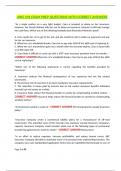
£7.73
Get access to the full document:

100% satisfaction guarantee
Immediately available after payment
Both online and in PDF
No strings attached

Get to know the seller
Seller avatar
AcademicPlug

Get to know the seller

Seller avatar
AcademicPlug Yale School Of Medicine
Follow You need to be logged in order to follow users or courses
Sold
1
Member since
7 months
Number of followers
0
Documents
327
Last sold
2 months ago
⚡ACADEMIC PLUG- Your Ultimate Exam Resource Center⚡

Welcome to Academic Plug, your one-stop shop for all things academic success! We specialize in providing high-quality, curated exam resources to help students, professionals, and lifelong learners excel in their studies and certification goals. Whether you're preparing for high school finals, university exams, or global certifications like IELTS, CPA, or SATs — Academic Plug connects you with the documents that matter most: ✅ Past papers ✅ Model answers ✅ Marking schemes ✅ Study guides ✅ Revision notes ✅ Certification prep kits We believe in smarter study, not harder. That’s why Academic Plug is more than a store — it’s your academic ally. With verified documents, organized by subject and exam board, you’ll save time and stay ahead. Plug in. Power up. Pass with confidence.

Read more Read less
0.0

0 reviews

5
0
4
0
3
0
2
0
1
0

Recently viewed by you

Why students choose Stuvia

Created by fellow students, verified by reviews

Quality you can trust: written by students who passed their exams and reviewed by others who've used these revision notes.

Didn't get what you expected? Choose another document

No problem! You can straightaway pick a different document that better suits what you're after.

Pay as you like, start learning straight away

No subscription, no commitments. Pay the way you're used to via credit card and download your PDF document instantly.

Student with book image

“Bought, downloaded, and smashed it. It really can be that simple.”

Alisha Student

Frequently asked questions