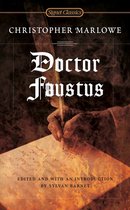
*Marlowe, C. (2010). Doctor Faustus: The A-text (R. Gill, Ed.). Bloomsbury Methuen
Drama. (Original work published 1604)
Act 1 Scene 1:
● ‘How am I glutted with conceit of this’*
- Faustus contemplates what necromancy may offer him, but ‘glutted’ may imply
he has already been consumed by this idea and blinded into failing to realise the
consequences of his actions, foreshadowing his downfall
● ‘His waxen wings did mount about his reach’
- Classical allusion to the Greek Myth of Icarus - conveys Fautsus’ hubris desire to
transcend the boundary between mortals and Gods
● ‘A world of profit and delight / of power, of honour, of omnipotence’
- Listing = sees necromancy as offering limitless possibilities, driven by glory status
and power
● ‘Necromantic books are heavenly’
- Oxymoron = conveys Faustus’ mistaken belief that necromancy will bring
God-like power
- Marlowe makes clear that the dark arts have already corrupted his values and
theological understandings
- Link to 'conjurer laureate’/ ‘no more he commands must we perform’/ context of
Dr John Dee amassing largest library
● ‘A sound magician is a mighty God’
- Metaphor - Faustus believes that magic can elevate his status to a God
Act 1 Scene 3:
The first time that Meph enters the play, he is used by Marlowe as a cautionary figure in
order to highlight Faustus’ hubris and ignorance:
● ‘Thou art too ugly to attend on me. Go, and return an old Franciscan Friar; that holy
shape becomes a devil best’ - Page 19
- Example of anti-catholic agenda/propaganda, that was used throughout
Marlowe’s play
- After being at large with the Spanish who were known to be strongly catholics,
they were consequently treated as the enemy.
- Mass- catholic religious ceremony, was typically performed in Latin, outlawed
during Jacobean England
- Significant as Faustus’ initial incantation to summon Mephistopheles is in Latin,
language used in mass, so Marlowe may have been perhaps suggesting there is
something devilish about the catholic faith
Drama. (Original work published 1604)
Act 1 Scene 1:
● ‘How am I glutted with conceit of this’*
- Faustus contemplates what necromancy may offer him, but ‘glutted’ may imply
he has already been consumed by this idea and blinded into failing to realise the
consequences of his actions, foreshadowing his downfall
● ‘His waxen wings did mount about his reach’
- Classical allusion to the Greek Myth of Icarus - conveys Fautsus’ hubris desire to
transcend the boundary between mortals and Gods
● ‘A world of profit and delight / of power, of honour, of omnipotence’
- Listing = sees necromancy as offering limitless possibilities, driven by glory status
and power
● ‘Necromantic books are heavenly’
- Oxymoron = conveys Faustus’ mistaken belief that necromancy will bring
God-like power
- Marlowe makes clear that the dark arts have already corrupted his values and
theological understandings
- Link to 'conjurer laureate’/ ‘no more he commands must we perform’/ context of
Dr John Dee amassing largest library
● ‘A sound magician is a mighty God’
- Metaphor - Faustus believes that magic can elevate his status to a God
Act 1 Scene 3:
The first time that Meph enters the play, he is used by Marlowe as a cautionary figure in
order to highlight Faustus’ hubris and ignorance:
● ‘Thou art too ugly to attend on me. Go, and return an old Franciscan Friar; that holy
shape becomes a devil best’ - Page 19
- Example of anti-catholic agenda/propaganda, that was used throughout
Marlowe’s play
- After being at large with the Spanish who were known to be strongly catholics,
they were consequently treated as the enemy.
- Mass- catholic religious ceremony, was typically performed in Latin, outlawed
during Jacobean England
- Significant as Faustus’ initial incantation to summon Mephistopheles is in Latin,
language used in mass, so Marlowe may have been perhaps suggesting there is
something devilish about the catholic faith