Focus:
- Expand on “because”....
- Mention supernatural, omniscience and omnipotence, didactic
- Link quotations and ideas across the text
- Use of dynamic, static verbs and determiners
- Proxemics, stage directions.
- Expand on the extract
- Use the word “hypocrisy” more accurately.
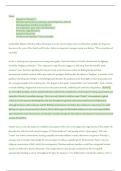
Undeniably didactic, Priestley utilises the Inspector as the moral compass in his morality play; equally, the Inspector
also acts as the voice of Eva Smith and Priestley deliver an imperative message to post-war Britain: “We are members of
one body”.
In Act 1, the Inspector is presented as a strong moral guide. Upon his entrance, Priestley dictates that the lighting
should be “brighter and harder”. The comparative stage direction suggests a shift away from the initially “pink,
intimate” tone- therefore signalling that the previously masked tension within the Birling family and their
romanticised, idealistic outlook will be put under the spotlight. Additionally, the adjective “brighter” is symbolic of the
guidance that Inspector will give to the Birlings (and therefore the audience) as he sheds light on their immorality and
the consequent plight of the working class. The Inspector also speaks “purposefully” and “masterfully”- both of which
contradict Birling's fragmented sentences from this point onwards, solidifying his authority and guidance. However,
the intensified spotlight, and his upheld authority could also be an implication of the Inspector being supernatural and
intensifies Priestley’s moralistic message. This is not only linked in with his name “Goole”, a homophone to ghoul
which ties to the mystery shrouding him, but also through his apparent omniscience (and lack of omnipotence);
although he knows of Eva’s history and the Birling’s involvement even before they confess, he cannot force the older
Birlings to repent, nor prevent Eva’s demise. All of which urges the Edwardian audience to take social responsibility
upon themselves, learn from and act on Priestley’s socialist message for the collective betterment of society and to avoid
another World War.
Further into act one, the Inspector establishes the purpose of his visit: to investigate the tragic demise of Eva Smith. He
describes Eva with the vivid, emotive imagery of “burnt inside out” and passing away in “great agony”. The verb
“burnt” has violent connotations, evoking sympathy from the audience to make them more receptive to Priestley’s
message, and eventually acknowledge the vicious impact of callous, capitalist greed. Alternatively, “burnt” also has
religious connotations of hell- which the contemporary Christian audience members would have recognized because
suicide was believed to lead to damnation. This implies that Eva had already considered her life a living hell-
subsequently deciding to end it. Throughout the play, the Inspector “very deliberately” reminds the audience of Eva’s
- Expand on “because”....
- Mention supernatural, omniscience and omnipotence, didactic
- Link quotations and ideas across the text
- Use of dynamic, static verbs and determiners
- Proxemics, stage directions.
- Expand on the extract
- Use the word “hypocrisy” more accurately.
Undeniably didactic, Priestley utilises the Inspector as the moral compass in his morality play; equally, the Inspector
also acts as the voice of Eva Smith and Priestley deliver an imperative message to post-war Britain: “We are members of
one body”.
In Act 1, the Inspector is presented as a strong moral guide. Upon his entrance, Priestley dictates that the lighting
should be “brighter and harder”. The comparative stage direction suggests a shift away from the initially “pink,
intimate” tone- therefore signalling that the previously masked tension within the Birling family and their
romanticised, idealistic outlook will be put under the spotlight. Additionally, the adjective “brighter” is symbolic of the
guidance that Inspector will give to the Birlings (and therefore the audience) as he sheds light on their immorality and
the consequent plight of the working class. The Inspector also speaks “purposefully” and “masterfully”- both of which
contradict Birling's fragmented sentences from this point onwards, solidifying his authority and guidance. However,
the intensified spotlight, and his upheld authority could also be an implication of the Inspector being supernatural and
intensifies Priestley’s moralistic message. This is not only linked in with his name “Goole”, a homophone to ghoul
which ties to the mystery shrouding him, but also through his apparent omniscience (and lack of omnipotence);
although he knows of Eva’s history and the Birling’s involvement even before they confess, he cannot force the older
Birlings to repent, nor prevent Eva’s demise. All of which urges the Edwardian audience to take social responsibility
upon themselves, learn from and act on Priestley’s socialist message for the collective betterment of society and to avoid
another World War.
Further into act one, the Inspector establishes the purpose of his visit: to investigate the tragic demise of Eva Smith. He
describes Eva with the vivid, emotive imagery of “burnt inside out” and passing away in “great agony”. The verb
“burnt” has violent connotations, evoking sympathy from the audience to make them more receptive to Priestley’s
message, and eventually acknowledge the vicious impact of callous, capitalist greed. Alternatively, “burnt” also has
religious connotations of hell- which the contemporary Christian audience members would have recognized because
suicide was believed to lead to damnation. This implies that Eva had already considered her life a living hell-
subsequently deciding to end it. Throughout the play, the Inspector “very deliberately” reminds the audience of Eva’s