AC 3.1 Writing Frames
*Must link to the brief*
Evidence:
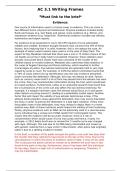
One source of information used in criminal cases is evidence. This can come in
two different forms: physical and testimonial. Physical evidence includes bodily
fluids and tissues (e.g. skin flakes and saliva), trace evidence (e.g. fibres), and
impression evidence (e.g. footprints). Testimonial evidence includes eye witness
testimonies and expert reports.
For evidence to be presented in court, the CPS requires it to be admissible,
reliable and credible. Evidence brought forward must convince the CPS of these
factors, thus implying that it is valid. However, this is not always the case. An
example of where expert reports were used is in the case of Sally Clark. The
expert Sir Roy Meadows claimed that there was a one in 73 million chance of two
cot deaths occurring in Sally Clark’s household. However, these statistics were
actually inaccurate which meant Clark was convicted of the murder of her
children based on invalid evidence. Meadows also used these false statistics in
the cases of Angela Cannings and Donna Anthony, which resulted in further
miscarriages of justice. Eye witness testimonies are generally held in very high
regard by juries in court. For example, in 1976 the Delvin Committee found that
in 74% of cases where line-up identification was the only evidence presented,
juries convicted the defendant. Although, this may not always be wise. Factors
such as currency mean that if a lot of time has passed since the witness has seen
the crime, they may misremember information during the trial, which would lead
to invalid evidence. Furthermore, Loftus et al conducted research that found that
the circumstances of the crime can also affect the eye witness testimony. For
example, if a weapon had been used, the witness would focus on it and ignore
other details occurring around it, leading to a potentially invalid report. Another
factor that will impact the validity of eye witness testimonies is bias. If the
witness holds prejudice views against the defendant, they may overly dramatize
the story in order to portray the defendant in a bad light. Likewise, if they have
favourable views of the defendant, they may choose to depict them in a more
positive way. Both of these instances would impact the validity of their testimony.
Finally, physical evidence such as DNA can be extremely valid in a case because
every individual has a unique set of DNA (aside from monozygotic twins). This
means that the evidence will be accurate. However, there is a risk of
contamination which would cause it to be inaccurate and hence, invalid. For
example, in 2011 Adam Scott was on remand for 5 months as he was charged
with rape. Although, this was due to his DNA being mishandled and mixed up
with genetic material from a rape victim in Manchester, after police had originally
taken it due to a spitting incident in Exeter.
In the brief, a member of the public brought the police a red scarf two days after
the murder that they claimed to have found on the day of the crime. Due to the
circumstances in which this piece of evidence came to light, it may not be valid.
This is because the police cannot be certain as to whether the scarf was in fact
found in the park on the day. Furthermore, since it has been with this individual
for two days, there is a high risk of contamination or tampering. Therefore, it
may be inadmissible.
*Must link to the brief*
Evidence:
One source of information used in criminal cases is evidence. This can come in
two different forms: physical and testimonial. Physical evidence includes bodily
fluids and tissues (e.g. skin flakes and saliva), trace evidence (e.g. fibres), and
impression evidence (e.g. footprints). Testimonial evidence includes eye witness
testimonies and expert reports.
For evidence to be presented in court, the CPS requires it to be admissible,
reliable and credible. Evidence brought forward must convince the CPS of these
factors, thus implying that it is valid. However, this is not always the case. An
example of where expert reports were used is in the case of Sally Clark. The
expert Sir Roy Meadows claimed that there was a one in 73 million chance of two
cot deaths occurring in Sally Clark’s household. However, these statistics were
actually inaccurate which meant Clark was convicted of the murder of her
children based on invalid evidence. Meadows also used these false statistics in
the cases of Angela Cannings and Donna Anthony, which resulted in further
miscarriages of justice. Eye witness testimonies are generally held in very high
regard by juries in court. For example, in 1976 the Delvin Committee found that
in 74% of cases where line-up identification was the only evidence presented,
juries convicted the defendant. Although, this may not always be wise. Factors
such as currency mean that if a lot of time has passed since the witness has seen
the crime, they may misremember information during the trial, which would lead
to invalid evidence. Furthermore, Loftus et al conducted research that found that
the circumstances of the crime can also affect the eye witness testimony. For
example, if a weapon had been used, the witness would focus on it and ignore
other details occurring around it, leading to a potentially invalid report. Another
factor that will impact the validity of eye witness testimonies is bias. If the
witness holds prejudice views against the defendant, they may overly dramatize
the story in order to portray the defendant in a bad light. Likewise, if they have
favourable views of the defendant, they may choose to depict them in a more
positive way. Both of these instances would impact the validity of their testimony.
Finally, physical evidence such as DNA can be extremely valid in a case because
every individual has a unique set of DNA (aside from monozygotic twins). This
means that the evidence will be accurate. However, there is a risk of
contamination which would cause it to be inaccurate and hence, invalid. For
example, in 2011 Adam Scott was on remand for 5 months as he was charged
with rape. Although, this was due to his DNA being mishandled and mixed up
with genetic material from a rape victim in Manchester, after police had originally
taken it due to a spitting incident in Exeter.
In the brief, a member of the public brought the police a red scarf two days after
the murder that they claimed to have found on the day of the crime. Due to the
circumstances in which this piece of evidence came to light, it may not be valid.
This is because the police cannot be certain as to whether the scarf was in fact
found in the park on the day. Furthermore, since it has been with this individual
for two days, there is a high risk of contamination or tampering. Therefore, it
may be inadmissible.