

Qualification:
DNA structure
X-ray diffraction analysis was how DNA was first examined; it is a technique that determines the
three-dimensional atomic structure of a molecule. The x-ray diffraction indicated that the DNA is
made up of two strands of polymer wound into a helix, this information that the DNA is rouble
stranded was very important and it provided a big clue that led to the Watson-Crick structure of
DNA. DNA is made up of molecules, these molecules are known as nucleotides and each one
contains a phosphate group, a sugar group and a nitrogen base. There are four different types of
nitrogen bases which are adenine, thymine, guanine and cytosine. The four bases are in different
orders in DNA which determines the DNA’s instructions and genetic code.
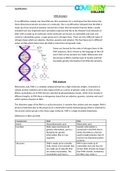
Genes are formed by the order of nitrogen bases in the
DNA sequence, this is known as the language of the cell
and it tells us how proteins are made. Ribonucleic acid
also knows as RNA is another type of nucleic acid that
translates genetic information from DNA into proteins.
RNA structure
Ribonucleic acid, RNA, is a complex compound that has a high molecular weight, it functions in
cellular protein synthesis and it also replaces DNA as a carrier of genetic codes in some viruses.
Ribose nucleotides are in RNA that are attached by phosphodiester bonds, which form strands of
different lengths. In RNA there a nitrogenous bases that are adenine, guanine, cytosine and uracil
which replaces thymine in DNA.
The ribosome sugar of the RNA is a cyclical structure, it contains five carbons and one oxygen. RNA is
prone to hydrolysis due to the presence of a chemically reactive hydroxyl group which is attached to
the second carbon group in the ribose sugar molecule. RNA is a single stranded biopolymer.
Differences in RNA and DNA
Comparison DNA RNA
Name Deoxyribonucleic acid Ribonucleic acid
Function DNA copies and stores all Genetic information is
genetic information, and is a converted in the RNA that is
blueprint for genetic within the DNA to a format
information that is in an used to build proteins, then it
organism moves it to ribosomal protein
factories
Structure DNA is made up by a double RNA is also made up of
helix, which is two strands that nucleotides but only has one
are made up of subunits that strand. DNA strands are longer
are names nucleotides. The than RNA strands. Sometimes
nucleotides each have a the RNA may create a
, Qualification:
phosphate which is a 5-carbon secondary double helix
sugar molecule and a structure, however this only
nitrogenous base. happens intermittently.
Length A chromosome is a single long RNA molecules are different in
DNA molecule, it can be their length but still are
several centimetres in length smaller than DNA polymers.
when unravelled, which makes An RNA molecule may be a
it a much longer polymer than few thousand base pairs long.
RNA.
Sugar Deoxyribose is the sugar that is RNA has ribose sugar
in DNA, it has one less molecules and without the
hydroxyl group than RNA’s hydroxyl modifications of the
ribose. deoxyribose.
Bases There are four bases in DNA, RNA has adenine. Guanine and
these are adenine, thymine, cytosine, however it replaces
guanine, and cytosine. thymine with uracil.
Base pairs Adenine and thymine par A-T Adenine and uracil pair A-U
Cytosine and guanine pair C-G Cytosine and guanine pair C-G
Location The DNA is in the nucleus, and RNA is form in the nucleolus,
a very small amount of DNA is then it is transported to the
in the mitochondria. specialised regions of the
cytoplasm, but it depends on
the type of RNA formed.
Reactivity DNA is more stable than an RNA has a ribose sugar, it is
RNA molecule, this is because more reactive than the DNA, it
of DNA’s deoxyribose sugar is not stable in alkaline
that contains one less oxygen- conditions. RNA is more easily
containing hydroxyl group. subject to attack by enzymes
This is useful for a molecule due to the RNA’s larger helical
that has the job of keeping grooves.
genetic information safe.
Ultraviolet sensitivity DNA is damaged by ultraviolet RNA does not as damaged by
light. UV light as it is more resistant
to it.
Protein synthesis
The sequence of bases in a DNA molecule determine the order of amino acids in a protein molecule.
Triples are groups of three bases, they represent different amino acids.
Below, in figure one is the basis of a genetic code, the sequence of genetic information on DNA
which codes of a protein, this is also known as a gene.
DNA structure
X-ray diffraction analysis was how DNA was first examined; it is a technique that determines the
three-dimensional atomic structure of a molecule. The x-ray diffraction indicated that the DNA is
made up of two strands of polymer wound into a helix, this information that the DNA is rouble
stranded was very important and it provided a big clue that led to the Watson-Crick structure of
DNA. DNA is made up of molecules, these molecules are known as nucleotides and each one
contains a phosphate group, a sugar group and a nitrogen base. There are four different types of
nitrogen bases which are adenine, thymine, guanine and cytosine. The four bases are in different
orders in DNA which determines the DNA’s instructions and genetic code.
Genes are formed by the order of nitrogen bases in the
DNA sequence, this is known as the language of the cell
and it tells us how proteins are made. Ribonucleic acid
also knows as RNA is another type of nucleic acid that
translates genetic information from DNA into proteins.
RNA structure
Ribonucleic acid, RNA, is a complex compound that has a high molecular weight, it functions in
cellular protein synthesis and it also replaces DNA as a carrier of genetic codes in some viruses.
Ribose nucleotides are in RNA that are attached by phosphodiester bonds, which form strands of
different lengths. In RNA there a nitrogenous bases that are adenine, guanine, cytosine and uracil
which replaces thymine in DNA.
The ribosome sugar of the RNA is a cyclical structure, it contains five carbons and one oxygen. RNA is
prone to hydrolysis due to the presence of a chemically reactive hydroxyl group which is attached to
the second carbon group in the ribose sugar molecule. RNA is a single stranded biopolymer.
Differences in RNA and DNA
Comparison DNA RNA
Name Deoxyribonucleic acid Ribonucleic acid
Function DNA copies and stores all Genetic information is
genetic information, and is a converted in the RNA that is
blueprint for genetic within the DNA to a format
information that is in an used to build proteins, then it
organism moves it to ribosomal protein
factories
Structure DNA is made up by a double RNA is also made up of
helix, which is two strands that nucleotides but only has one
are made up of subunits that strand. DNA strands are longer
are names nucleotides. The than RNA strands. Sometimes
nucleotides each have a the RNA may create a
, Qualification:
phosphate which is a 5-carbon secondary double helix
sugar molecule and a structure, however this only
nitrogenous base. happens intermittently.
Length A chromosome is a single long RNA molecules are different in
DNA molecule, it can be their length but still are
several centimetres in length smaller than DNA polymers.
when unravelled, which makes An RNA molecule may be a
it a much longer polymer than few thousand base pairs long.
RNA.
Sugar Deoxyribose is the sugar that is RNA has ribose sugar
in DNA, it has one less molecules and without the
hydroxyl group than RNA’s hydroxyl modifications of the
ribose. deoxyribose.
Bases There are four bases in DNA, RNA has adenine. Guanine and
these are adenine, thymine, cytosine, however it replaces
guanine, and cytosine. thymine with uracil.
Base pairs Adenine and thymine par A-T Adenine and uracil pair A-U
Cytosine and guanine pair C-G Cytosine and guanine pair C-G
Location The DNA is in the nucleus, and RNA is form in the nucleolus,
a very small amount of DNA is then it is transported to the
in the mitochondria. specialised regions of the
cytoplasm, but it depends on
the type of RNA formed.
Reactivity DNA is more stable than an RNA has a ribose sugar, it is
RNA molecule, this is because more reactive than the DNA, it
of DNA’s deoxyribose sugar is not stable in alkaline
that contains one less oxygen- conditions. RNA is more easily
containing hydroxyl group. subject to attack by enzymes
This is useful for a molecule due to the RNA’s larger helical
that has the job of keeping grooves.
genetic information safe.
Ultraviolet sensitivity DNA is damaged by ultraviolet RNA does not as damaged by
light. UV light as it is more resistant
to it.
Protein synthesis
The sequence of bases in a DNA molecule determine the order of amino acids in a protein molecule.
Triples are groups of three bases, they represent different amino acids.
Below, in figure one is the basis of a genetic code, the sequence of genetic information on DNA
which codes of a protein, this is also known as a gene.


