Comparative labour law
Lecture 10
Part 1 – Europe
● In the past strikes were often repressed as ‘revolts’,
● but since the end of the 19th century they have been increasingly tolerated,
● although they are always looked at with suspicion and sometimes still have been forbidden
● After the Second World War a number of Member States (FR, IT, ES, PT, SE) recognised the
‘right to strike’ in their national constitutions.
● In other MS (NL, BE, DE) the ‘right to strike’ is recognised by case law.
● In some MS (UK, AT) there is no ‘right to strike’ but a certain ‘freedom to strike’.
● The ‘right to strike’ was also recognised in
o The UN Covenant ESC Rights (art. 8),
o The ESC (art. 6(4),
o The EU Charter of Fundamental Rights (art. 28) and
o (Recently by case law (Enerji case) of the ECtHR) as a sequel of art. 11 ECHR,
o But NOT explicitly in the ILO –Conventions!!!!!
The Right to strike
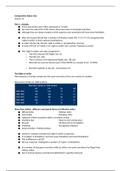
The frequency of strikes varied over the years and varies from one country to another.
Days lost to strikes on 1000 workers
More than strikes –different and special forms of collective action
● Official strike -Wildcat strike
● Total strike -Rotating strike
● Solidarity strikes/sympathy strikes, secondary action
● Overtime ban -Work-to-the-rule/go slow
● Boycott -Sit-down/sit-in/occupation
● Picketing -Recognition disputes
● General strikes / Political strikes
● However, nobody considers the right to strike as absolute.
● It is subject to limitations, but how many limitations and what limitations?
● This is different in all MS.
● We can, however, distinguish a number of “types” of limitations.
● In a number of European countries wild cat strikes are easier considered as illegal than
official strikes,
● but in most European countries this distinction is equally irrelevant.
, ● In a number of European countries (DE, NL, Nordic countries) the ‘peace obligation’ is a very
important limitation on the right to strike:
o Workers should not go out on strike as long as a collective agreement is in force that
covers (ratione materiae) the claims of the workers.
● This element is less important or even unimportant in the UK, FR, IT, SE, PT. In Belgium the
peace obligation is legally not important but factually it is.
● In a number of European countries (DE, NL, PT, Nordic countries) one should not strike on
o matters of rights, but only on matters of interest.
o In other European countries this distinction is not relevant.
● In most European countries certain notice requirements must be met for a strike to be legal,
o Only a minority of European countries consider the strike as an ultimum remedium.
o In a few European countries (DE, NL) strikes can be tested to the principle of
proportionality.
Legality of special forms of collective action
● Recognition disputes
o in principle legal in most European countries
● Picketing
o in principle legal provided it is peaceful
● Solidarity strikes/sympathy strikes, secondary action
o in most Eur. Countries can be legal, in the UK still very much restricted
● Boycotts
o in Nordic countries accepted, in other countries dubious
● Work-to-the-rule/go slow
o sometimes considered as unfair methods
● Overtime ban in most European countries allowed
● Sit-down/sit-in/occupation
o only seldom legal
The strike of civil servants and in essential industries
● Most European countries were traditionally hostile towards the right to strike of civil
servants, but nowadays in most countries this right is recognised albeit with important
limitations for certain categories of civil servants (often: police, prison guards, etc.)
● In Germany almost half of the civil servants (those qualified as Beambte) are excluded from
the right to strike.
● In many European countries strikes in essential services (such as public transport, health
care, waste management) are subject to limitations.
The consequences of the strike for trade unions
● In all countries of Europe trade unions that are organising lawful strikes are not liable for
damages.
● If they are organising unlawful strikes in most European countries they run the risk of being
sued for damages, but in some countries (FR, UK) this liability is limited or even non-existent
(BE).
The consequences of the strike for workers
● In all European countries, workers participating in a strike are losing the entitlement to
wages.
Lecture 10
Part 1 – Europe
● In the past strikes were often repressed as ‘revolts’,
● but since the end of the 19th century they have been increasingly tolerated,
● although they are always looked at with suspicion and sometimes still have been forbidden
● After the Second World War a number of Member States (FR, IT, ES, PT, SE) recognised the
‘right to strike’ in their national constitutions.
● In other MS (NL, BE, DE) the ‘right to strike’ is recognised by case law.
● In some MS (UK, AT) there is no ‘right to strike’ but a certain ‘freedom to strike’.
● The ‘right to strike’ was also recognised in
o The UN Covenant ESC Rights (art. 8),
o The ESC (art. 6(4),
o The EU Charter of Fundamental Rights (art. 28) and
o (Recently by case law (Enerji case) of the ECtHR) as a sequel of art. 11 ECHR,
o But NOT explicitly in the ILO –Conventions!!!!!
The Right to strike
The frequency of strikes varied over the years and varies from one country to another.
Days lost to strikes on 1000 workers
More than strikes –different and special forms of collective action
● Official strike -Wildcat strike
● Total strike -Rotating strike
● Solidarity strikes/sympathy strikes, secondary action
● Overtime ban -Work-to-the-rule/go slow
● Boycott -Sit-down/sit-in/occupation
● Picketing -Recognition disputes
● General strikes / Political strikes
● However, nobody considers the right to strike as absolute.
● It is subject to limitations, but how many limitations and what limitations?
● This is different in all MS.
● We can, however, distinguish a number of “types” of limitations.
● In a number of European countries wild cat strikes are easier considered as illegal than
official strikes,
● but in most European countries this distinction is equally irrelevant.
, ● In a number of European countries (DE, NL, Nordic countries) the ‘peace obligation’ is a very
important limitation on the right to strike:
o Workers should not go out on strike as long as a collective agreement is in force that
covers (ratione materiae) the claims of the workers.
● This element is less important or even unimportant in the UK, FR, IT, SE, PT. In Belgium the
peace obligation is legally not important but factually it is.
● In a number of European countries (DE, NL, PT, Nordic countries) one should not strike on
o matters of rights, but only on matters of interest.
o In other European countries this distinction is not relevant.
● In most European countries certain notice requirements must be met for a strike to be legal,
o Only a minority of European countries consider the strike as an ultimum remedium.
o In a few European countries (DE, NL) strikes can be tested to the principle of
proportionality.
Legality of special forms of collective action
● Recognition disputes
o in principle legal in most European countries
● Picketing
o in principle legal provided it is peaceful
● Solidarity strikes/sympathy strikes, secondary action
o in most Eur. Countries can be legal, in the UK still very much restricted
● Boycotts
o in Nordic countries accepted, in other countries dubious
● Work-to-the-rule/go slow
o sometimes considered as unfair methods
● Overtime ban in most European countries allowed
● Sit-down/sit-in/occupation
o only seldom legal
The strike of civil servants and in essential industries
● Most European countries were traditionally hostile towards the right to strike of civil
servants, but nowadays in most countries this right is recognised albeit with important
limitations for certain categories of civil servants (often: police, prison guards, etc.)
● In Germany almost half of the civil servants (those qualified as Beambte) are excluded from
the right to strike.
● In many European countries strikes in essential services (such as public transport, health
care, waste management) are subject to limitations.
The consequences of the strike for trade unions
● In all countries of Europe trade unions that are organising lawful strikes are not liable for
damages.
● If they are organising unlawful strikes in most European countries they run the risk of being
sued for damages, but in some countries (FR, UK) this liability is limited or even non-existent
(BE).
The consequences of the strike for workers
● In all European countries, workers participating in a strike are losing the entitlement to
wages.