General Defences AO1
Consent
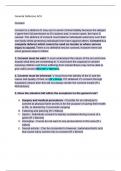
Consent is a defence D may use to avoid criminal liability because the alleged
V gave their full permission to D’s actions and, in some cases, the harm D
caused. The defence of consent must balance individuals autonomy over their
own body whilst protecting individuals from harm against others. Consent is a
complete defence which cannot be used on murder or where serious
injury is caused. There is no definitive test.for consent, however there are
some general steps to follow.
1. Consent must be valid. V must understand the nature of the act and know
exactly what they are consenting to. V must have the capacity to consent
meaning children and those suffering from mental illness may not be able to
give valid consent (Burrell v Harmer).
2. Consent must be informed. V must know the identity of the D and the
nature and quality of their act (R v Dica). If D obtained V’s consent through
fraudulent means then this will not always render the consent invalid (R v
Richardson).
3. Does the situation fall within the exceptions to the general rule?
A. Surgery and medical procedures - Possible for an individual to
consent to physical harm as this is for the purpose of saving their health
or life, or desired by V (cosmetic surgery)
B. Tattooing and piercing (R v Wilson)
C. Sports - Individuals consent to injuries sustained during course of a
game (R v Barnes)
D. Horseplay - Courts do not want to see prosecutions in this area (R v
Aitken)
E. Sexual activity - Can be consented to however, sadomasochistic acts
that cause injury cannot rely on consent (R v Brown)
, Self Defence
Self defence covers situations where force is necessary to defend people or
prevent crime. A person may use reasonable force to defend themselves or
another from attack, to protect property or to prevent crime. Once D raises self
defence, it is the job of the prosecution to prove beyond all reasonable doubt
that the defendant was not acting in self defence or that the force used was
unreasonable. Self defence is a complete defence meaning, if successful, the
full charge will be dropped, and is available for offences. There is a two-stage
test for self defence -
1. Was the force necessary? D is judged in the circumstances they
honestly believed them to be. D does not need to wait to be attacked before
defending himself (R v Beckford)
2. Was the force reasonable? The jury must consider the fact D was
acting in the heat of the moment and, as long as D did what he honestly
thought was required, this is evidence that the force was reasonable (R v
Martin). This case is an example of excessive force.
Duress
Duress is a complete defence for all crimes except murder (R v Howe)
and attempted murder (R v Gotts). The burden of proof is on the prosecution
to prove D was not under duress. There are two types of duress - 1. Duress
by threats - D has been forced to commit the crime by threats made to him. 2.
Duress of circumstance - the circumstance dictates the crime rather than the
person.
Duress by Threats Test - R v Hasan
1. threat to cause death or serious injury - R v Valderrama-Vega
2. threat must be directed against the D or their immediate family or
someone close to them - R v Graham - 2-part test - 1. Did D
reasonably believe that he would be killed or physically injured if
he did not comply? 2. Would a sober person of reasonable
firmness have also done as he did (objective)
3. Whether D acted reasonably in the light of the threats will be
judged objectively
4. The threats relate directly to the crime committed by the D
5. no action the D could have taken - R v Gill
Consent
Consent is a defence D may use to avoid criminal liability because the alleged
V gave their full permission to D’s actions and, in some cases, the harm D
caused. The defence of consent must balance individuals autonomy over their
own body whilst protecting individuals from harm against others. Consent is a
complete defence which cannot be used on murder or where serious
injury is caused. There is no definitive test.for consent, however there are
some general steps to follow.
1. Consent must be valid. V must understand the nature of the act and know
exactly what they are consenting to. V must have the capacity to consent
meaning children and those suffering from mental illness may not be able to
give valid consent (Burrell v Harmer).
2. Consent must be informed. V must know the identity of the D and the
nature and quality of their act (R v Dica). If D obtained V’s consent through
fraudulent means then this will not always render the consent invalid (R v
Richardson).
3. Does the situation fall within the exceptions to the general rule?
A. Surgery and medical procedures - Possible for an individual to
consent to physical harm as this is for the purpose of saving their health
or life, or desired by V (cosmetic surgery)
B. Tattooing and piercing (R v Wilson)
C. Sports - Individuals consent to injuries sustained during course of a
game (R v Barnes)
D. Horseplay - Courts do not want to see prosecutions in this area (R v
Aitken)
E. Sexual activity - Can be consented to however, sadomasochistic acts
that cause injury cannot rely on consent (R v Brown)
, Self Defence
Self defence covers situations where force is necessary to defend people or
prevent crime. A person may use reasonable force to defend themselves or
another from attack, to protect property or to prevent crime. Once D raises self
defence, it is the job of the prosecution to prove beyond all reasonable doubt
that the defendant was not acting in self defence or that the force used was
unreasonable. Self defence is a complete defence meaning, if successful, the
full charge will be dropped, and is available for offences. There is a two-stage
test for self defence -
1. Was the force necessary? D is judged in the circumstances they
honestly believed them to be. D does not need to wait to be attacked before
defending himself (R v Beckford)
2. Was the force reasonable? The jury must consider the fact D was
acting in the heat of the moment and, as long as D did what he honestly
thought was required, this is evidence that the force was reasonable (R v
Martin). This case is an example of excessive force.
Duress
Duress is a complete defence for all crimes except murder (R v Howe)
and attempted murder (R v Gotts). The burden of proof is on the prosecution
to prove D was not under duress. There are two types of duress - 1. Duress
by threats - D has been forced to commit the crime by threats made to him. 2.
Duress of circumstance - the circumstance dictates the crime rather than the
person.
Duress by Threats Test - R v Hasan
1. threat to cause death or serious injury - R v Valderrama-Vega
2. threat must be directed against the D or their immediate family or
someone close to them - R v Graham - 2-part test - 1. Did D
reasonably believe that he would be killed or physically injured if
he did not comply? 2. Would a sober person of reasonable
firmness have also done as he did (objective)
3. Whether D acted reasonably in the light of the threats will be
judged objectively
4. The threats relate directly to the crime committed by the D
5. no action the D could have taken - R v Gill