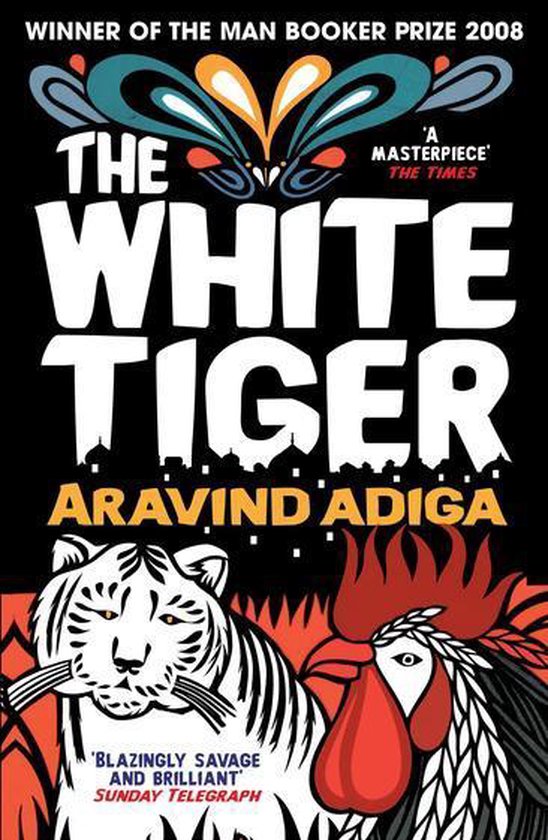
The White Tiger
ARAVIND ADIGA
Full notes
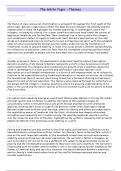
The First Night
In the first chapter ofThe White Tiger, Balram'sletter to Chinese Premier Wen Jiabao
introduces the novel’s central purpose: to challenge the myth of New India as a land of
opportunity and progress. Through his story, Balram exposes the harsh realities of
poverty, corruption, and lack of basic services. A child who can read is rare, and
education is often sacrificed for survival. The chapter also sets up the novel's satirical
tone. Using humor and exaggeration, Aravind Adiga critiques not only Indian society and
government but also global hypocrisy—referring to communist China as
“freedom-loving” and India’s leader as “the Great Socialist,” despite the lack of freedom
or social welfare in either country. Balram is an unreliable narrator. Though he claims
not to know English, he writes fluently in polished prose. He seems mentally unstable,
proudly referencing a wanted poster that accuses him of theft and murder—crimes he
openly admits to in a letter to a foreign dignitary. The chapter also explores internalized
oppression. Balram, born into a low caste, is expected to be a servant. Even his family
values a buffalo over him. Yet Balram believes he is different. Inspired by Vijay, a man
who rose from pig herder to bus conductor, he comes to see rebellion as the path to
success—what he calls “the entrepreneur’s prerogative.” While the murder is revealed
early—Balram kills Mr. Ashok—the reasons remain unclear, creating suspense. The
chapter leaves readers asking: why did he do it, how did he get away with it, and what
does the act say about India's so-called entrepreneurial rise?
1. Introduction of Balram:Balram introduces himselfas a self-made entrepreneur
from India, calling himself "The White Tiger" — a rare creature, symbolizing his
uniqueness and intelligence.
2. Setting:The narrative takes place inBangalore, whereBalram runs a taxi
business that caters to call-center workers. He writes his letters at night.
3. Tone and Perspective:Balram uses a direct, sarcastic,and often humorous tone.
He is both critical and insightful, offering a dark but sharp view of India’s class
, divisions, corruption, and social realities.
4. The Premise:He promises to tell the Premier the storyof how he rose from being
the son of a rickshaw-puller in a poor village to a successful entrepreneur. He
hints that his journey involvedmurder and moral compromise,suggesting the
complexity of his transformation.
5. Themes Introduced:
- Class struggle: Balram contrasts India’s "Light" and"Darkness" — the
wealthy, urban elite vs. the rural poor.
- Corruption and ambition: He begins to unveil the rotwithin India's social
and political systems, and his ambition to escape his fate.
Qoutes
● “Don't waste your money on those American books. They are so yesterday. I am
tomorrow” - balram
● “Its true that all these gods seem to do awfully little work - much like our
politicans” - showcasing the political state of india
● “Hes half-baked” - underdevloped and lacks education
● “Hes a coward and eats too much” - kusm describing balram
● “But he was a man of courage and honour” - balram describing his dad
● “ They remain slaves becuase they can't see what is beatufual in this world.” -
shows balrams resentement.
● “Even as a boy I could see what was beautiful in the world: I was destined not to
stay a slaver” - balram on his future. What makes him different from everyone
else.
● To break the law of his land ... is the entrepreneur's prerogative. - to become an
entrepreneur is not just about making money.
The Second Night
In Chapter 2 ofThe White Tiger, Aravind Adiga exploresthe caste system and its
breakdown in modern India. Balram, born into the Halwai (sweet-maker) caste, rejects
the idea that caste equals destiny—his father pulled a rickshaw, not made sweets. He
argues that since the British left, castes no longer function as a stable system but now
clash like animals freed from cages. According to Balram, only two castes remain: “Men
with Big Bellies” and “Men with Small Bellies”—the rich and the poor. The chapter also
introduces internalized servitude, where the poor accept their roles as natural and
1
, unchangeable. Balram unquestioningly serves his wealthy employers, even performing
demeaning tasks. Family obligations also enforce submission—he's expected to
surrender his income and obey his grandmother. Yet, Balram begins to rebel, refusing
marriage and leaving home to escape a life of servitude like his father’s and brother’s.
Animal metaphors throughout the chapter underscore society's dehumanization.
Landlords are nicknamed the Buffalo, the Stork, and so on, while Balram compares
himself to a spider scuttling around a tea shop. India becomes a zoo, where castes fight
for survival in a lawless, amoral world. In this setting, Balram’s eventual murder of his
master becomes, in his eyes, not a crime but an "act of entrepreneurship."
1. Setting
● Takes place in Dhanbad and later in Delhi, as Balram begins his career as a
servant and driver.
● Balram is still writing from his office in Bangalore at night, continuing his
letter to Premier Wen Jiabao.
2. Tone and perspective
● Candid, ironic, and increasingly confident.
● Balram continues to mock the hypocrisy of India’s elite while justifying his
own rise.
● His tone becomes more strategic and self-assured, signaling his growing
ambition.
3. Introduction
● Balram resumes his story after leaving Laxmangarh.
● He decides that becoming a driver for a wealthy family is his best chance to
escape poverty.
● Balram’s narration reveals a growing awareness of the social ladder andhis
desire to climb it.
4. Key events
● Balram travels to Dhanbad, where he learns to drive and looks for work.
● He is hired by the Stork, one of Laxmangarh’s powerful landlords.
● Balram becomes the second driver for the Stork’s son, Mr. Ashok, and his
wife, Pinky Madam.
● Mr. Ashok is shown to be gentle and conflicted, while Pinky Madam is
uncomfortable in India.
● Balram discovers that the head driver, Ram Persad, is secretly a Muslim
posing as a Hindu.
● Balram uses this information to get Ram Persad fired, securing a promotion
2
ARAVIND ADIGA
Full notes
The First Night
In the first chapter ofThe White Tiger, Balram'sletter to Chinese Premier Wen Jiabao
introduces the novel’s central purpose: to challenge the myth of New India as a land of
opportunity and progress. Through his story, Balram exposes the harsh realities of
poverty, corruption, and lack of basic services. A child who can read is rare, and
education is often sacrificed for survival. The chapter also sets up the novel's satirical
tone. Using humor and exaggeration, Aravind Adiga critiques not only Indian society and
government but also global hypocrisy—referring to communist China as
“freedom-loving” and India’s leader as “the Great Socialist,” despite the lack of freedom
or social welfare in either country. Balram is an unreliable narrator. Though he claims
not to know English, he writes fluently in polished prose. He seems mentally unstable,
proudly referencing a wanted poster that accuses him of theft and murder—crimes he
openly admits to in a letter to a foreign dignitary. The chapter also explores internalized
oppression. Balram, born into a low caste, is expected to be a servant. Even his family
values a buffalo over him. Yet Balram believes he is different. Inspired by Vijay, a man
who rose from pig herder to bus conductor, he comes to see rebellion as the path to
success—what he calls “the entrepreneur’s prerogative.” While the murder is revealed
early—Balram kills Mr. Ashok—the reasons remain unclear, creating suspense. The
chapter leaves readers asking: why did he do it, how did he get away with it, and what
does the act say about India's so-called entrepreneurial rise?
1. Introduction of Balram:Balram introduces himselfas a self-made entrepreneur
from India, calling himself "The White Tiger" — a rare creature, symbolizing his
uniqueness and intelligence.
2. Setting:The narrative takes place inBangalore, whereBalram runs a taxi
business that caters to call-center workers. He writes his letters at night.
3. Tone and Perspective:Balram uses a direct, sarcastic,and often humorous tone.
He is both critical and insightful, offering a dark but sharp view of India’s class
, divisions, corruption, and social realities.
4. The Premise:He promises to tell the Premier the storyof how he rose from being
the son of a rickshaw-puller in a poor village to a successful entrepreneur. He
hints that his journey involvedmurder and moral compromise,suggesting the
complexity of his transformation.
5. Themes Introduced:
- Class struggle: Balram contrasts India’s "Light" and"Darkness" — the
wealthy, urban elite vs. the rural poor.
- Corruption and ambition: He begins to unveil the rotwithin India's social
and political systems, and his ambition to escape his fate.
Qoutes
● “Don't waste your money on those American books. They are so yesterday. I am
tomorrow” - balram
● “Its true that all these gods seem to do awfully little work - much like our
politicans” - showcasing the political state of india
● “Hes half-baked” - underdevloped and lacks education
● “Hes a coward and eats too much” - kusm describing balram
● “But he was a man of courage and honour” - balram describing his dad
● “ They remain slaves becuase they can't see what is beatufual in this world.” -
shows balrams resentement.
● “Even as a boy I could see what was beautiful in the world: I was destined not to
stay a slaver” - balram on his future. What makes him different from everyone
else.
● To break the law of his land ... is the entrepreneur's prerogative. - to become an
entrepreneur is not just about making money.
The Second Night
In Chapter 2 ofThe White Tiger, Aravind Adiga exploresthe caste system and its
breakdown in modern India. Balram, born into the Halwai (sweet-maker) caste, rejects
the idea that caste equals destiny—his father pulled a rickshaw, not made sweets. He
argues that since the British left, castes no longer function as a stable system but now
clash like animals freed from cages. According to Balram, only two castes remain: “Men
with Big Bellies” and “Men with Small Bellies”—the rich and the poor. The chapter also
introduces internalized servitude, where the poor accept their roles as natural and
1
, unchangeable. Balram unquestioningly serves his wealthy employers, even performing
demeaning tasks. Family obligations also enforce submission—he's expected to
surrender his income and obey his grandmother. Yet, Balram begins to rebel, refusing
marriage and leaving home to escape a life of servitude like his father’s and brother’s.
Animal metaphors throughout the chapter underscore society's dehumanization.
Landlords are nicknamed the Buffalo, the Stork, and so on, while Balram compares
himself to a spider scuttling around a tea shop. India becomes a zoo, where castes fight
for survival in a lawless, amoral world. In this setting, Balram’s eventual murder of his
master becomes, in his eyes, not a crime but an "act of entrepreneurship."
1. Setting
● Takes place in Dhanbad and later in Delhi, as Balram begins his career as a
servant and driver.
● Balram is still writing from his office in Bangalore at night, continuing his
letter to Premier Wen Jiabao.
2. Tone and perspective
● Candid, ironic, and increasingly confident.
● Balram continues to mock the hypocrisy of India’s elite while justifying his
own rise.
● His tone becomes more strategic and self-assured, signaling his growing
ambition.
3. Introduction
● Balram resumes his story after leaving Laxmangarh.
● He decides that becoming a driver for a wealthy family is his best chance to
escape poverty.
● Balram’s narration reveals a growing awareness of the social ladder andhis
desire to climb it.
4. Key events
● Balram travels to Dhanbad, where he learns to drive and looks for work.
● He is hired by the Stork, one of Laxmangarh’s powerful landlords.
● Balram becomes the second driver for the Stork’s son, Mr. Ashok, and his
wife, Pinky Madam.
● Mr. Ashok is shown to be gentle and conflicted, while Pinky Madam is
uncomfortable in India.
● Balram discovers that the head driver, Ram Persad, is secretly a Muslim
posing as a Hindu.
● Balram uses this information to get Ram Persad fired, securing a promotion
2