NURS 345 Exam 1 Review List
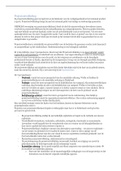
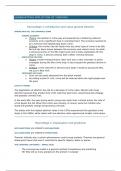
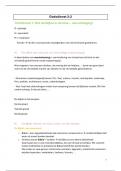
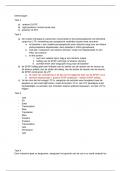
How are kids different from adults?
Pathophysiology (metabolism, growth, development)
Assessment strategies for different age groups of pediatric patients
Position Sequence Preparation
Infant - If quiet, auscultate the - Completely undress if
- Before able to sit alone; heart, lungs, and abdomen room temperature permits
supine or prone, preferably - Record heart and - Leave diaper on the male
in parent’s lap; before 4-6 respiratory rates infant
months, can place on - Palpate and percuss same - Gain cooperation with
examining table areas distraction, bright objects,
- After able to sit alone; - Proceed in the usual head- rattles, talking
sitting in parent’s lap to-toe direction - Smile at infant; Use soft,
whenever possible; if on - Perform traumatic gentle voice
table, place with the parent procedures LAST (eyes, - Use pacifier (if used) or
in full view ears, mouth [while crying) bottle with feeding (if
- Elicit reflexes as the body bottle feeding)
part is examined - Enlist parent’s aid for
- Elicit moro reflexes last restraining to examine ears
and mouth
- Avoid abrupt, jerky
movements
Toddler - Inspect body area through - Have parent remove outer
- Sitting on parent’s lap or play; “count fingers, tickle clothing
standing by parent toes” - Remove underwear as the
- Prone or supine in parent’s - Use minimum physical body part is examined
lap contact initially - Allow toddlers to inspect
- Introduce equipment equipment; demonstrating
slowly the use of equipment is
- Auscultate, percuss, usually ineffective
palpate whenever quiet - If uncooperative, perform
- Perform traumatic procedures quickly
procedures last (same as - Use restraint when
for infant) appropriate; request
parent’s assistance
- Talk about examination if
cooperative; use short
phrases
- Praise for cooperative
behavior
Preschool child - If cooperative, proceed in - Request self-undressing
- Prefer standing or sitting a head-to-toe direction - Allow to wear underwear
- Usually cooperative prone - If uncooperative, proceed if shy
or supine as with toddler - Offer equipment for
- Prefer parent’s closeness inspection; briefly
demonstrate use
- Make up a story about the
procedure (I’m seeing how
strong your muscles are
[blood pressure)
- Use the paper-doll
, technique
- Give choices when
possible
- Expect cooperation; use
positive statements (“open
your mouth”)
School-age child - Proceed in a head-toe- - Respect the need for
- Prefer sitting direction privacy
- Cooperation in most - May examine genitalia last - Request self-undressing
positions in an older child - Allow to wear underwear
- Younger child prefers - Give gown to wear
parents presence - Explain the purpose of
- Older child may prefer equipment and
privacy significance of procedure,
such as otoscope to see
tympanic membrane,
which is necessary for
hearing
- Teach about body function
and care
Adolescent - Same as an older school- - Allow to undress in private
- Same as for school age age child - Give gown
child - May examine genitalia last - Expose only the area to be
- Offer option of parent’s examined
presence - Respect the need for
privacy
- Explain findings during
the examination (“your
muscles are firm and
strong”)
- Matter-of-factly comment
about sexual development
(“your breasts are
developing as they should
be”)
- Emphasize normalcy of
development
- Examine genitalia as any
other body part; may leave
to end
Normal vs. abnormal behavior for different age groups
Stammering/stuttering is normal for preschool child
Lying can be normal for children
Assessment of pediatric patients. Normal vs. abnormal findings.
Growth measurements
o Growth charts
o Length
o Height
o Weight
, o Skin full thickness and arm circumference
o Head circumference
Length, height, weight
Circumference measures
o Generally, head circumference is larger than chest circumference in most newborns
o The head and chest circumferences approximate each other around 12 months of age
o Later in childhood, the chest circumference exceeds head size by about 5-7 cm
Physiologic Measurements
o Temperature (box 29.9)
For rectal temperatures in children, 37 degrees Celsius to 37.5 degrees Celsius is
an acceptable range
For neonates, core body temperature between 36.5 degrees Celsius and 37.6
degrees Celsius is a desirable range
Birth to 2 years- Axillary and rectal
2-5 years old- Axillary, tympanic, oral, and rectal
Older than 5- Oral, axillary, tympanic, temporal artery
o Pulse
Radial or brachial
Apical * (count for full 60 seconds)
o Respiration (count for full 60 seconds)
Count respirations first.
For infants and young children- count apical pulse. Radial pulse is too fast to count.
Temperature: tympanic, temporal, axillary, oral, rectal
Physiologic Measurements (2)
o Pediatric blood pressure (BP)
o Measurement devices
Auscultation remains the gold standard method of BP measurement in children
under most circumstances
Use of the automated devices is acceptable for BP measurement in newborns and
young infants, in whom auscultation is difficult, and in the intensive care setting
where frequent BP measurement is needed
o Selection of cuff
Choose a cuff with a bladder width that is at least 40% of the arm circumference
midway between the olecranon and the acromion
o Cuff placement
Upper arm (brachial), lower arm (radial), thigh (popliteal), or ankle (posterior
tibial)
o BP measurement and interpretation
o Orthostatic hypotension
Physical assessment
o General appearance
o Skin (Ng tube, open areas, lymph nodes)
Normally, the skin texture of young children is smooth, slightly dry, and not oily
or clammy
o Accessory structures
Childrens scalp hair is usually lustrous, silky, strong, and elastic
Hair that is stringy, dull, brittle, dry, friable, and depigmented may suggest poor
nutrition
o Lymph nodes
In children, small, nontender, moveable nodes are usually normal
, Tender, enlarged, warm, erythematous lymph nodes generally indicated infection
or inflammation close to their location
o Head and neck
The posterior fontanel closes normally by 2 months old, and the anterior fontanel
fuses between 12 and 18 months old
Note any unusual facial proportion, such as an unusually high or low forehead;
wide or close set eyes, or a small, receding chin
The neck is normally short, with skinfolds between the head and shoulders
during infancy; the neck lengthens during the next 3-4 years
o Cranial nerves only for neuro focused exam
o Eyes
External structures
When the eye is open, the upper lid should fall near the upper iris
When the eyes are closed, the lids should completely cover the cornea
and sclera
Conjunctiva should appear pink and glossy
The sclera should be clear
Cornea should be clear and transparent
Pupils should be round, clear, and equal
Lens is not visible through the pupil
Internal structures
Funduscopic examination (get otoscope and look into eyes)
Optic disc should be round or oval
o Vision testing
Ocular alignment
Normally by 3-4 months old, children can fixate on one visual field with
both eyes simultaneously
Visual acuity in children
Visual acuity in infants and difficult to test children
Peripheral vision
Children normally see 50 degrees upward, 70 degrees downward, 60
degrees nasalward, and 90 degrees temporally
Color vision
o Ears
External structures
Internal structures
Positioning the child
Otoscopic examination
Auditory testing
Under 2- Pull pinna down & back
o Nose
o External structures
The nose should lie in the middle of the face, with each side exactly
symmetric on both sides of the imaginary line
o Internal structures
There should be no discharge from the nose
o Is there any drainage? Are the nares patent?
o Mouth and throat
o Internal structures
How are kids different from adults?
Pathophysiology (metabolism, growth, development)
Assessment strategies for different age groups of pediatric patients
Position Sequence Preparation
Infant - If quiet, auscultate the - Completely undress if
- Before able to sit alone; heart, lungs, and abdomen room temperature permits
supine or prone, preferably - Record heart and - Leave diaper on the male
in parent’s lap; before 4-6 respiratory rates infant
months, can place on - Palpate and percuss same - Gain cooperation with
examining table areas distraction, bright objects,
- After able to sit alone; - Proceed in the usual head- rattles, talking
sitting in parent’s lap to-toe direction - Smile at infant; Use soft,
whenever possible; if on - Perform traumatic gentle voice
table, place with the parent procedures LAST (eyes, - Use pacifier (if used) or
in full view ears, mouth [while crying) bottle with feeding (if
- Elicit reflexes as the body bottle feeding)
part is examined - Enlist parent’s aid for
- Elicit moro reflexes last restraining to examine ears
and mouth
- Avoid abrupt, jerky
movements
Toddler - Inspect body area through - Have parent remove outer
- Sitting on parent’s lap or play; “count fingers, tickle clothing
standing by parent toes” - Remove underwear as the
- Prone or supine in parent’s - Use minimum physical body part is examined
lap contact initially - Allow toddlers to inspect
- Introduce equipment equipment; demonstrating
slowly the use of equipment is
- Auscultate, percuss, usually ineffective
palpate whenever quiet - If uncooperative, perform
- Perform traumatic procedures quickly
procedures last (same as - Use restraint when
for infant) appropriate; request
parent’s assistance
- Talk about examination if
cooperative; use short
phrases
- Praise for cooperative
behavior
Preschool child - If cooperative, proceed in - Request self-undressing
- Prefer standing or sitting a head-to-toe direction - Allow to wear underwear
- Usually cooperative prone - If uncooperative, proceed if shy
or supine as with toddler - Offer equipment for
- Prefer parent’s closeness inspection; briefly
demonstrate use
- Make up a story about the
procedure (I’m seeing how
strong your muscles are
[blood pressure)
- Use the paper-doll
, technique
- Give choices when
possible
- Expect cooperation; use
positive statements (“open
your mouth”)
School-age child - Proceed in a head-toe- - Respect the need for
- Prefer sitting direction privacy
- Cooperation in most - May examine genitalia last - Request self-undressing
positions in an older child - Allow to wear underwear
- Younger child prefers - Give gown to wear
parents presence - Explain the purpose of
- Older child may prefer equipment and
privacy significance of procedure,
such as otoscope to see
tympanic membrane,
which is necessary for
hearing
- Teach about body function
and care
Adolescent - Same as an older school- - Allow to undress in private
- Same as for school age age child - Give gown
child - May examine genitalia last - Expose only the area to be
- Offer option of parent’s examined
presence - Respect the need for
privacy
- Explain findings during
the examination (“your
muscles are firm and
strong”)
- Matter-of-factly comment
about sexual development
(“your breasts are
developing as they should
be”)
- Emphasize normalcy of
development
- Examine genitalia as any
other body part; may leave
to end
Normal vs. abnormal behavior for different age groups
Stammering/stuttering is normal for preschool child
Lying can be normal for children
Assessment of pediatric patients. Normal vs. abnormal findings.
Growth measurements
o Growth charts
o Length
o Height
o Weight
, o Skin full thickness and arm circumference
o Head circumference
Length, height, weight
Circumference measures
o Generally, head circumference is larger than chest circumference in most newborns
o The head and chest circumferences approximate each other around 12 months of age
o Later in childhood, the chest circumference exceeds head size by about 5-7 cm
Physiologic Measurements
o Temperature (box 29.9)
For rectal temperatures in children, 37 degrees Celsius to 37.5 degrees Celsius is
an acceptable range
For neonates, core body temperature between 36.5 degrees Celsius and 37.6
degrees Celsius is a desirable range
Birth to 2 years- Axillary and rectal
2-5 years old- Axillary, tympanic, oral, and rectal
Older than 5- Oral, axillary, tympanic, temporal artery
o Pulse
Radial or brachial
Apical * (count for full 60 seconds)
o Respiration (count for full 60 seconds)
Count respirations first.
For infants and young children- count apical pulse. Radial pulse is too fast to count.
Temperature: tympanic, temporal, axillary, oral, rectal
Physiologic Measurements (2)
o Pediatric blood pressure (BP)
o Measurement devices
Auscultation remains the gold standard method of BP measurement in children
under most circumstances
Use of the automated devices is acceptable for BP measurement in newborns and
young infants, in whom auscultation is difficult, and in the intensive care setting
where frequent BP measurement is needed
o Selection of cuff
Choose a cuff with a bladder width that is at least 40% of the arm circumference
midway between the olecranon and the acromion
o Cuff placement
Upper arm (brachial), lower arm (radial), thigh (popliteal), or ankle (posterior
tibial)
o BP measurement and interpretation
o Orthostatic hypotension
Physical assessment
o General appearance
o Skin (Ng tube, open areas, lymph nodes)
Normally, the skin texture of young children is smooth, slightly dry, and not oily
or clammy
o Accessory structures
Childrens scalp hair is usually lustrous, silky, strong, and elastic
Hair that is stringy, dull, brittle, dry, friable, and depigmented may suggest poor
nutrition
o Lymph nodes
In children, small, nontender, moveable nodes are usually normal
, Tender, enlarged, warm, erythematous lymph nodes generally indicated infection
or inflammation close to their location
o Head and neck
The posterior fontanel closes normally by 2 months old, and the anterior fontanel
fuses between 12 and 18 months old
Note any unusual facial proportion, such as an unusually high or low forehead;
wide or close set eyes, or a small, receding chin
The neck is normally short, with skinfolds between the head and shoulders
during infancy; the neck lengthens during the next 3-4 years
o Cranial nerves only for neuro focused exam
o Eyes
External structures
When the eye is open, the upper lid should fall near the upper iris
When the eyes are closed, the lids should completely cover the cornea
and sclera
Conjunctiva should appear pink and glossy
The sclera should be clear
Cornea should be clear and transparent
Pupils should be round, clear, and equal
Lens is not visible through the pupil
Internal structures
Funduscopic examination (get otoscope and look into eyes)
Optic disc should be round or oval
o Vision testing
Ocular alignment
Normally by 3-4 months old, children can fixate on one visual field with
both eyes simultaneously
Visual acuity in children
Visual acuity in infants and difficult to test children
Peripheral vision
Children normally see 50 degrees upward, 70 degrees downward, 60
degrees nasalward, and 90 degrees temporally
Color vision
o Ears
External structures
Internal structures
Positioning the child
Otoscopic examination
Auditory testing
Under 2- Pull pinna down & back
o Nose
o External structures
The nose should lie in the middle of the face, with each side exactly
symmetric on both sides of the imaginary line
o Internal structures
There should be no discharge from the nose
o Is there any drainage? Are the nares patent?
o Mouth and throat
o Internal structures