Ac 3.1 Criminology Personal Notes
Unit: Crime Scene to Courtroom Date: Name:
Topic: 3.1 Examine for
- Bias
- Opinion
- Circumstances
- Currency
- Accuracy
Information
- Evidence
- Trial transcripts
- Media reports
- Judgements
- Law Reports
Notes made during the lesson (in your own words)
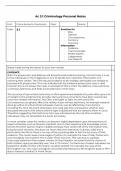
EVIDENCE
Both the prosecution and defence will bring forward evidence during criminal trials, it is up
to the individuals in the magistrate or jury to decide how valid their information is in
reaching their verdict. The CPS requires evidence to be credible, admissible and reliable to
proceed with prosecution. This may indicate that the evidence prosecution uses is valid
however this is not always the case, an example of this is when the defence cross-examines
a witness’s testimony and finds inconsistencies in their story.
The accuracy of eye-witness testimony is often questioned, despite this juries often give a lot
of weight to the evidence they provide. Many previous convictions have been overturned
once new reliable information, like DNA, is brought to light. As well as this the
circumstances can greatly affect the validity of eye-witness testimony, for example research
done by Loftus et al found that witnesses memory can be affected by many factors
including the time the event took place, how long ago they witnessed it, whether they
discussed the event with others and the type of questions that are asked to them in court.
Therefore suggesting that testimony from eye-witnesses has the risk of be invalid as
individuals may not remember the event accurately.
In more complex cases the verdict can become highly dependent upon the testimony of
expert witnesses, such as forensic scientists. Due to their expertise and knowledge, jurors
tend to find their opinion highly credible and base their verdict off of the information they
bring forward. However, this does not mean that their testimony is always valid, this is
particularly harmful as there is no way of the jury being able to test the accuracy of their
evidence. This could cause miscarriages of justice, for example the case of Sally Clarke who
was wrongfully convicted for the murder of her two sons. This was due to a grossly
inaccurate statement from expert witness Sir Roy Meadow, he stated that the chance of
both children dying accidentally was “one in 73 million”. Furthermore if expert witnesses are
biased the validity of their information could be tainted. For example the case of the
Birmingham Six, who were wrongfully convicted of bombing two Birmingham pubs in 1974
due to forensic scientist Dr Frank Skuse.
Unit: Crime Scene to Courtroom Date: Name:
Topic: 3.1 Examine for
- Bias
- Opinion
- Circumstances
- Currency
- Accuracy
Information
- Evidence
- Trial transcripts
- Media reports
- Judgements
- Law Reports
Notes made during the lesson (in your own words)
EVIDENCE
Both the prosecution and defence will bring forward evidence during criminal trials, it is up
to the individuals in the magistrate or jury to decide how valid their information is in
reaching their verdict. The CPS requires evidence to be credible, admissible and reliable to
proceed with prosecution. This may indicate that the evidence prosecution uses is valid
however this is not always the case, an example of this is when the defence cross-examines
a witness’s testimony and finds inconsistencies in their story.
The accuracy of eye-witness testimony is often questioned, despite this juries often give a lot
of weight to the evidence they provide. Many previous convictions have been overturned
once new reliable information, like DNA, is brought to light. As well as this the
circumstances can greatly affect the validity of eye-witness testimony, for example research
done by Loftus et al found that witnesses memory can be affected by many factors
including the time the event took place, how long ago they witnessed it, whether they
discussed the event with others and the type of questions that are asked to them in court.
Therefore suggesting that testimony from eye-witnesses has the risk of be invalid as
individuals may not remember the event accurately.
In more complex cases the verdict can become highly dependent upon the testimony of
expert witnesses, such as forensic scientists. Due to their expertise and knowledge, jurors
tend to find their opinion highly credible and base their verdict off of the information they
bring forward. However, this does not mean that their testimony is always valid, this is
particularly harmful as there is no way of the jury being able to test the accuracy of their
evidence. This could cause miscarriages of justice, for example the case of Sally Clarke who
was wrongfully convicted for the murder of her two sons. This was due to a grossly
inaccurate statement from expert witness Sir Roy Meadow, he stated that the chance of
both children dying accidentally was “one in 73 million”. Furthermore if expert witnesses are
biased the validity of their information could be tainted. For example the case of the
Birmingham Six, who were wrongfully convicted of bombing two Birmingham pubs in 1974
due to forensic scientist Dr Frank Skuse.