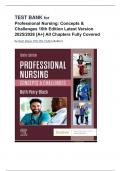
Test Bank For
Pediatric Primary Care: Practice Guidelines For Nurses
Author: Beth Richardson
5th Edition
,TABLE OF CONTENT
Section 1 Child Health Care
Chapter 1 Obtaining An Initial History
Chapter 2 Obtaining An Interval History
Chapter 3 Performing A Physical Examination
Chapter 4 Making Newborn Rounds
Chapter 5 Guidelines For Breastfeeding
Chapter 6 Common Genetic Disorders
Chapter 7 Two-Week Visit
Chapter 8 One-Month Visit
Chapter 9 Two-Month Visit
Chapter 10 Four-Month Visit
Chapter 11 Six-Month Visit
Chapter 12 Nine-Month Visit
Chapter 13 Twelve-Month Visit
Chapter 14 Fifteen-To Eighteen-Month Visit
Chapter 15 Two-Year And Two-And-A-Half-Year Visit
Chapter 16 Three-Year Visit (Preschool)
Chapter 17 Six-Year Visit (School Readiness)
Chapter 18 Seven- To Ten- Year Visit (School Age)
Chapter 19 Eleven- To Thirteen- Year Visit (Preadolescent)
Chapter 20 Fourteen- To Eighteen- Year Visit (Adolescent)
Section 2 Common Childhood Disorders
Chapter 21 Dermatological Problems
Chapter 22 Eye Disorders
Chapter 23 Ear Disorders
Chapter 24 Sinus, Mouth, Throat, And Neck Disorders
Chapter 25 Respiratory Disorders
,Chapter 26 Cardiovascular Disorders
Chapter 27 Gastrointestinal Disorders
Chapter 28 Genitourinary Disorders
Chapter 29 Gynecologic Disorders
Chapter 30 Endocrine Disorders
Chapter 31 Musculoskeletal Disorders
Chapter 32 Neurological Disorders
Chapter 33 Hematologic Disorders
Chapter 34 Pediatric Obesity
Chapter 35 Behavioral Disorders
Chapter 36 Mental Health Disorders
, Chapter 1 Obtaining An Initial History
Multiple Choice
1. The Nurse Is Seeing An Adolescent And The Parents In The Clinic For The First Time. Which
Should The Nurse Do First?
A. Introduce Him- Or Herself.
B. Make The Family Comfortable.
C. Give Assurance Of Privacy.
D. Explain The Purpose Of The Interview. Ans: A
The First Thing That Nurses Must Do Is To Introduce Themselves To The Patient And Family. Parents
And Other Adults Should Be Addressed With Appropriate Titles Unless They Specify A Preferred Name.
Clarification Of The Purpose Of The Interview And The Nurses Role Is The Second Thing That Should Be
Done. During The Initial Part Of The Interview, The Nurse Should Include General Conversation To Help
Make The Family Feel At Ease. The Interview Also Should Take Place In An Environment As Free Of
Distraction As Possible. In Addition, The Nurse Should Clarify Which Information Will Be Shared With
Other Members Of The Health Care Team And Any Limits To The Confidentiality.
2. Which Is Considered A Block To Effective Communication?
A. Using Silence
B. Using Clichs
C. Directing The Focus
D. Defining The Problem Ans: B
Using Stereotyped Comments Or Clichs Can Block Effective Communication. After The Nurse Uses
Such Trite Phrases, Parents Often Do Not Respond. Silence Can Be An Effective Interviewing Tool.
Silence Permits The Interviewee To Sort Out Thoughts And Feelings And Search For Responses To
Questions. To Be Effective, The Nurse Must Be Able To Direct The Focus Of The Interview While
Allowing Maximum Freedom Of Expression. By Using Open-Ended Questions And Guiding Questions,
The Nurse Can Obtain The Necessary Information And Maintain A Relationship With The Family. The
Nurse And Parent Must Collaborate And Define The Problem That Will Be The Focus Of The Nursing
Intervention.
3. Which Is The Single Most Important Factor To Consider When Communicating With Children?
A. Presence Of The Childs Parent
B. Childs Physical Condition
C. Childs Developmental Level
Pediatric Primary Care: Practice Guidelines For Nurses
Author: Beth Richardson
5th Edition
,TABLE OF CONTENT
Section 1 Child Health Care
Chapter 1 Obtaining An Initial History
Chapter 2 Obtaining An Interval History
Chapter 3 Performing A Physical Examination
Chapter 4 Making Newborn Rounds
Chapter 5 Guidelines For Breastfeeding
Chapter 6 Common Genetic Disorders
Chapter 7 Two-Week Visit
Chapter 8 One-Month Visit
Chapter 9 Two-Month Visit
Chapter 10 Four-Month Visit
Chapter 11 Six-Month Visit
Chapter 12 Nine-Month Visit
Chapter 13 Twelve-Month Visit
Chapter 14 Fifteen-To Eighteen-Month Visit
Chapter 15 Two-Year And Two-And-A-Half-Year Visit
Chapter 16 Three-Year Visit (Preschool)
Chapter 17 Six-Year Visit (School Readiness)
Chapter 18 Seven- To Ten- Year Visit (School Age)
Chapter 19 Eleven- To Thirteen- Year Visit (Preadolescent)
Chapter 20 Fourteen- To Eighteen- Year Visit (Adolescent)
Section 2 Common Childhood Disorders
Chapter 21 Dermatological Problems
Chapter 22 Eye Disorders
Chapter 23 Ear Disorders
Chapter 24 Sinus, Mouth, Throat, And Neck Disorders
Chapter 25 Respiratory Disorders
,Chapter 26 Cardiovascular Disorders
Chapter 27 Gastrointestinal Disorders
Chapter 28 Genitourinary Disorders
Chapter 29 Gynecologic Disorders
Chapter 30 Endocrine Disorders
Chapter 31 Musculoskeletal Disorders
Chapter 32 Neurological Disorders
Chapter 33 Hematologic Disorders
Chapter 34 Pediatric Obesity
Chapter 35 Behavioral Disorders
Chapter 36 Mental Health Disorders
, Chapter 1 Obtaining An Initial History
Multiple Choice
1. The Nurse Is Seeing An Adolescent And The Parents In The Clinic For The First Time. Which
Should The Nurse Do First?
A. Introduce Him- Or Herself.
B. Make The Family Comfortable.
C. Give Assurance Of Privacy.
D. Explain The Purpose Of The Interview. Ans: A
The First Thing That Nurses Must Do Is To Introduce Themselves To The Patient And Family. Parents
And Other Adults Should Be Addressed With Appropriate Titles Unless They Specify A Preferred Name.
Clarification Of The Purpose Of The Interview And The Nurses Role Is The Second Thing That Should Be
Done. During The Initial Part Of The Interview, The Nurse Should Include General Conversation To Help
Make The Family Feel At Ease. The Interview Also Should Take Place In An Environment As Free Of
Distraction As Possible. In Addition, The Nurse Should Clarify Which Information Will Be Shared With
Other Members Of The Health Care Team And Any Limits To The Confidentiality.
2. Which Is Considered A Block To Effective Communication?
A. Using Silence
B. Using Clichs
C. Directing The Focus
D. Defining The Problem Ans: B
Using Stereotyped Comments Or Clichs Can Block Effective Communication. After The Nurse Uses
Such Trite Phrases, Parents Often Do Not Respond. Silence Can Be An Effective Interviewing Tool.
Silence Permits The Interviewee To Sort Out Thoughts And Feelings And Search For Responses To
Questions. To Be Effective, The Nurse Must Be Able To Direct The Focus Of The Interview While
Allowing Maximum Freedom Of Expression. By Using Open-Ended Questions And Guiding Questions,
The Nurse Can Obtain The Necessary Information And Maintain A Relationship With The Family. The
Nurse And Parent Must Collaborate And Define The Problem That Will Be The Focus Of The Nursing
Intervention.
3. Which Is The Single Most Important Factor To Consider When Communicating With Children?
A. Presence Of The Childs Parent
B. Childs Physical Condition
C. Childs Developmental Level