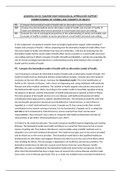
LEARNING AIM B: EXAMINE HOW SOCIOLOGICAL APPROACHES SUPPORT
UNDERSTANDING OF MODELS AND CONCEPTS OF HEALTH
P3 : Compare the biomedical model of health with an alternative model of health.
M2: Analyse how the biomedical and an alternative model of health and concepts of health, ill
health and disability affect service provision in a local health and social care setting.
D1: Evaluate the role of sociological perspectives in the understanding of society and models and
concepts of health in relation to service provision in a local health and social care setting.
In this assignment I am going to examine how sociological approaches support understanding of
models and concepts of health. I will be comparing how the biomedical model of health differs from
the social model of health and whether they have any similarities. I will also be analysing how the
biomedical model and the social model of health affect service provision in a local health and social
care setting and how it affects concepts of health, ill health and disability. I will also be evaluating the
role of several sociological perspectives in understanding society while linking to the concepts of
health and the models of health.
P3: Compare the biomedical model of health with an alternative model of health.
I am first going to compare the biomedical model of health with an alternative model of health. The
model of health that has dominated Western industrialised societies, certainly since the industrial
revolution of the mid-19th century, has been the biomedical model. This is the identification of
health as the ‘absence of disease’, with a focus on diagnosing and curing individuals with particular
illnesses and other medical conditions. This outlook of health supports the policies and practice of
the National Health Service (NHS). According to this model, health is essentially regarded as being
the absence of disease, and the intervention of health professionals is required in times of illness.
The main purpose of the health services is to cure disease, and health professionals will utilise
scientifically tested approaches to address identified illnesses. The biomedical model fits well with
the functionalist perspective introduced and established by Talcott Parsons, in which illness is
regarded as, in itself, dysfunctional for society. If people are ill, they cannot make their normal
contribution to the smooth running of society. For the functionalist, if people are ill, or adopt the
sick role (a term introduced by Talcott Parsons), and are exempt from their normal social
responsibilities, they moreover have a duty to cooperate with health professionals and take all
rational steps to get better. (Pearsonactivelearn.com, 2019)
It is linked to the medical profession. The model comprises qualified experts diagnosing and treating
illnesses. The biomedical model sees health and illness as a social fact that everyone has an equal
chance of getting sick. They believe that illness is only treatable using scientific methods such as
allopathic cures and only medical professionals. The model encourages users to be service provided
and be reliant on on the service provider. The biomedical model idea is that qualified healthcare
professionals are able detect and diagnose illnesses and they focus on the cure of the illness rather
than avoiding the illness. This encourages a dependency on healthcare and service providers. The
biomedical model does not take into account social factors that may cause illnesses. Health
difficulties are seen as individual by the biomedical model and social factors are ignored. On the
other hand the biomedical has been a huge cause of research into various illnesses and this made
many more cures to illnesses get found. This, as a result, has enabled many successful treatments to
1
, be developed which once where illnesses that were assumed to be incurable. Biomedical does not
look at social factors that could potentially cause an illness like the social medical model does and
instead it places its full focus on the illness and trying to relieve that illness.
The social medical model is an approach to health and illness that focuses on the social
environmental factors that influence our health and well-being including the impact of poverty, poor
housing, diet and pollution. They focus on other aspects that could possibly cause illness. The model
focuses more on the deterrence of illnesses rather than caring for it and ensuring the problem does
not arise again. An instance of how social-medical works would be the sugar tax announced in the
UK to make buying fizzy drinks more expensive to try and decrease the consumption of the drinks.
Child obesity and diabetes are rising for young people in the UK and this shows the social-medical
model in action as they are looking at a social factor such as a diet and instilling strategies to avert
illnesses by increasing prices through taxes. Research indicates that life expectancy rose, and death
rates, particularly infant mortality rates, began to fall during the late 19th and early 20th centuries.
This coincided with enhancements in sanitation, the facility of clean water, the construction of new
council houses and generally enhanced standards of living. This was before 1948 and the
introduction of the NHS, with universal personal health care. This sort of evidence supports the view
that environmental and social conditions are a significant source of disease, and the causes of ill
health are not merely located in the individual.
The social model fits more easily with the beliefs of the conflict theorists, such as Karl Marx, than the
functionalists. Conflict theorists would clarify the current shorter life expectancy and relatively
higher rates of ill health amid lower-income groups as being consequences of the inequalities in
society and the life circumstances of the disadvantaged. They would advise that the poor are more
probable to have an insufficient diet and reside in damp houses, often in inner-city areas where
unemployment and environmental pollution incline to have the greatest impact. They would also say
that the ruling groups in society (the politicians and the owners of industries) are not willing to make
the changes required to guard the poor from ill health and disease. The biomedical model of health
has a clear focus on individual diagnosed illness, and the social model is concerned with the
environmental causes of illness. They can, though, be seen as two complementary approaches to the
study of health and illness. (Pearsonactivelearn.com, 2019)
Reductionism is a model that tries to reduce explanations of illness to the simplest possible process.
If there is a biological problem it won’t then look at any other factors which could contribute to the
illness. For example, if someone is ill, the medical model would treat the physical symptoms, but not
look at the social factors which could have caused it. The medical model would her medicine rather
than investigate the social factors. The biomedical model looks for the cause of a disorder rather
than looking for a range of contributory factors. It defines illness from the point of view of the
individual's functioning within their society rather than looking at changes in biological or
physiological signs. (Pearsonactivelearn.com, 2019)
Complementary therapy is not generally prescribed by a medical professional. Complementary
therapy sometimes used as an alternative, or alongside standard treatments prescribed by the
medical professional. Complementary approaches and complementary therapies (complementary
medicine) consist of a varied range of health-focused practices and treatments, such as
aromatherapy, reflexology and acupuncture. Most of these are not currently part of conventional or
2
UNDERSTANDING OF MODELS AND CONCEPTS OF HEALTH
P3 : Compare the biomedical model of health with an alternative model of health.
M2: Analyse how the biomedical and an alternative model of health and concepts of health, ill
health and disability affect service provision in a local health and social care setting.
D1: Evaluate the role of sociological perspectives in the understanding of society and models and
concepts of health in relation to service provision in a local health and social care setting.
In this assignment I am going to examine how sociological approaches support understanding of
models and concepts of health. I will be comparing how the biomedical model of health differs from
the social model of health and whether they have any similarities. I will also be analysing how the
biomedical model and the social model of health affect service provision in a local health and social
care setting and how it affects concepts of health, ill health and disability. I will also be evaluating the
role of several sociological perspectives in understanding society while linking to the concepts of
health and the models of health.
P3: Compare the biomedical model of health with an alternative model of health.
I am first going to compare the biomedical model of health with an alternative model of health. The
model of health that has dominated Western industrialised societies, certainly since the industrial
revolution of the mid-19th century, has been the biomedical model. This is the identification of
health as the ‘absence of disease’, with a focus on diagnosing and curing individuals with particular
illnesses and other medical conditions. This outlook of health supports the policies and practice of
the National Health Service (NHS). According to this model, health is essentially regarded as being
the absence of disease, and the intervention of health professionals is required in times of illness.
The main purpose of the health services is to cure disease, and health professionals will utilise
scientifically tested approaches to address identified illnesses. The biomedical model fits well with
the functionalist perspective introduced and established by Talcott Parsons, in which illness is
regarded as, in itself, dysfunctional for society. If people are ill, they cannot make their normal
contribution to the smooth running of society. For the functionalist, if people are ill, or adopt the
sick role (a term introduced by Talcott Parsons), and are exempt from their normal social
responsibilities, they moreover have a duty to cooperate with health professionals and take all
rational steps to get better. (Pearsonactivelearn.com, 2019)
It is linked to the medical profession. The model comprises qualified experts diagnosing and treating
illnesses. The biomedical model sees health and illness as a social fact that everyone has an equal
chance of getting sick. They believe that illness is only treatable using scientific methods such as
allopathic cures and only medical professionals. The model encourages users to be service provided
and be reliant on on the service provider. The biomedical model idea is that qualified healthcare
professionals are able detect and diagnose illnesses and they focus on the cure of the illness rather
than avoiding the illness. This encourages a dependency on healthcare and service providers. The
biomedical model does not take into account social factors that may cause illnesses. Health
difficulties are seen as individual by the biomedical model and social factors are ignored. On the
other hand the biomedical has been a huge cause of research into various illnesses and this made
many more cures to illnesses get found. This, as a result, has enabled many successful treatments to
1
, be developed which once where illnesses that were assumed to be incurable. Biomedical does not
look at social factors that could potentially cause an illness like the social medical model does and
instead it places its full focus on the illness and trying to relieve that illness.
The social medical model is an approach to health and illness that focuses on the social
environmental factors that influence our health and well-being including the impact of poverty, poor
housing, diet and pollution. They focus on other aspects that could possibly cause illness. The model
focuses more on the deterrence of illnesses rather than caring for it and ensuring the problem does
not arise again. An instance of how social-medical works would be the sugar tax announced in the
UK to make buying fizzy drinks more expensive to try and decrease the consumption of the drinks.
Child obesity and diabetes are rising for young people in the UK and this shows the social-medical
model in action as they are looking at a social factor such as a diet and instilling strategies to avert
illnesses by increasing prices through taxes. Research indicates that life expectancy rose, and death
rates, particularly infant mortality rates, began to fall during the late 19th and early 20th centuries.
This coincided with enhancements in sanitation, the facility of clean water, the construction of new
council houses and generally enhanced standards of living. This was before 1948 and the
introduction of the NHS, with universal personal health care. This sort of evidence supports the view
that environmental and social conditions are a significant source of disease, and the causes of ill
health are not merely located in the individual.
The social model fits more easily with the beliefs of the conflict theorists, such as Karl Marx, than the
functionalists. Conflict theorists would clarify the current shorter life expectancy and relatively
higher rates of ill health amid lower-income groups as being consequences of the inequalities in
society and the life circumstances of the disadvantaged. They would advise that the poor are more
probable to have an insufficient diet and reside in damp houses, often in inner-city areas where
unemployment and environmental pollution incline to have the greatest impact. They would also say
that the ruling groups in society (the politicians and the owners of industries) are not willing to make
the changes required to guard the poor from ill health and disease. The biomedical model of health
has a clear focus on individual diagnosed illness, and the social model is concerned with the
environmental causes of illness. They can, though, be seen as two complementary approaches to the
study of health and illness. (Pearsonactivelearn.com, 2019)
Reductionism is a model that tries to reduce explanations of illness to the simplest possible process.
If there is a biological problem it won’t then look at any other factors which could contribute to the
illness. For example, if someone is ill, the medical model would treat the physical symptoms, but not
look at the social factors which could have caused it. The medical model would her medicine rather
than investigate the social factors. The biomedical model looks for the cause of a disorder rather
than looking for a range of contributory factors. It defines illness from the point of view of the
individual's functioning within their society rather than looking at changes in biological or
physiological signs. (Pearsonactivelearn.com, 2019)
Complementary therapy is not generally prescribed by a medical professional. Complementary
therapy sometimes used as an alternative, or alongside standard treatments prescribed by the
medical professional. Complementary approaches and complementary therapies (complementary
medicine) consist of a varied range of health-focused practices and treatments, such as
aromatherapy, reflexology and acupuncture. Most of these are not currently part of conventional or
2